 Inner Sanctum
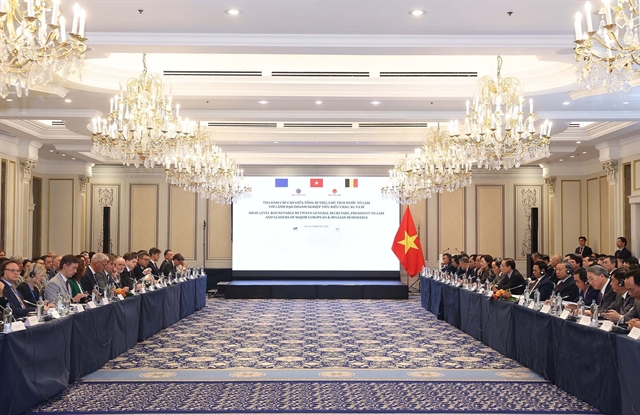
Top leader urges deeper, higher-value economic ties with EU, Belgium
1.
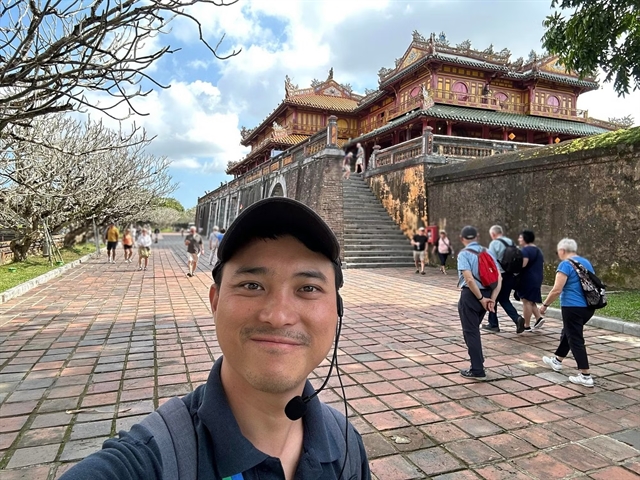 |
| Hà Lưỡng Thành believes the hardest thing for a guide to preserve is the “heart”. — Photo courtesy of Hà Thành |
After 15 years as an international tour guide, Hà Lưỡng Thành has turned his experiences into a book, Dẫn đường bằng Tâm – Giữ nghề bằng Lửa (Guiding With Heart – Staying the Course With Passion), reflecting on the profession, changing traveller expectations and the importance of “heart”.
Inner Sanctum: What made you decide to write the book, despite concerns that sharing your experience might sound like lecturing others?
To be honest, I hesitated for a long time. In the profession, especially in guiding English-speaking international visitors to Việt Nam, there are many people far more experienced than I am. I have always considered myself an ordinary practitioner, so I never wanted to tell others how to do their jobs.
But I realised that everyone has something worth sharing. If my experiences can help tourism students or young guides enter the profession with greater confidence, then why not share them?
I wrote the book as a conversation between someone who has been in the profession and those who are just starting out. I share what I have experienced, including the mistakes, pressures and lessons I have learned along the way. I hope every reader will find something useful for their own journey.
Inner Sanctum: What is the main message you want to leave with readers?
Being a tour guide is not simply about taking visitors from one destination to another. It is also about how we treat people.
That is why I chose the title. To me, “heart” means kindness, a spirit of service and responsibility towards the job. “Passion” is the experience, skills and confidence built up over the years.
After 15 years, I believe a guide's value is not measured only by how much information they can provide. It is also about whether they can make visitors feel welcomed, understood and cared for. If a young reader finishes the book with a better understanding of what “heart” means in this profession, I will feel that the book has fulfilled its purpose.
Inner Sanctum: You once wrote: “People may forget the places they visited, but they will not forget how you made them feel.” What experience made you understand that most deeply?
There is a story in the book called The Day I Stopped the Bus. I was taking a group of international visitors through a Vietnamese village when we passed a funeral. Some visitors asked about Vietnamese funeral customs. I could have explained everything while they remained on the bus, but I thought they might eventually forget what they heard.
So I got off the bus and asked the family if our group could come in and offer incense. It was quite a bold decision because we were strangers and the visitors were foreigners.
Fortunately, the family was very open. The group entered quietly, paid their respects and bowed before the deceased. Afterwards, the family thanked us, saying they had not expected foreign visitors to show them such sympathy.
When we returned to the bus, many visitors were deeply moved. I realised they would probably remember not the information I had given them, but the feeling of sharing a moment of grief with a Vietnamese family.
A single stick of incense became a small bridge between people of different languages and cultures.
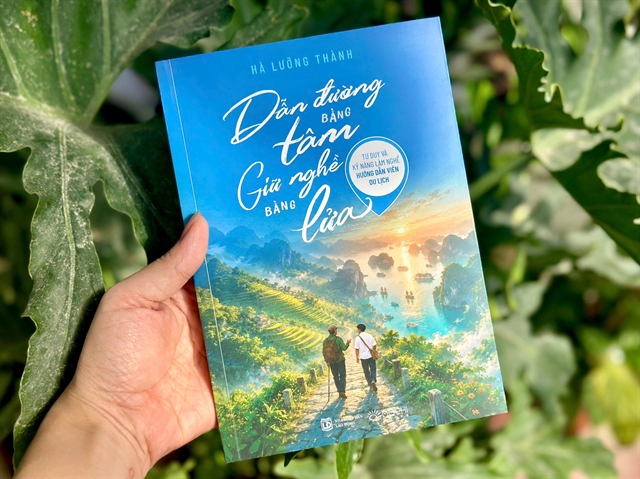 |
| Hà Lưỡng Thành has turned his experiences and lessons from the road into a book, 'Dẫn đường bằng Tâm – Giữ nghề bằng Lửa'. — Photo mochibooks.com.vn |
Inner Sanctum: After 15 years in the profession, was there ever a time when you wanted to stop?
The most difficult moment came when my grandmother died while I was guiding a group in Hội An. She had raised me, so her death affected me deeply. It was also when I felt most clearly the price of being a tour guide.
People often think guiding is simply about travelling and being away from home. But the hardest part is knowing that you may not be there for important moments in your family's life.
At one point, I asked myself whether it was worth it. Eventually, I realised that every profession involves choices and sacrifices. What matters is understanding why you made that choice and taking responsibility for it.
After that experience, I appreciated my family more and became more aware of the responsibility I carry towards every visitor who entrusts their journey to me.
Inner Sanctum: Looking back over 15 years, what has changed most about the profession?
I think travellers, the way guides work and the guides themselves have all changed. But the biggest change is travellers' expectations.
Today, technology and the internet allow visitors to find information very easily. Knowledge and foreign-language skills have become basic requirements rather than special advantages.
What visitors increasingly want is someone who can connect with them, understand them and create experiences that feel personal. They want to be listened to and cared for – things that Google or AI cannot provide. That, in my view, is what makes the human role of a tour guide difficult to replace.
When I first started, I thought a happy customer who thanked me and left a tip at the end of a trip meant I had done a good job. Over time, I realised that was not necessarily the case.
Some visitors smile throughout a tour and say thank you, but their true feelings only appear in their feedback afterwards.
That changed the way I work. Instead of waiting until the end, I listen to visitors throughout the journey and make adjustments when necessary. I have learned that what people remember is not simply whether an itinerary was completed, but whether they felt genuinely cared for.
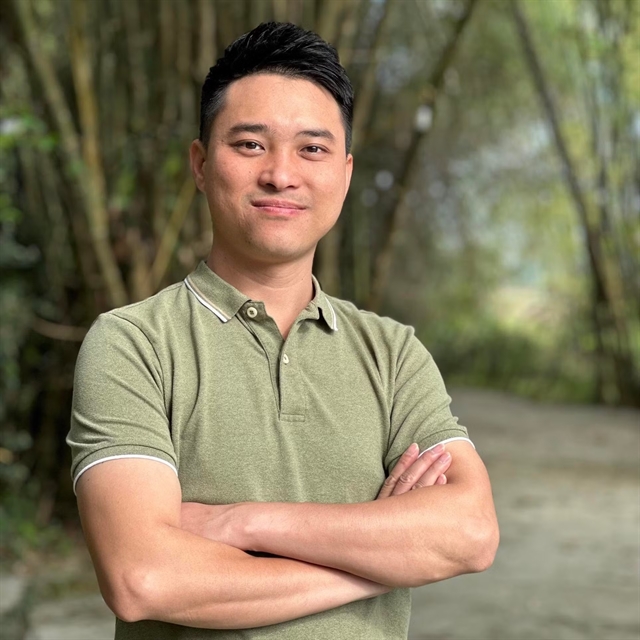 |
| Hà Lưỡng Thành believes a guide's value is not measured only by how much information they can provide. It is also about whether they can make visitors feel welcomed, understood and cared for. — Photo courtesy of Hà Thành |
Inner Sanctum: You often refer to heart and passion in the book. Which is harder to preserve?
For me, heart is the foundation for anyone who wants to stay in this profession for the long term. It means kindness, responsibility and the way you treat other people.
Skills and experience can be accumulated over time, but heart cannot be learned overnight. It comes from a person's character and way of thinking.
Passion grows through each journey. With an open mind and a willingness to learn, anyone can develop the skills and confidence needed to keep that passion alive. However, without the right attitude, even a very skilled guide will find it difficult to go far.
Inner Sanctum: Among the thousands of visitors you have accompanied, was there anyone who changed the way you see the profession or yourself?
There is one visitor I will remember for the rest of my life. She was a woman with terminal nasopharyngeal cancer who joined a cross-country trip in 2018.
Under the regulations at the time, I should have advised her to stop the trip for safety reasons. But she sent me a message: “Please let me continue. This is my last journey.”
I later learned that her husband had died during the war in Việt Nam and that she had always wanted to revisit places where he had once been.
After careful consideration, medical preparations and agreement from the company, her family and the group, I decided to accompany her through the entire journey.
Fortunately, everything went safely. Before returning home, she left me a short message: “Thank you for helping me fulfil my last dream.”
But in fact, I was the one who needed to say thank you. She changed the way I looked at my profession. I realised that being a tour guide is not simply about completing an itinerary. It is about having the courage to make difficult decisions, the responsibility to see them through and the empathy to understand the story behind each person.
Perhaps that is the greatest gift the profession has given me. — VNS
Inner Sanctum
 Inner Sanctum
 Inner Sanctum
 Inner Sanctum
 Inner Sanctum
 Inner Sanctum
 Inner Sanctum
 Inner Sanctum
 Inner Sanctum
 Inner Sanctum
 Inner Sanctum
 Inner Sanctum
 Inner Sanctum
 Inner Sanctum
 Inner Sanctum