 Inner Sanctum
Weaving the unique heritage of the Thu Lao
1.
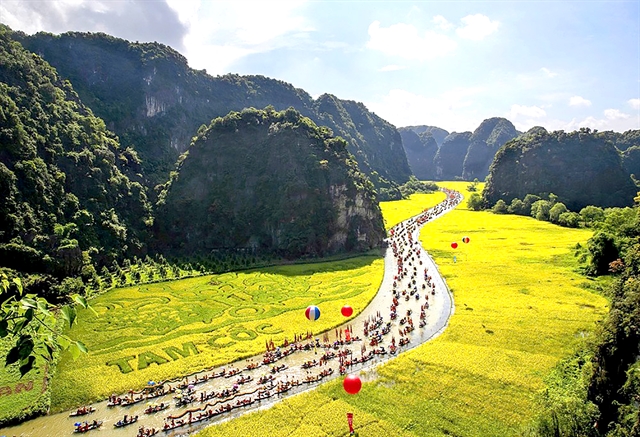
Ninh Bình’s spectacular landscapes and rich heritage have made it a favourite filming destination. Now the province is seeking to build a more professional environment where cinema can support tourism and cultural industries. Nguyễn Mạnh Cường, deputy director of the provincial Department of Culture and Sports, speaks to Hà An.
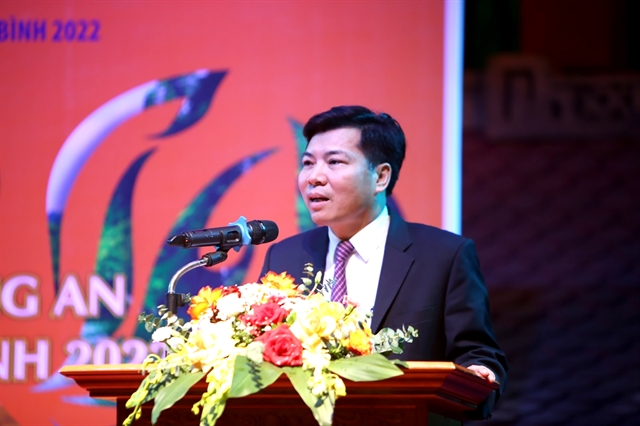 |
| Nguyễn Mạnh Cường, deputy director of the Ninh Bình Department of Culture and Sports, speaks at an event. — Photo vov2.vov.vn |
Inner Sanctum: Ninh Bình has become a popular filming destination thanks to its rich heritage and spectacular landscapes. What is the province doing to make it easier for domestic and international film crews to work there?
Ninh Bình regards cinema as an effective way to promote its image, culture, heritage and people. Over the years, many domestic and international productions have chosen the province as a filming location, including Kong: Skull Island, The Quiet American, Tấm Cám: Chuyện Chưa Kể (Tấm Cám: The Untold Story), and Hộ Linh Tráng Sĩ - Bí Ẩn Mộ Vua Đinh (The Sacred Armour – Mystery of King Đinh’s Tomb), as well as numerous television productions.
Building on these advantages, the province is gradually creating a more favourable and professional environment for filmmaking. Our approach is not simply to welcome film crews when they arrive, but to actively promote Ninh Bình as a filming destination and support productions so that projects can be carried out smoothly and on a long-term basis.
The province has issued specific guidelines for coordinating with and supporting domestic and international film crews, from location scouting and selection to connecting them with relevant agencies, businesses, heritage-site and scenic-area managers and local authorities.
We also introduce local resources such as supporting actors and extras, while encouraging organisations, individuals and tourism businesses to cooperate with film crews, offer preferential rates and provide favourable conditions for productions.
In addition, the province provides publications, documents and images introducing Ninh Bình's tourism resources, and supports security, fire prevention and fighting and medical services when required. We also guide film crews through the necessary procedures to ensure that productions comply with regulations and can proceed more efficiently.
The province is also studying mechanisms to strengthen social mobilisation and public-private partnerships, while simplifying and shortening procedures within its authority.
In 2024, the provincial People's Committee and the Vietnam Association for the Promotion and Development of Cinema signed an agreement on the development of the film industry in Ninh Bình for the following decade. This provides a foundation for attracting film productions, hosting cinema-related artistic events and developing the local film industry.
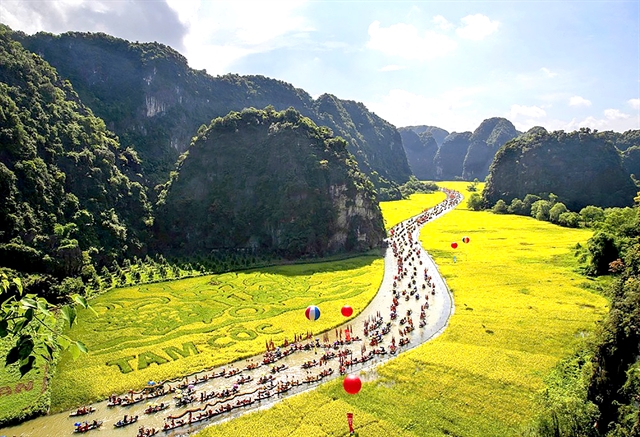 |
| Ninh Bình’s dramatic landscapes have made the province an increasingly sought-after filming destination. — Photo Trần Huấn |
Inner Sanctum: Filming can bring heritage and landscapes to a much wider audience, but it can also put pressure on sensitive sites. How does Ninh Bình balance creative freedom with heritage protection?
Ninh Bình's position is clear: we will not trade the value of heritage for filmmaking activities.
Cinema can help promote and bring greater value to heritage, but such use must remain within the limits established by laws on heritage conservation, environmental protection and landscape management. The most important principle is to protect the original elements and core values of heritage.
For heritage sites and scenic areas, particularly those subject to strict protection requirements, filming must be considered in accordance with the law and the specific management regulations applicable to each location.
We cannot allow the demands of a particular scene to alter or damage original elements, terrain, landscapes, ecosystems or the cultural values of a heritage site.
So when considering support for a production, we do not simply ask whether filming is possible. We have to consider where it should take place, how it should be done, its scale and its potential impact on the heritage.
Requirements concerning equipment, lighting, vehicles, set construction, the number of people involved, filming schedules and movement within heritage areas all need to be carefully assessed according to the characteristics of each location.
In creating more favourable conditions for film crews, Ninh Bình always puts heritage conservation, landscape and environmental protection and respect for local communities first. Supporting filmmaking must strike a balance between artistic creativity and the long-term preservation of these values.
Inner Sanctum: The country increasingly views culture as an endogenous resource and a driver of sustainable development. How does Ninh Bình see cinema contributing to that broader vision?
Ninh Bình has very clear advantages in terms of its heritage system, natural landscapes, cultural spaces and community life. However, to turn the advantage of having attractive locations into an advantage in the film industry, we need to move from simply having beautiful scenery for filmmakers to creating a professional production environment capable of supporting the full range of activities involved in a film project.
Cinema can create value well beyond the screen. A production can boost a destination, stimulate tourism, create demand for local services and provide employment opportunities. At the same time, it can contribute to raising awareness of heritage and encouraging people to appreciate and protect local cultural values.
That is why Ninh Bình's goal is to build an environment in which filmmaking can become connected with tourism, businesses, local communities and the cultural industries.
Inner Sanctum: What are the province’s priorities in building that professional environment?
First, the province will continue improving mechanisms for coordinating with and supporting film crews. Producers coming to Ninh Bình should be able to access information about locations, procedures, filming conditions and related services conveniently and transparently. There should also be a clear coordination mechanism linking cultural and tourism authorities, local administrations, heritage managers and other relevant agencies.
The goal is to reduce unnecessary time and costs for productions while still ensuring proper management and meeting conservation requirements.
Second, the province plans to develop a database of filming locations in Ninh Bình. It would provide not only images but also information on the characteristics of each location, accessibility, infrastructure, suitable filming periods and requirements concerning heritage and environmental protection, as well as available support services.
This would be an important tool for promoting Ninh Bình more professionally to domestic and international producers.
Third, we will continue connecting local businesses with film crews and strengthening social mobilisation and public-private partnerships. In the longer term, the province is also studying ways to attract resources for film studios and other spaces to support film production.
We want the province to become a professional film-production destination with suitable infrastructure, human resources, services and support mechanisms.
When that happens, each film project will leave behind more than beautiful images of Ninh Bình. It can generate tangible value for tourism, businesses, workers, the cultural industries and heritage conservation. That is the direction we want to gradually pursue in the years ahead. VNS
Inner Sanctum
 Inner Sanctum
 Inner Sanctum
 Inner Sanctum
 Inner Sanctum
 Inner Sanctum
 Inner Sanctum
 Inner Sanctum
 Inner Sanctum
 Inner Sanctum
 Inner Sanctum
 Inner Sanctum
 Inner Sanctum
 Inner Sanctum
 Inner Sanctum