.jpg) Society
Hà Nội changes mindset in attracting high-quality capital
1.
 |
| Artisans in Sơn Đồng, Hà Nội, meticulously crafting fine wood-carved artworks. |
HÀ NỘI — With more than 1,350 craft villages and villages with traditional trades, Hà Nội boasts a rich cultural resource for developing cultural industries and creative tourism. Preserving traditional craftsmanship while innovating products, expanding visitor experiences and reaching new markets is opening up fresh opportunities for the capital’s craft villages.
From traditional craftsmanship to creative spaces
Hà Nội is home to a wealth of long-established handicrafts, embodying sophisticated techniques and cultural identities passed down through generations. From Bát Tràng ceramics and Vạn Phúc silk to Chuyên Mỹ mother-of-pearl inlay and Sơn Đồng wood carving, each product is more than a functional item; it tells a story of Vietnamese history, people and cultural life.
As of October 2026, Hà Nội had more than 1,350 craft villages and villages with traditional trades, including 337 officially recognised craft villages, traditional craft villages and traditional trades. However, urbanisation and growing market pressures are making it increasingly urgent to preserve cultural heritage while creating sustainable livelihoods for local artisans.
The recognition of Bát Tràng, Vạn Phúc, Chuyên Mỹ and Sơn Đồng by the World Crafts Council as members of the World Crafts Cities Network has opened up new opportunities to promote their products, expand markets and strengthen international connections.
Nguyễn Đình Hoa, Deputy Director of the Hà Nội Department of Agriculture and Environment, said the recognition was significant in preserving and promoting traditional craftsmanship while affirming the reputation and creativity of the capital’s craft villages.
Nguyễn Thị Thùy Hương, Vice Chairwoman of the People’s Committee of Chuyên Mỹ Commune, said the recognition would help the locality promote its image and develop experiential tourism, enabling visitors to gain a deeper understanding of the village’s history, culture and people. In Vạn Phúc, artisan Lê Thị Kim Thư emphasised that the value of silk lies not only in the finished product but also in the intricate techniques and painstaking work behind every piece of fabric.
Meanwhile, Cao Văn Tâm, Vice Chairman of the People’s Committee of Sơn Đồng Commune, said the locality hoped to combine the preservation of wood carving with cultural tourism, allowing visitors to learn about the history and religious beliefs of the local community.
These initiatives will help enrich Hà Nội’s cultural identity as a member of UNESCO’s Creative Cities Network. According to Trần Thị Thủy, Deputy Director of the Centre for Chinese Studies at the Institute for Asia-Pacific Studies under the Vietnam Academy of Social Sciences, the system of craft villages, cultural heritage and human resources in rural areas provides a foundation for developing creative models rooted in local culture.
In practice, Bát Tràng is working towards a “living museum” model, where visitors can try their hand at pottery and learn about the village’s history. Artisan Hà Thị Vinh, Chairwoman of the Hanoi Handicraft and Craft Village Association, said the initiative aims to tell stories of tradition, community life and the preservation of craftsmanship within the village’s historic setting.
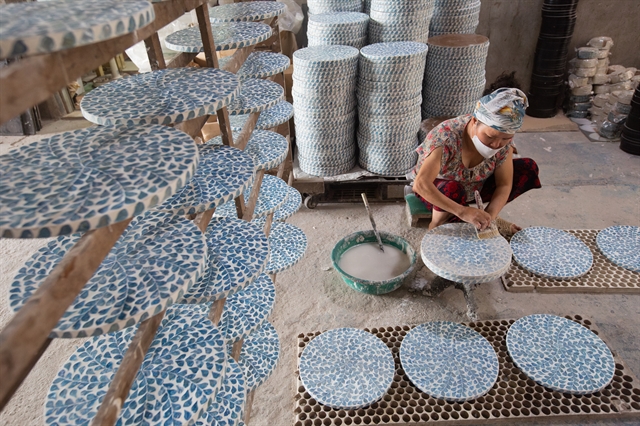 |
| Experienced artisans in Chuyên Mỹ, Hà Nội, preserve traditional mother-of-pearl inlay and lacquerware craftsmanship while developing products that combine aesthetic value with Vietnamese cultural identity. |
Innovation for Sustainable Development
Keeping traditional crafts alive requires conservation to go hand in hand with innovative design, improved quality and adaptation to market demand. Associate Professor and Doctor Đặng Mai Anh, former acting Vice Rector of the University of Industrial Fine Arts, said artisans should work with designers, universities, research institutes and businesses to combine traditional techniques with professional expertise and market research.
Digital transformation also offers new opportunities for product promotion. According to Doctor Nguyễn Nhật Quang, Director of the Institute of Science and Technology under the Vietnam Software and IT Services Association (VINASA), the cultural stories behind products help establish distinctive brand identities. Integrating QR codes enables consumers to learn about product origins, manufacturing processes and their associated cultural values.
Craft tourism, meanwhile, needs to move beyond sightseeing and shopping to offer more meaningful experiences.
Nguyễn Tiến Đạt, Vice Chairman of the Hanoi Tourism Association and Director of AZA Travel, said visitors were increasingly interested in making pottery themselves, learning traditional techniques and talking with artisans.
For such initiatives to succeed, experiential programmes must be professionally organised, linked with travel companies and supported by reliable service quality. More importantly, the economic benefits must be shared fairly with the communities that directly preserve these crafts.
Professor and Doctor Từ Thị Loan, Chairwoman of the Vietnam Association for Cultural Development, stressed that local residents and artisans should be involved at every stage, from developing ideas and designing products to organising production and accessing markets. Transparent cooperation mechanisms would encourage communities to take a more active role in preserving and promoting their heritage.
The cultural values accumulated over generations are an important resource for developing cultural industries, tourism and creative design. The key is to turn the distinctive strengths of each craft village into products and services with greater added value and stronger market appeal.
Hà Nội aims to develop 10 craft-village tours or tourism routes by 2030, with at least three craft villages linked to tourism, while digitising 300 products. The city is also supporting craft villages in building brands and establishing intellectual property rights.
Progress should be measured not only by the number of digitised products or brands receiving support, but also by the ability to expand markets, increase incomes and improve the livelihoods of craft workers.
When heritage preservation is combined with innovation and local communities benefit from development, traditional crafts can do more than survive. They can become a driving force for the capital’s cultural industries, tourism and sustainable development. — VNS
* This article was produced in collaboration with the Hà Nội Department of Agriculture and Environment.
Society
 Society
 Society
 Society
 Society
 Society
 Society
 Society
 Society
 Society
 Society
 Society
 Society
 Society
 Society

.jpg)




