 Society
Police rescue two foreign tourists lost in Đà Nẵng forest
1.
|
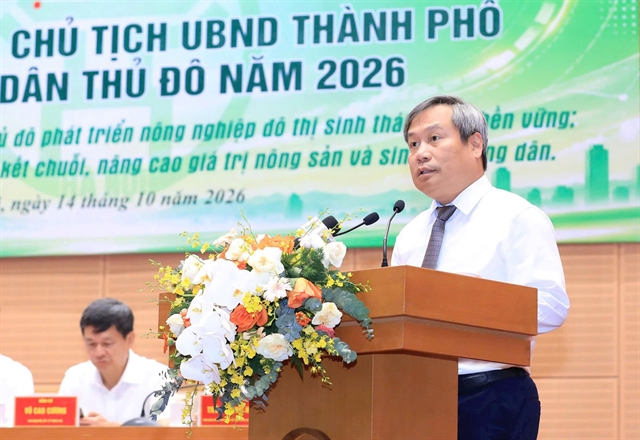
| Chairman of the Hà Nội People’s Committee Vũ Đại Thắng speaks at the conference. — VNS Photos Ngọc Yến |
HÀ NỘI — Chairman of the Hà Nội People’s Committee Vũ Đại Thắng has emphasised that land clearance must be linked with vocational training, job creation and long-term livelihoods for residents.
Speaking at the 2026 Dialogue Conference with Farmers, which was held on Wednesday by the Hà Nội People’s Committee, Thắng called for urban development to be harmonised with the preservation of ecological spaces, traditional craft villages and rural culture.
He confirmed the capital was entering a new stage of development, with requirements to accelerate economic growth, invest in infrastructure and reorganise urban space.
Some agricultural land will be converted to serve urban, industrial, service-sector and infrastructure development. The rural labour structure will continue to change as many villages gradually become part of the urban landscape.
This is an inevitable trend, but it must be implemented well, ensuring harmony between development requirements and the legitimate interests of the people, said Thắng.
“We cannot focus only on compensation and support plans when land is acquired, while failing to provide long-term livelihood plans for the people,” he said.
He asked for clarity on what farmers will do after losing their production land, where their new sources of income will come from and what kind of training and job opportunities will be available to their children.
For households and farms that must be relocated, the city must review their needs and guide them in selecting production sites that comply with planning and environmental regulations.
The Department of Home Affairs is assigned to work with training institutions, businesses, the Farmers’ Union and local authorities to organise vocational training linked to actual recruitment needs, with particular attention on middle-aged and older workers.
Urban areas and industrial parks also need to plan space for commerce, services and job creation for local residents.
Thắng urged the city's competent authorities to pay attention to the “village in the city, city in the village” model in urban planning and development.
Modernisation does not mean eliminating traditional rural values. Ancient villages, craft villages, community cultural spaces and ecological landscapes need to be preserved and used appropriately, while being equipped with additional infrastructure and services to improve quality of life.
New urban areas also need to include green and ecological spaces, as well as community cultural activities connected to local traditional values. These elements must be considered from the planning stage.
On agricultural development, the chairman acknowledged the results achieved by models applying high technology, sustainable agriculture, the cooperative economy and value-chain linkages.
The New Rural Development Programme, One Commune One Product (OCOP) development and the preservation of craft villages have also contributed to improving living standards and transforming the countryside.
|
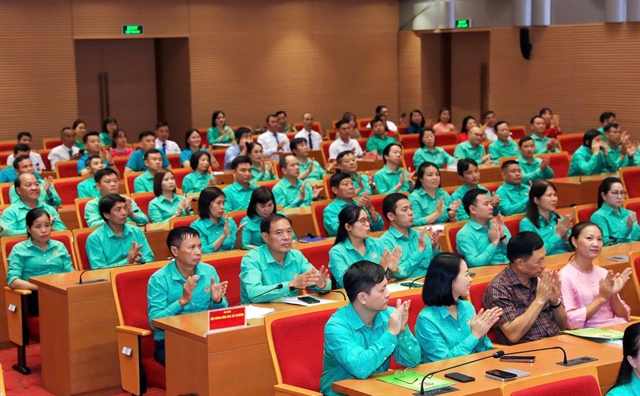
| Delegates attend the event to discuss higher agricultural product value and secure livelihoods for farmers. |
High-value agriculture
According to the Chairman of the Hà Nội People’s Committee, the capital’s agriculture needs to be placed within the city’s overall development and linked with the Capital Region.
With advantages in markets, science and technology, human resources and distribution systems, Hà Nội needs to shift from an agricultural production mindset to an agricultural economy mindset, focusing on quality, added value and efficient land use.
The city aims to develop ecological agriculture, high-tech agriculture, high-quality commodity production and the circular economy; encourage the use of by-products and develop biosecure livestock farming and waste management.
Traditional craft villages need support in terms of land, infrastructure, environmental treatment, technological innovation, brand building and market expansion.
Developing craft-village tourism, experiential spaces and product showcases will also help create jobs, increase incomes and preserve cultural identity.
The city has called for digital transformation suited to the scale of farmers’ and cooperatives’ production, as well as support for connecting production data, product traceability and technology access, while avoiding unnecessary administrative procedures.
The Department of Industry and Trade will work with the Department of Agriculture and Environment to review needs for preliminary processing, processing, preservation and logistics in concentrated production areas, as well as strengthening links with distributors, supermarkets, wholesale markets and retail systems.
Thắng said that task implementation must ensure clear assignments, clear responsibility holders, clear responsibilities, clear deadlines and clear results, with the effectiveness of problem-solving and people’s satisfaction as the metrics of success.
The goal is to help people continue prospering from agriculture in areas with advantages, while also providing opportunities to change careers and participate in new economic sectors when their production land is acquired.
The development of capital must go hand in hand with preserving ecological space, rural landscapes, craft villages and the distinctive cultural values of Thăng Long-Hà Nội.
The commitments made at the conference needed to be turned into concrete solutions at the grassroots level, helping farmers stabilise their lives, increase their incomes and share in the benefits of the city’s development, he said. — VNS
Society
 Society
 Society
 Society
 Society
 Society
 Society
 Society
 Society
 Society
 Society
 Society
 Society
 Society
 Society