 Society
Green credit and carbon market critical to boosting climate finance
1.
|
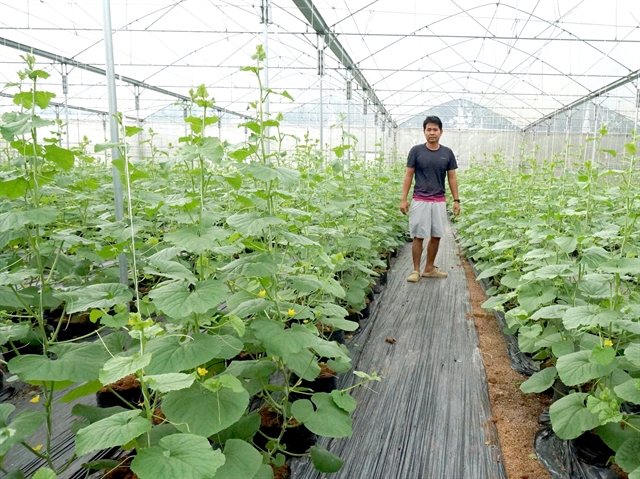
| A melon farm owned by Nguyễn Văn’s household in Thiện Hưng Commune, Đồng Nai City and equipped with a high-tech system managed using smart software has proved effective. — VNA/VNS Photo |
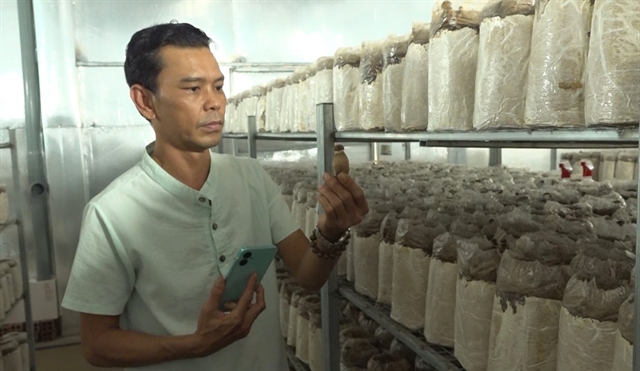
ĐỒNG NAI — For Huỳnh Tấn Việt in Đồng Nai City, growing mushrooms no longer depends mainly on experience and manual labour.
At his black ant mushroom farm in Lộc Ninh Ward, he monitors and adjusts temperature and humidity through a smartphone-controlled system.
Previously, even a sudden temperature change could affect mushroom quality. Production relied heavily on experience, and tending the crop took considerable time and effort.
Việt invested in an enclosed, temperature-controlled growing facility. Now, even when away from the farm, he can check conditions and adjust them promptly using his phone.
“I have been using this model for more than a year and have seen quite clear results,” he says.
Better control of growing conditions has helped the mushrooms grow more evenly, improve quality consistency, and reduce losses, he says.
Việt Farm Co-operative, which he runs, now has three mushroom houses and produces nearly 7.5 tonnes per crop.
His experience illustrates how digital tools are changing farming in the southern city.
|
| Huỳnh Tấn Việt tends to black ant mushrooms at his farm in Lộc Ninh Ward. — VNA/VNS Photo |
But growing better mushrooms is only part of the challenge. For farmers and co-operatives, finding customers and securing regular sales matter just as much.
At Thái Hòa Phát Co-operative in Bình Phước Ward, digital tools help potential partners and customers learn about its produce and its supply capacity.
The ward has launched the “Bình Phước Digital Co-operative” website to promote products and services, showcase successful businesses, and provide information on government policies.
Phạm Thị Thanh Tâm, chairwoman of Thái Hòa Phát Co-operative, says the platform should do more than provide administrative information and help co-operatives do business.
It should set out how much the co-operative produces and can supply, its food safety certifications, where it sources its produce, and the partnerships it is seeking, she says.
This information can help co-operatives find suppliers, reach new markets, and identify potential business partners.
The move from simply producing goods to actively marketing them online reflects a broader change in how farmers sell their produce.
For the Hàng Gòn Beekeeping, Trading and Services Agricultural Co-operative in Hàng Gòn Ward, online sales have become part of its efforts to reach more customers.
Nguyễn Thị Đào, a representative of the co-operative, says it is developing a varied range of honey products and has taken part in trade promotion programmes to showcase them and find buyers further afield.
It has also stepped up sales through e-commerce platforms and social media.
These efforts have helped the co-operative sell 20 tonnes of honey a year, along with about 20 processed products.
Online channels account for an important share of sales, Đào says.
The city’s co-operative alliance has supported these efforts through trade promotion programmes, fairs, exhibitions, introductions to potential business partners, and product marketing. It has also organised training in technology, management, and online sales.
Vy Vũ Hồng Thảo, deputy chairwoman of the alliance, says these activities have helped co-operatives reach consumers, businesses, distributors, and other buyers, particularly those seeking agricultural produce and goods made under the national One Commune – One Product (OCOP) programme.
But selling through larger distribution networks requires more than putting products online; co-operatives must meet buyers’ requirements for quality, price, packaging, traceability, and supply quantities, she says.

|
| A livestream sale takes place at the Bình Tân Commune stall during the Đồng Nai City Golden Cashew Festival 2026, held in Đồng Tâm Commune from May 22 to 24. — VNA/VNS Photo |
Building stronger links
This points to a broader challenge for agriculture in Đồng Nai: technology can improve production and open new sales channels, but lasting growth depends on stronger links between farmers, co-operatives, businesses, and consumers.
The city aims to sell more than 70 per cent of its main agricultural products through linked networks of producers, processors, and distributors. Expanding the areas supplying these networks, improving processing, and finding new markets are therefore increasingly important.
Digital platforms can help build these links by making production information easier to access and enabling co-operatives, farms, and farming households to promote their products beyond local markets.
These efforts support the goals of the Politburo’s Resolution No. 57, issued in December 2024, which calls for advances in science, technology, innovation, and digital transformation across the country.
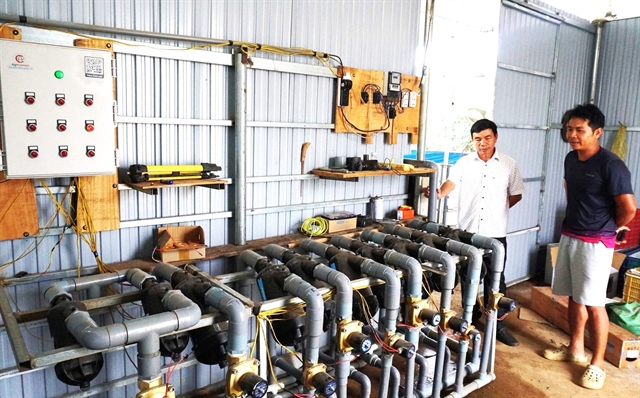
|
| A smart irrigation and fertiliser management system controlled by smartphone at Nguyễn Văn’s household in Thiện Hưng Commune. — VNA/VNS Photo |
For farmers, however, digital tools ultimately matter for the gains they bring to production and sales.
Việt is taking part in the 2026 “Digital-era Đồng Nai Farmers” competition, which has attracted entries from 95 communes and wards. The entries cover fruit growing, livestock farming, OCOP-programme products, high-tech agriculture, and online marketing of farm produce.
Besides improving his family’s income, Việt’s mushroom business has also created jobs and encouraged others to try new ways of working.
He has also helped local farmers, particularly older people, learn to use smartphones to manage production, giving them greater confidence to explore new business opportunities.
Phạm Văn Minh, deputy chairman of the Lộc Ninh Ward Farmers Association, says digital tools are significantly changing how local farmers work.
“Việt’s use of technology to operate the co-operative demonstrates farmers’ capacity for innovation in the digital age and contributes to the development of greener and more sustainable agriculture in the city.” — VNS
Society
 Society
 Society
 Society
 Society
 Society
 Society
 Society
 Society
 Society
 Society
 Society
 Society
 Society
 Society