 Society

Wood businesses face cash-flow strain over VAT refunds
1.
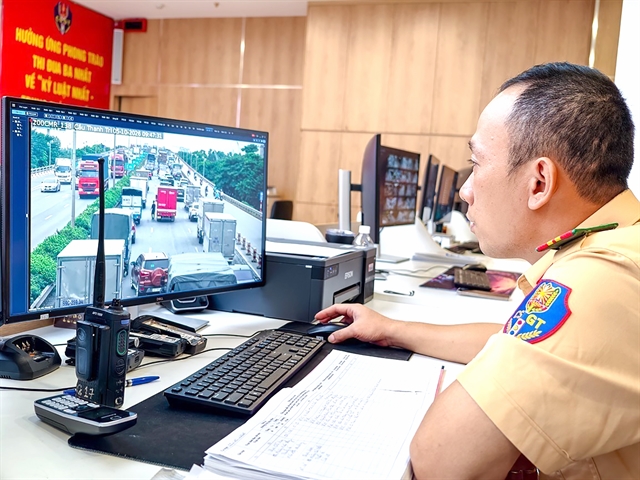 |
| Officers from the traffic control station monitor traffic conditions via surveillance cameras near the Thanh Trì Bridge in Hà Nội. — VNA/VNS Photos Trung Nguyên |
HÀ NỘI — From surveillance cameras to 23 'green wave' routes with coordinated traffic signals, Hà Nội is increasingly using AI and digital data to manage traffic, detect congestion and address urban bottlenecks.
The move is part of the city’s efforts to put Politburo Resolution 57-NQ/TW on breakthroughs in science and technology, innovation and national digital transformation into practice.
At the traffic control team under the capital city police department's Traffic Police Division, images from major roads, intersections and bridges are monitored in real time. Thanh Trì and Thăng Long bridges, Ngã Tư Sở intersection, Đàm Quang Trung Street and other key corridors are among the locations under continuous surveillance.
The camera system is no longer used solely for recording. Integrated with AI, the traffic control centre and signal systems, it enables officers to monitor traffic flows, detect violations and identify potential congestion early.
According to the Traffic Police Division, the traffic monitoring and management system operates 24 hours a day. From September 16 to 29, officers used the system to monitor key roads and intersections and coordinate with units on the ground to regulate traffic and respond to incidents.
The division currently manages traffic signals at 564 intersections and maintains 23 green wave routes, in which traffic signals are timed to allow for continuous traffic flow, along major corridors, including Hàng Bông, Bà Triệu, Ngô Quyền, Trần Hưng Đạo, Võ Chí Công, Hoàng Quốc Việt, Âu Cơ-An Dương Vương, Trần Duy Hưng, Cổ Linh and Phạm Văn Đồng streets.
Real-time camera feeds allow officers to identify where vehicles are accumulating, assess the severity of congestion and determine possible causes, said Lieutenant Colonel Bùi Thị Thơm.
They can then adjust traffic signals, reroute vehicles or deploy personnel to the scene. The system has also significantly improved the detection of traffic violations.
Between September 16 and 29, it identified 7,813 violations, including 3,659 cases of driving in the wrong direction, 3,205 cases of riding without helmets, 389 cases of stopping or parking where prohibited and 265 cases of failing to obey traffic signals.
During the same period, the Traffic Police Division provided or extracted footage on 34 occasions for other Hà Nội Police units to support investigations into security and public order cases, traffic accidents and violations involving urban order and environmental sanitation.
Beyond immediate enforcement, accumulated traffic data can help authorities identify recurring congestion hotspots and adjust traffic organisation plans.
According to figures released by the city in mid-2026, 39 of 51 congestion hotspots had been addressed, while solutions are being sought for the remaining 12 locations.
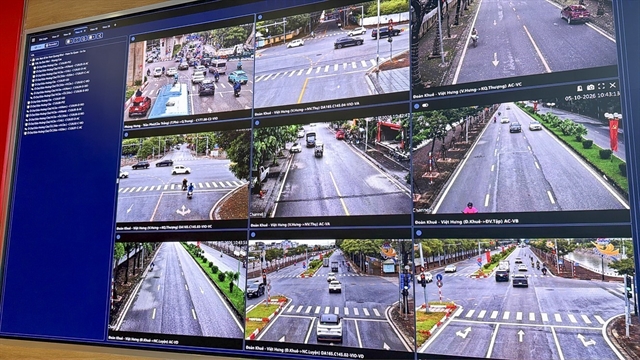 |
| Cameras help traffic police monitor traffic in real time and quickly detect potential congestion and incidents. |
Technology is increasingly helping authorities move from reacting to congestion to anticipating it. Real-time monitoring enables earlier detection of traffic build-ups, while data from the system provides a basis for adjusting signal cycles and traffic flows.
The capital city is also expanding its smart traffic infrastructure.
According to information released by the Hà Nội Police in late September, the city is deploying more than 21,671 AI cameras along 993 major inner-city roads and at 3,129 locations and intersections without traffic signals.
The city aims to complete the transmission infrastructure, installation and peripheral equipment by December 31, making the system ready for operation.
The growing integration of cameras, traffic signals, control centres and data analysis is gradually creating a more data-driven model of traffic management in Hà Nội. — VNS
Society
 Society
 Society
 Society
 Society
 Society
 Society
 Society
 Society
 Society
 Society
 Society
 Society
 Society
 Society