 Society

Public security ministry proposes new law to tackle online fraud, deepfake identity abuse
1.
|
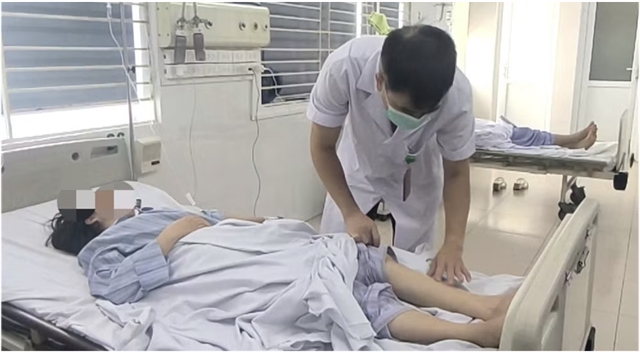
| A patient infected with dengue fever being treated in the National Hospital for Tropical Diseases. VNA/VNS Photo |
HÀ NỘI — The final months of the year and the seasonal transition often bring an increased risk of outbreaks of infectious diseases, as travel, trade and large gatherings become more frequent.
Infectious diseases that tend to increase during this period include seasonal influenza, dengue fever, hand, foot and mouth disease, measles, chickenpox, acute diarrhoeal diseases and other respiratory infections.
According to the Ministry of Health, since earlier this year, the country has recorded more than 94,000 cases of dengue fever including 14 deaths; 74,000 cases of foot-and-mouth disease (11 deaths); nearly 5,200 cases of rash with fever suspected to be measles; 242 cases of viral encephalitis (1 death); 34 cases of meningococcal meningitis (5 deaths); and 54 deaths from rabies.
Notably, among infectious diseases, cases of dengue fever have been continuously increasing in many localities nation-wide, especially in the rainy season that is a good condition for disease-transmitting striped mosquitoes to breed.
HCM City recorded more than 1,400 cases of dengue fever and 1,500 cases of foot-and-mouth disease from September 21 to 27.
The HCM City Tropical Disease Hospital has received cases of dengue fever progressed to a severe stage despite the patients being young.
Two patients, aged 16 and 21, required intensive care; one required extracorporeal membrane oxygenation (ECMO) for over a month, while the other underwent continuous renal replacement therapy for 45 days. In September alone, the hospital recorded the death of a 20-year-old patient due to dengue fever.
At the National Hospital for Tropical Diseases, doctors have recently recorded a steady stream of dengue cases with varied clinical presentations. Some patients developed the disease after returning from areas where cases had been reported, while others contracted it in their local communities.
Dr Nguyễn Thanh Bình, deputy head of the Department of Viruses and Parasites at the National Hospital for Tropical Diseases, said dengue fever can also easily be mistaken for common viral infections because they share symptoms such as fever, headache, body aches and fatigue.
Some patients may also develop a cough or sore throat. If the disease is not detected and monitored properly, it can progress to a critical stage, characterised by a drop in platelet levels, increased vascular permeability, haemoconcentration and a risk of bleeding and shock.
In addition, travelling to, living in or caring for patients in areas with a high number of dengue cases without taking measures to prevent mosquito bites can increase the risk of infection.
To proactively prevent dengue fever, the Ministry of Health recommends that people take measures to avoid mosquito bites and eliminate mosquito breeding sites.
In daily life, people should regularly clean their surroundings, clear overgrown vegetation and remove items that can collect stagnant water. Water containers should be turned upside down or kept tightly covered when not in use.
Regarding hand, foot and mouth disease, doctors noted that the disease can progress rapidly. Parents should take children to hospital immediately, even during the night, if they develop a high fever that is difficult to reduce accompanied by symptoms such as frequent vomiting, lethargy or trembling of the hands and feet, so that they can receive timely treatment.
Children with hand, foot and mouth disease should stay home from school and be kept away from other children. They should not be taken to playgrounds or crowded places to prevent the disease from spreading to others. VNS
Loading rewrite
Society
 Society
 Society
 Society
 Society
 Society
 Society
 Society
 Society
 Society
 Society
 Society
 Society
 Society
 Society