 Society

Exotic Food Showcases Its Position as a Leading Global Sriracha Producer and Exporter at SIAL Paris 2026
1.
|
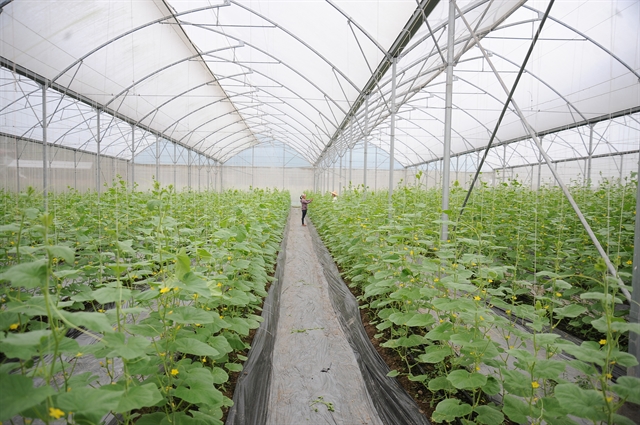
| Gherkins grown in a greenhouse in Hiệp Hòa Ward in Bắc Ninh City. — Photos courtesy of the City Department of Culture, Sports and Tourism. |
BẮC NINH — Bắc Ninh aims to have all specialised agricultural databases developed, digitised, connected and shared by 2030, as the northern localitiy accelerates the application of science and technology and digital transformation in farming.
All growing-area codes and packing facilities serving agricultural exports will be managed on digital platforms.
Vice Chairman of the Bắc Ninh People’s Committee Lê Xuân Lợi said the city will accelerate the application of science and technology and digital transformation in agricultural production.
By 2030, more than 60 per cent of concentrated production areas are expected to use electronic production logs and traceability systems, while more than 60 per cent of large-scale livestock farms will be updated and managed through the national livestock database.
|
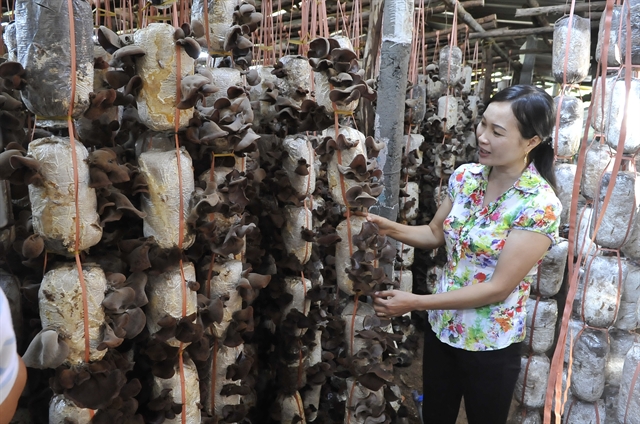
| A wood-ear mushroom production model in Bãi Cả Village, Tiên Lục Commune in the city. |
The city also aims to have more than 80 per cent of its OCOP (One Commune One Product) products promoted and sold through digital platforms, while all high-tech, smart and circular agriculture models and safe production models linked to multi-value chains will be developed.
To achieve these targets, the city will prioritise the application of artificial intelligence (AI), the Internet of Things (IoT), big data, blockchain, biotechnology, remote sensing, geographic information systems, drones, smart sensors, automation and robotics in agricultural production and management.
Businesses, cooperatives and farmers will be encouraged to invest in technological innovation and adopt high-tech, smart, precision, organic and circular farming models, as well as low-emission production.
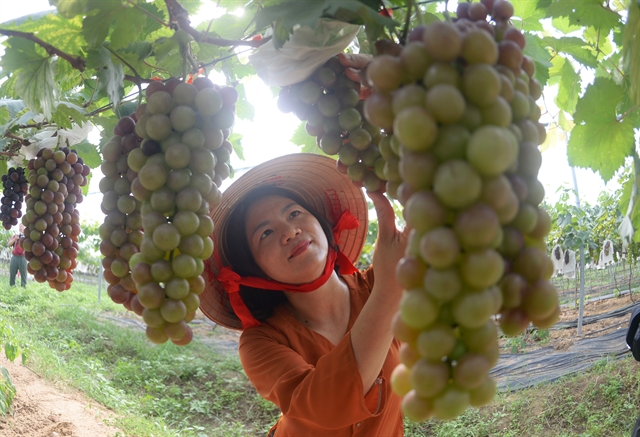
|
| Grapes grown in Hiệp Hòa Ward in Bắc Ninh. |
The city plans to establish concentrated production areas where science, technology and digital solutions are integrated throughout agricultural value chains.
In crop production, the city will promote new varieties with high yields and quality, resistance to pests and diseases, and greater resilience to climate change.
Biotechnology will be expanded in crop breeding and propagation, while digital databases on crops, pests, growing areas and packing facilities will support production management and product traceability.
Digital maps and electronic production logs will also be developed to improve monitoring and administration.
In livestock farming, veterinary services and aquaculture, the city will build and connect digital databases covering farms, herds, breeding establishments, slaughterhouses, disease-free zones, animal feed businesses and aquaculture areas.
AI, IoT, automated sensors and other digital technologies will be used to monitor livestock, diseases, food safety and environmental conditions, while providing early warnings of disease outbreaks and pollution risks.
The city will also expand smart, high-tech, circular and low-emission livestock models and apply digital technologies to animal quarantine, slaughter control and traceability.
At the farm level, producers say technology is already helping improve efficiency and quality.
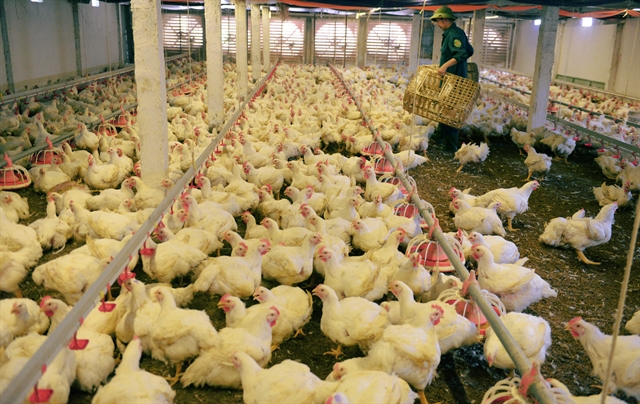
|
| An industrial chicken farm in Tân An Ward in the city. |
Lư Thị Quý, production manager at ADENCO Medicinal Mushroom Co., Ltd. in the city's Mỹ Thái Commune, said experience gained through cultivation had highlighted the importance of selecting raw materials and, above all, choosing high-quality varieties.
“Selecting the right variety is the most important step in producing high-quality strains that deliver high economic value and the highest possible levels of medicinal compounds in the mushrooms,” she said.
In the inoculation stage, they use inoculation machines, which are more efficient and faster than the traditional manual method. During cultivation, they also use misting systems to control humidity and deal with any problems that arise during the growing process, she said.
Vũ Trí Đức, a resident of Hồng Sơn residential quarter in the Tân An Ward, said growing melons in high-tech greenhouses required careful management from soil preparation through to nutrition and pest control.
First, they need to assess whether the soil and growing conditions are suitable. If the soil lacks sufficient nutrients, they need to apply basal fertiliser, including high-quality organic fertilisers imported from countries such as Japan, including slow-release varieties, he said.
During cultivation, pest and disease management is also essential, as outbreaks can reduce both yields and fruit quality.
Another important factor is providing balanced nutrition throughout the growing cycle.
Different melon varieties require different nutrient levels, which can be delivered through a drip-irrigation system.
Lương Đức Kiên, Deputy Head of the city's Livestock Production, Veterinary Services and Fisheries Division, said livestock farming had been identified as a key driver of agricultural growth.
The agency has developed and implemented plans to advise municipal authorities and the Department of Agriculture on measures to further develop livestock production.
The focus is on promoting industrial-scale farming, applying high technologies and adopting biosecure production processes to ensure disease safety, while proactively securing sources of breeding stock and animal feed and applying disease-prevention measures suited to local conditions, he said. — VNS
Society
 Society
 Society
 Society
 Society
 Society
 Society
 Society
 Society
 Society
 Society
 Society
 Society
 Society
 Society