 Society

Triton Crown launch draws more than 400 prospective buyers
1.
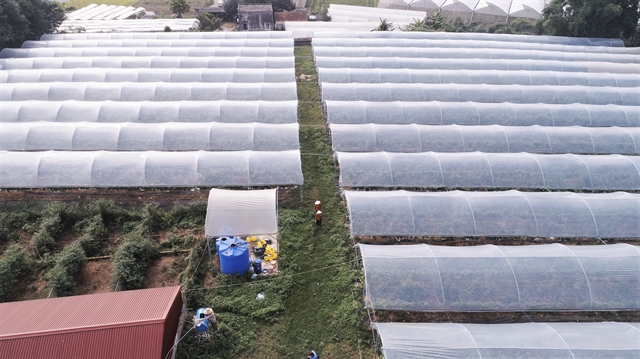 |
| High-tech agricultural greenhouses at Đồng Tâm 3 Cooperative, Hiệp Hòa Commune. |
BẮC NINH — Bắc Ninh is stepping up investment in digital infrastructure and data systems as it seeks to strengthen its position as a leading digital economy hub.
The northern industrial hub will focus on building modern, interconnected digital infrastructure and improving data management as part of a broader push to support economic growth, said Mai Sơn, Vice Chairman of the People's Committee.
“Breakthrough action, widespread results” is the guiding principle as authorities work to upgrade the digital architecture and expand a shared geographic information system (GIS).
The locality aims to use digital infrastructure and data as key drivers of a new growth model while maintaining its position among coutry's leaders in digital transformation.
For 2026, authorities plan to develop unified digital platforms and infrastructure, with a focus on interoperability, data reuse, information security and cybersecurity.
They are also reviewing plans for passive telecommunications infrastructure following the merger with neighbouring Bắc Giang Province, with the aim of aligning the network with provincial, urban and land-use planning.
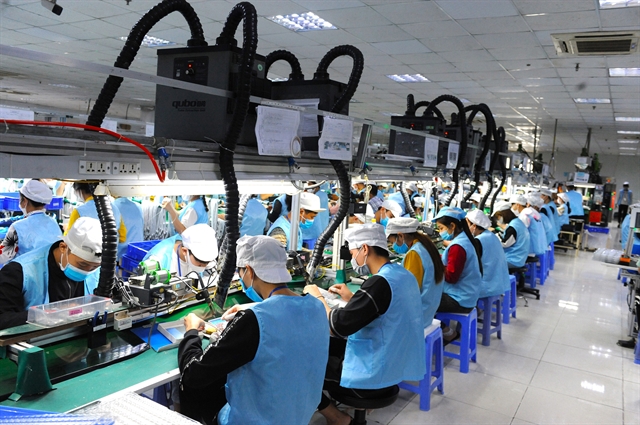 |
| Electronic component manufacturing at Suntech-JSC, a South Korean company, in Thanh Vân Industrial Cluster. |
A smart-city project is also being developed, while authorities are studying the possibility of piloting a digital twin once requirements set by central agencies are met.
5G coverage tops 92 per cent
Telecommunications networks, data systems, the Internet of Things and other digital infrastructure have been identified as priorities for 2026.
Authorities are also working to build databases in line with central government guidance, including a government resolution issued in July 2025 aimed at accelerating data creation for comprehensive digital transformation.
Digital infrastructure is being prioritised in industrial parks and urban areas, while infrastructure sharing among government agencies and other organisations is being encouraged.
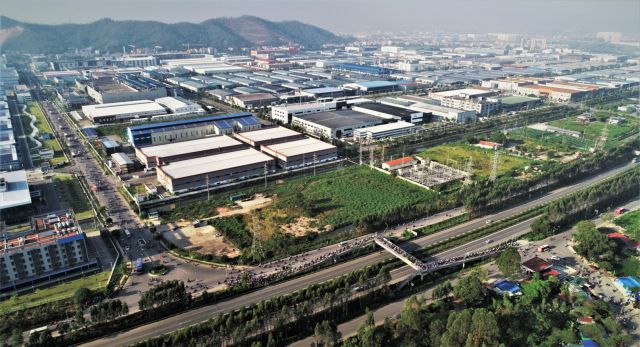 |
| Vân Trung Industrial Park. |
The province also plans to expand 5G coverage, upgrade network connections for government agencies and improve the performance of data centres.
By the end of 2025, 849 5G base stations had been put into operation, bringing coverage to more than 92 per cent of the population, according to official figures.
4G coverage stood at more than 99 per cent, while fibre-optic networks had reached most villages and residential areas and all industrial parks.
The province has set a target of extending 5G coverage to 100 per cent of the population in 2026.
Under the expansion plan, Viettel will deploy 532 5G base stations, VNPT 593 and MobiFone 1,008. The projects combine newly built stations with equipment installed on existing infrastructure.
The expansion is expected to improve telecommunications services and support the development of the digital economy and digital society.
 |
| Farmers in Phượng Sơn Ward livestream the promotion of local lychees to consumers through digital platforms and e-commerce marketplaces. |
From digitisation to data governance
Bắc Ninh is also seeking to move beyond the digitisation of individual services towards more centralised data management.
The year 2026 has been designated a foundation year for the data governance framework, with plans to issue a data strategy, an open-data catalogue, a shared database catalogue and regulations governing the digital data warehouse.
The locality is also one of 16 nationwide to have completed connections between an Intelligent Operations Centre and the national population database, according to officials.
It has piloted 15 real-time, data-driven management scenarios.
 |
| Digital content creators promote Bắc Ninh lychees to consumers nationwide through livestreaming on digital platforms. |
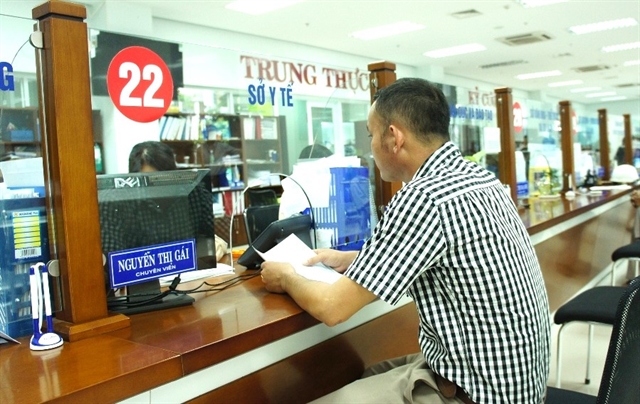
At the Public Administration Service Centre in Mỹ Thái commune, digital infrastructure has already changed the way residents access government services.
“Thanks to the province's support for digital infrastructure and equipment, administrative procedures have become more convenient. There is no longer overcrowding because an automated queue-number system has been installed,” said Hoàng Quang Mạnh the centre's director.
Nguyễn Gia Phong, deputy director of the provincial Department of Science and Technology, said digital infrastructure was essential to the smooth operation of the two-tier local government system and to improving public services.
Better telecommunications networks, shared platforms and secure data systems would allow administrative procedures to be handled more quickly while improving data sharing between government agencies, he said.
 |
| Leaders of Chũ Ward join digital content creators in a livestream from a lychee orchard to promote and sell the fruit. |
The infrastructure would also provide a foundation for technologies such as artificial intelligence, the Internet of Things and big data.
“Investment in digital infrastructure is not only about meeting immediate needs. It also creates a long-term foundation for developing the digital economy and digital society, enhancing competitiveness and promoting sustainable growth,” Phong said.
Authorities are simultaneously seeking investment in research and training facilities, university urban areas and innovation spaces, while developing plans for energy infrastructure, particularly clean and new energy.
Reliable energy supplies will be increasingly important as the area attracts high-tech investment and develops strategic industries.
The push comes as the northern industrial hub seeks to strengthen its role as one of the country's major manufacturing centres while shifting towards higher-value industries and technology-driven growth. — VNS
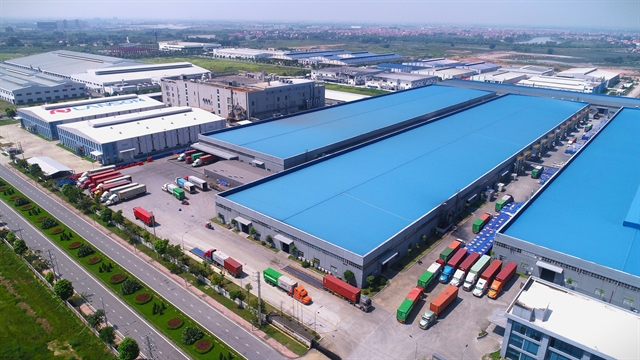 |
| Hòa Phú Industrial Park attracts numerous FDI projects in high-tech industries and the digital economy. |
Society
 Society
 Society
 Society
 Society
 Society
 Society
 Society
 Society
 Society
 Society
 Society
 Society
 Society
 Society


.jpg)




