 Society
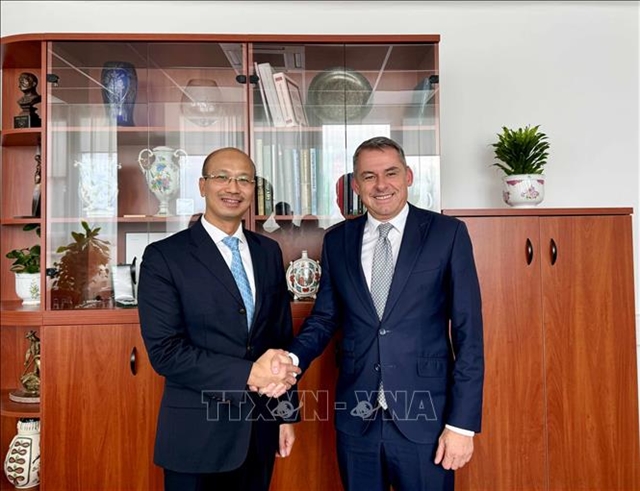
Việt Nam, Switzerland to turn education, sci-tech, innovation into cooperation focus
1.
|
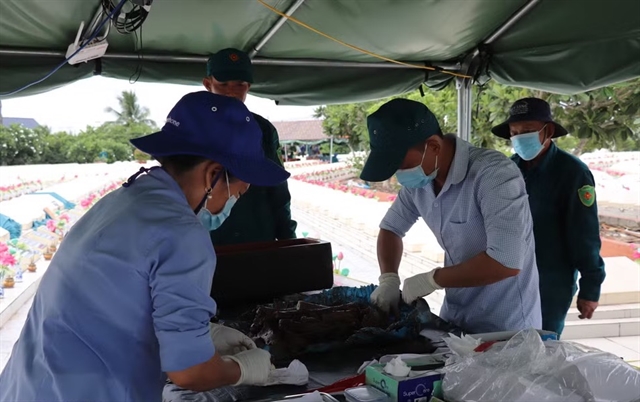
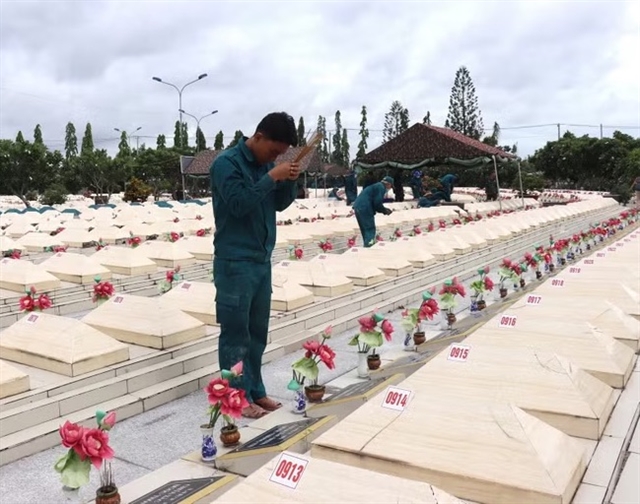
| DNA samples are collected with great care and precision by task forces in Tây Ninh Province. |
TÂY NINH — The southern province of Tây Ninh is executing an unprecedented national campaign to collect DNA samples from unidentified fallen soldiers to offer long-awaited answers to families searching for their loved ones.
In July, amidst white headstones at Tân Trụ-Châu Thành Martyrs' Cemetery, task forces have been working through heat and rain to collect the remains for profiling.
The effort is part of the national "500 Days and Nights" Campaign in a province where tens of thousands of heroes who laid down their lives during past wars for national defence.
At the Tân Trụ-Châu Thành Cemetery, 1,455 out of 3,000 graves remain unidentified.
Exhumation is tough due to layers of reinforced concrete from past upgrades, but the teams remain steadfast.
Châu Văn No, head of the War Veterans Association in Phú Xuân Hamlet, who served in Cambodia from 1987 to 1989, joined the mission to restore identities to his fallen comrades.
"I am truly honoured to take part in this campaign. It is an immense responsibility and an educational lesson in tradition for future generations,” he said.
"We hope these heroic fallen soldiers can be identified and returned to their families and roots. That is why we must work thoroughly and meticulously, to be worthy of their sacrifice."
To support the effort, Tầm Vu Commune has deployed three task forces with 74 members drawn from the militia, medical personnel, youth union, and local volunteers, and they work through weekends with strong community backing.
Nguyễn Thị Bích Tuyền, vice chairwoman of the Tầm Vu Commune People's Committee, said the volunteers regularly provide meals and supplies for workers:
"The overwhelming support from local residents and volunteer groups is truly precious. Their contributions provide a great source of encouragement for our teams.”
Healing generational wounds
For families of the fallen, the campaign offers hopes of closure after decades of searching.
Many have only known their heroic ancestors through fading yellow photographs, preserved wartime letters, and tales passed down through generations.
Huỳnh Văn Giải of Tầm Vu Commune, grandson of soldier Huỳnh Hữu Thời who died in 1950, said his family searched for many years to no avail.
“When my grandmother was alive, her biggest dream was to find his grave and bring him home. With this campaign, we hope my grandfather might be among those finally identified."
Phạm Văn Rấp of Bình Hiệp Commune, nephew of commando Võ Văn Bồi, who died in 1962, recalled his late mother’s unfulfilled wish.
"When my mother was alive, she searched everywhere for him. Now that the Government is launching this DNA identification campaign, we hope for a chance to find my uncle and bring him back for the family to worship."
|
| Task forces in Tây Ninh Province carry out the sample collection meticulously. |
Science, accuracy and responsibility
According to the province’s Steering Committee 515, more than 1,660 personnel on 35 teams are targeting 18,591 unidentified graves in 18 cemeteries.
To ensure maximum accuracy and prevent cross-contamination during testing, strict technical protocols are followed after every single exhumation session.
Task forces perform meticulous auditing, site marking, and immediate sealing of each collected specimen on site.
All technical files and grave coordinates are fully digitalised in a central database for long-term verification.
Strict security measures, including round-the-clock guarding by the military and police, are in place at cemetery storage areas to safeguard every sample.
Between June 4 and July 24, 2026, the province sampled 14,360 graves, or over 77 per cent of the target, and obtained 11,567 viable DNA samples.
The task has been completed in 13 localities.
An initial batch of 8,000 samples will be sent to the Vietnam Academy of Science and Technology for analysis.
Colonel Nguyễn Minh Tấn, deputy head of Steering Committee 515, acknowledged challenges such as severe natural decomposition over time and reinforced grave structures, but said the campaign is on track nevertheless.
"Collecting remains for DNA testing offers a vital opportunity to identify those who sacrificed their lives, fulfilling the wishes of their families, easing generations of grief, and ensuring we honour those who served."
Among rows of unnamed headstones, every sample collected represents an act of reverence — bridging science and gratitude to honour those who made the ultimate sacrifice for the nation. — VNS
Society
 Society
 Society
 Society
 Society
 Society
 Society
 Society
 Society
 Society
 Society
 Society
 Society
 Society
 Society