 Society
Việt Nam, Switzerland to turn education, sci-tech, innovation into cooperation focus
1.
|
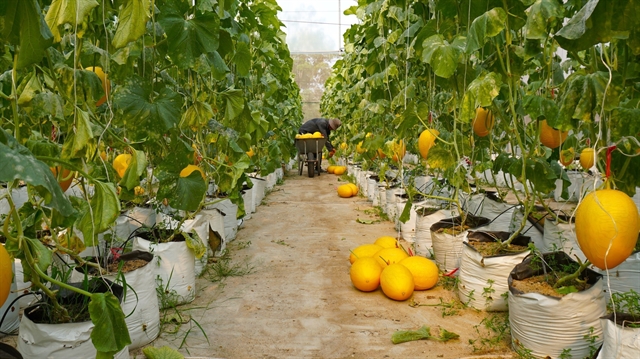
| Farmers in Tây Ninh Province harvest honeydew melons grown in a greenhouse using high-tech farming methods. — VNA/VNS Photo |
TÂY NINH — Tây Ninh Province is accelerating digital transformation in agriculture by expanding the use of artificial intelligence and other high technologies to raise productivity, boost exports, and promote sustainable growth.
Since the Politburo’s Resolution No. 57 was issued in December 2024, on breakthroughs in science, technology, innovation, and national digital transformation, the southern province has quickly translated the policy into practical programmes tailored to local conditions.
According to the province Department of Agriculture and Environment, Tây Ninh is continuing to implement its high-tech agricultural development programme linked to the sector’s restructuring for 2026–30.
It aims to build a modern, environmentally friendly agricultural sector while increasing the value and competitiveness of farm produce.
Đinh Thị Phương Khanh, deputy director of the department, said: “The province is shifting from an agricultural production mindset to an agricultural economy mindset, with science and technology, digital transformation, green transition and the circular economy forming the foundation for restructuring the sector.”
High technology, digital solutions and smart farming will be expanded throughout the production chain, from breeding and cultivation to harvesting, storage, processing and distribution, she said.
Artificial intelligence, along with big data, drones, and environmental monitoring sensors, is being promoted to improve productivity, product quality, and production efficiency.
|
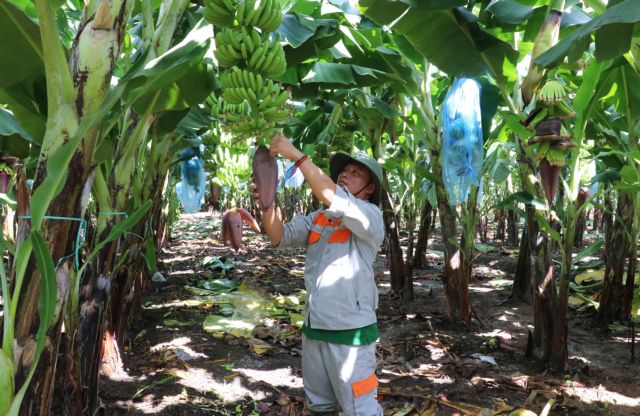
| An automated irrigation and crop management system at a high-tech banana farm in Ninh Điền Commune helps improve productivity and product quality. — VNA/VNS Photo |
In 2026–30, Tây Ninh aims to achieve annual agricultural growth of 3.5–4 per cent, with agriculture accounting for 13–14 per cent of its economy.
More than 60 per cent of key crop-growing areas are expected to adopt high technology, while 10–15 per cent of farmlands will be cultivated to good agricultural practices (GAP) and organic standards.
In livestock farming, 70 per cent of concentrated farms are expected to use modern technology and equipment while meeting environmental protection requirements.
In aquaculture, around 30 per cent of farming areas are expected to apply advanced technologies to monitor water quality and improve product quality.
The province recently introduced a support policy for VietGAP certification covering 15 agricultural and aquatic products, including yam, lotus, cassava, sugarcane, beef cattle, catfish, frogs, eels and softshell turtles.
Eligible producers will receive full support for soil, water, and air testing required for VietGAP certification, along with training and first-time certification costs.
Khanh said: “Expanding VietGAP support for local speciality products will encourage farmers, co-operatives and businesses to improve production standards and develop concentrated production areas with product traceability, meeting increasingly stringent requirements in domestic and export markets.”
The province is also promoting deep processing and market development.
It aims to earn US$1.5 billion from agricultural, forestry, and fisheries exports this year while expanding access to overseas markets and meeting stricter requirements on product traceability, technical standards, and food safety.
|
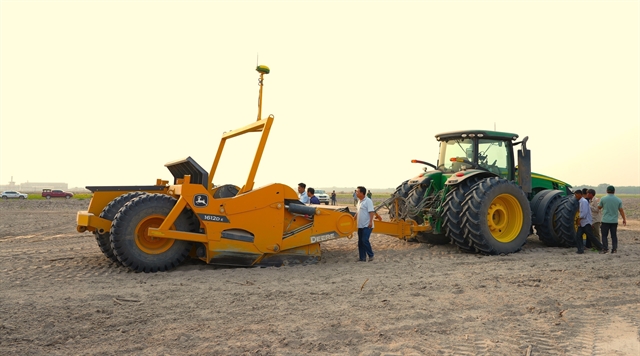
| Farmers in Tây Ninh Province apply mechanisation throughout the production process on large-scale agricultural fields. — VNA/VNS Photo |
In 2026–30, the province will implement a fruit, vegetable and seafood processing development scheme.
The scheme aims for more than 70 per cent of export-oriented processing facilities to meet international standards, including Hazard Analysis and Critical Control Points, a food safety risk management system.
The province also plans to attract at least two major processing projects and develop high-tech raw material zones linked to processing and exports.
Collective economy
Promoting digital transformation in the collective economy is a key provision in Resolution No. 57.
Tây Ninh has helped 92 of its 370 co-operatives adopt VietGAP standards, developed 31 products under the national “One Commune – One Product” (OCOP) programme, and granted 117 planting area codes covering about 1,470ha for exports to China, the EU, the US, Australia, New Zealand, and South Korea.
|
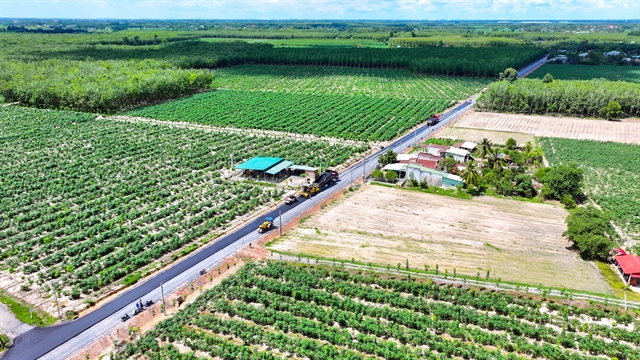
| A custard apple farm belonging to the Minh Trung Agricultural Services Co-operative in Tây Ninh Province’s Tân Phú Commune that meets VietGAP standards and produces around 3,000 tonnes of fruit annually. — VNA/VNS Photo |
Many co-operatives have proactively adopted digital technologies in management and production.
Mỹ Thạnh Agricultural Co-operative in Mỹ Hạnh Commune has developed 40.5ha of VietGAP-certified vegetables and linked a further 30ha cultivated by its members.
Its entire production process has been digitalised through FaceFarm software to ensure product traceability.
Nguyễn Quốc Cường, its director, said the biggest challenge is that the market has yet to clearly distinguish clean products produced under value-chain models from conventionally grown products.
“Selling prices do not yet fully reflect the value of clean agricultural products, making it difficult for many co-operatives to expand production. At the same time, funding demand is high but access to credit remains limited.”
Trương Tấn Đạt, deputy director of the Department of Agriculture and Environment, said the province would focus on developing a new generation of co-operatives in 2026–30 by expanding the application of science and technology, digital transformation, and green development.
They will get support for obtaining planting area codes, developing OCOP products, expanding e-commerce activities, and strengthening product traceability systems, he said.
Lê Văn Hẳn, Chairman of the Provincial People's Committee, said Tây Ninh would promote digital and green transformation while supporting the application of technology in governance, traceability and e-commerce to improve the competitiveness of the collective economy. — VNS
Society
 Society
 Society
 Society
 Society
 Society
 Society
 Society
 Society
 Society
 Society
 Society
 Society
 Society
.jpg) Society
Society