 Society

Go Where Flavors of Hunan Abound: Showcasing the Greater Zhangjiajie International Tourism Area Through Local Cuisine
1.
|
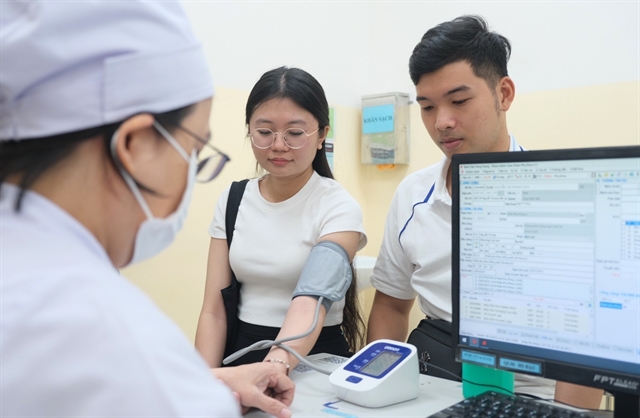
| A young couple undergoes a premarital health check-up at a hospital in HCM City. The Ministry of Health has proposed premarital education to help reverse declining birth rates. — VNA/VNS Photo |
HCM CITY — The Ministry of Health has proposed introducing premarital education courses and encouraging young people to marry before the age of 30 as the country seeks to reverse a record-low birth rate and slow the pace of population ageing.
The proposal, published this week in a draft regulation for public consultation, forms part of the government's National Target Programme on Healthcare, Population and Development for 2026-2035.
Việt Nam's fertility rate fell to 1.91 children per woman last year, below the replacement level of 2.1, according to the Ministry of Health, raising concerns over future labour shortages and a rapidly ageing population.
The ministry said young Vietnamese are marrying later because of financial pressures, career priorities and changing social attitudes.
The average age at first marriage rose to 27.3 in 2024 from 25.2 five years earlier, while in HCM City, Việt Nam's largest economic hub, it reached 30.4, the highest in the country.
Under the proposal, couples planning to marry would be offered courses on family life, reproductive and sexual health, pregnancy, parenting and household financial management.
The ministry also plans to develop a standardised national curriculum and train local health workers to deliver the programme.
The proposal accompanies a broader package of measures aimed at encouraging marriage and childbirth, including campaigns promoting two-child families in areas with particularly low fertility, expanded financial support for young children and pilot infertility screening programmes.
Like several other East Asian countries, Việt Nam is grappling with falling birth rates despite decades of economic growth and urbanisation.
Governments across the region, including those of Japan, South Korea, Singapore and China, have introduced financial incentives and family-friendly policies in an effort to encourage marriage and childbearing, with mixed results.
The ministry's proposals remain subject to public consultation before they can be finalised. — VNS
Society
 Society
 Society
 Society
 Society
 Society
 Society
 Society
 Society
 Society
 Society
 Society
 Society
 Society
 Society