 Politics & Law

Việt Nam proposes special visas for remote workers, medical tourists in bid to stimulate tourism
1.
|
|
| Foreign tourists on a walk around the Hoàn Kiếm Lake in downtown Hà Nội. — VNA/VNS Photo |
HÀ NỘI — The Government is proposing new visa arrangements for foreigners working remotely, travelling to the country for medical treatment or staying for extended periods for healthcare, as part of the effort to attract higher-spending international visitors and strengthen its tourism competitiveness.
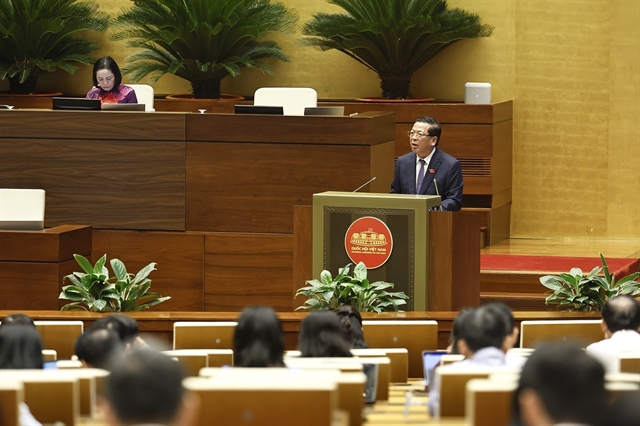
The proposed visas were included in a draft National Assembly resolution on special mechanisms and policies for tourism development, presented by Minister of Culture, Sports and Tourism Lâm Thị Phương Thanh at the National Assembly on Saturday.
Under the draft, Việt Nam would expand bilateral visa exemptions for visitors from key tourism markets and introduce more flexible visa policies tailored to individual markets, prioritising high-spending tourists, long-stay visitors, repeat travellers and attendees of conferences and seminars.
A controlled pilot scheme is also proposed for foreigners working remotely in Việt Nam.
Foreign nationals travelling to the country for medical examinations, treatment, rehabilitation, holidays and long-term healthcare, together with accompanying family members, would be considered for more favourable visa and temporary residence arrangements under a pilot scheme. These would be tailored to the purpose and duration of their stay and comply with applicable regulations.
The Government also proposes facilitating work permits, visas and temporary residence for foreign experts and artists working on tourism projects.
The suggested visa measures are part of seven policy groups in the revised draft resolution, which comprises 14 articles and seeks to remove longstanding bottlenecks in tourism development while mobilising investment and other resources.
However, the National Assembly's Committee on Culture and Social Affairs has called for further clarification of the novelty, distinctive features and scope of the proposed "special visa policy."
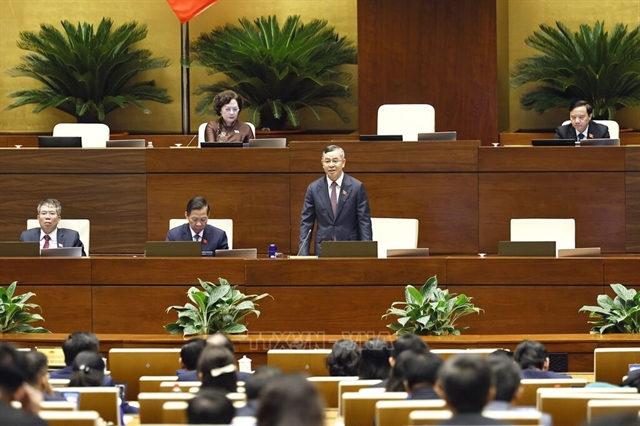
Presenting the committee's appraisal, the committee's chairman Nguyễn Đắc Vinh said the resolution should not prescribe specific visa policies for groups such as experts, technical workers, artists and performers. Instead, the Government should consider and determine appropriate arrangements for these and other groups in line with practical requirements and considerations of national security, public order and social safety.

|
| International tourists learn about various herbs at the Trà Quế vegetable village in the western part of Hội An, Đà Nẵng City. — VNA/VNS Photo |
Investment incentives and business support
Beyond visa reform, the draft proposes investment incentives for tourism projects, with support differentiated according to project scale and strategic importance.
Three categories are envisaged: high-quality tourism projects, key tourism projects and strategic key tourism projects.
Tax and infrastructure incentives would be applied to eligible tourism components, while community-based, agricultural, ecological and craft-village tourism projects of small and medium scale could receive support for essential infrastructure, training, digital transformation and promotion.
The draft also proposes piloting reductions in land rental payments for areas used for landscaping, green spaces, water surfaces and shared facilities at four-star and higher resort hotels, provided these areas are not directly used for commercial activities.
Tourism businesses could receive support to establish new air routes and develop tourism services. Travel companies and accommodation providers would also be encouraged to sign long-term purchasing contracts for products under the One Commune One Product (OCOP) programme.
New tourism models and workforce development
The proposed policies seek to encourage emerging tourism business models, including community-based initiatives, digital-platform-based services, integrated tourism, entertainment, cultural and sports complexes, and tourism combined with healthcare.
The draft also sets out controlled trials of large-scale tourism business models, including performing arts complexes, concert centres, festivals and integrated entertainment areas, with a streamlined one-time licensing procedure.
Human resource development is another priority, with State budget support proposed for training high-quality personnel and specialists in innovation, digital transformation, digital content creation, foreign languages, vocational skills and tourism management.
Support would also be provided for training local workers in community-based tourism destinations.
Infrastructure and State funding
One policy group concerns State budget support for tourism development, prioritising essential infrastructure and multimodal transport connections linking international gateways with growth centres, tourism hubs and national tourism areas.
The central budget would also prioritise targeted funding for localities developing community-based tourism in ethnic minority and mountainous areas, border regions and islands.
Presenting the Government's submission, Minister Lâm Thị Phương Thanh said the draft resolution was designed to translate Politburo Resolution No. 26 on developing Việt Nam's tourism sector into a spearhead economic industry in the new era into concrete policy measures.
The proposed framework aims to develop tourism towards a high-quality, smart, green and creative model, rooted in Vietnamese cultural identity, with higher added value and stronger regional and international competitiveness.
The minister said implementation would not require additional staffing or changes to the existing administrative apparatus, with funding expected to come from central and local budgets and other lawful sources.
The Government expects the resolution, once adopted, to help unlock resources, remove regulatory obstacles and establish a legal framework enabling more flexible and timely measures to address difficulties in tourism development.
If adopted by the parliament, the proposed resolution is scheduled to take effect for 10 years – starting right from next year until the end of 2036. — VNS
Politics & Law
 Politics & Law
 Politics & Law
 Politics & Law
 Politics & Law
 Politics & Law
 Politics & Law
 Politics & Law
 Politics & Law
 Politics & Law
 Politics & Law
 Politics & Law
 Politics & Law
 Politics & Law
 Politics & Law