 Politics & Law
Online course trains overseas Vietnamese teachers
1.
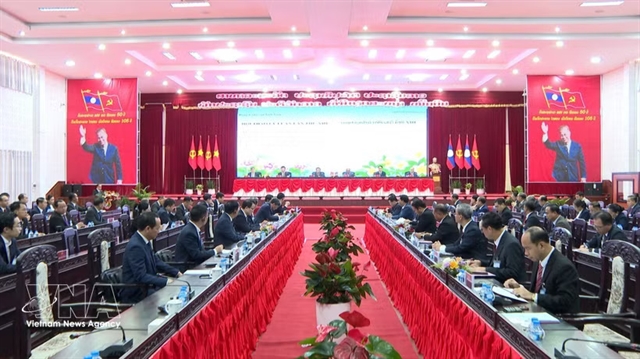 |
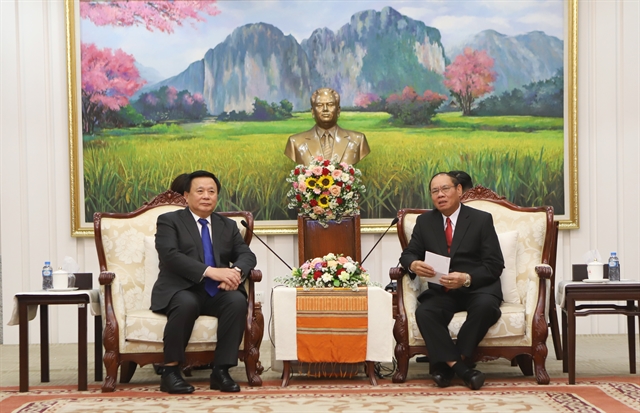
| The 13th theoretical seminar between the Communist Party of Việt Nam (CPV) and the Lao People’s Revolutionary Party (LPRP) is held in Oudomxay province, northern Laos, on Friday. — VNA/VNS Photo |
VIENTIANE — The 13th theoretical seminar between the Communist Party of Việt Nam (CPV) and the Lao People’s Revolutionary Party (LPRP) was held in Oudomxay province, northern Laos, on Friday.
The event was to implement the cooperation agreement between the CPV and the LPRP on theoretical research and practical review.
The Vietnamese delegation was led by Prof. Dr. Nguyễn Xuân Thắng, Chairman of the Central Council for Theoretical Studies, while the Lao side was headed by Prof. Dr. Kikeo Khaykhamphithoun, Politburo member, President of the Lao Front for National Construction Central Committee, and Chairman of the Theoretical Council of the LPRP.
The seminar served as an important forum for the two Parties to exchange views and share theoretical and practical insights into socio-economic development and the strengthening of strategic integration and connectivity. It also helped consolidate the political foundation, enhance mutual trust and deepen the special solidarity between Việt Nam and Laos.
Thang underscored the significance of “strategic cohesion” in Việt Nam-Laos relations, describing it as an important requirement for the two countries to adapt to changes of the times and effectively implement each side’s strategic decisions.
He said the two countries should continue to strengthen strategic trust, turn their special solidarity into a driving force for development, and translate it into long-term cooperation programmes, plans and projects that deliver tangible benefits to their peoples.
The official highlighted five pillars of strategic cohesion: alignment in development vision, goals and aspirations; institutions, policies and coordination mechanisms; development space and infrastructure; trade, investment, markets and supply chains; and science and technology and human resources.
These pillars are closely interrelated and mutually reinforcing, forming an integrated whole linking the two economies. Under this framework, a shared vision guides policymaking, institutions help mobilise resources, infrastructure expands development space, while businesses play a pioneering role in connecting markets, transferring technology and driving growth.
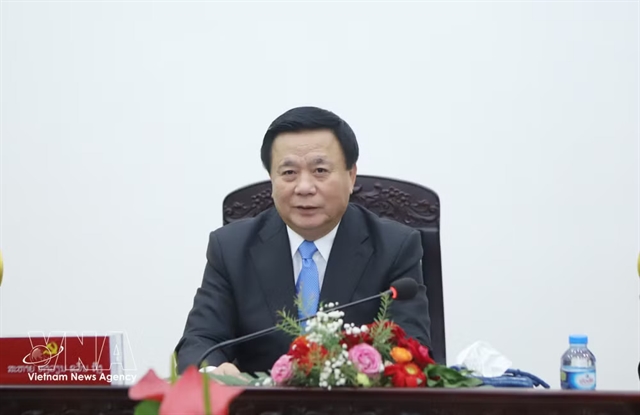 |
| Prof. Dr. Nguyễn Xuân Thắng, Chairman of the Central Council for Theoretical Studies of Laos, speaks at the event. |
Drawing on Việt Nam’s development experience, Thắng proposed major institutional breakthrough areas for delegates from the two countries to focus their discussions on. These include strengthening strategic coordination in policymaking and development planning; ensuring consistency and compatibility among regulations, procedures and standards; reforming mechanisms for resource mobilisation, investment coordination and the use of strategic infrastructure; improving institutions to expand opportunities for businesses and people to participate and share benefits; and enhancing implementation accountability and the capacity to adjust policies to ensure cooperation commitments are effectively carried out in line with practical requirements.
He also stressed the need to closely combine economic development with national defence and security, while safeguarding independence and self-reliance; focus on developing high-quality human resources; enhance national governance capacity; and ensure social welfare.
These issues are of practical significance and should be discussed, studied and applied by both sides in ways suited to each country’s conditions and characteristics, thereby contributing to rapid and sustainable development in the new period, he said.
For his part, Kikeo Khaykhamphithoun spoke highly of the two Parties’ choice of this year’s seminar theme, describing it as a practical topic that meets development requirements in the new context and reflects Vietnamese and Lao leaders’ policy of promoting the implementation of strategic cohesion.
Delegates noted that theoretical exchanges, sharing of practical experience and reference to appropriate approaches are of practical significance to the formulation and implementation of development policies by each Party and country amid complex international and regional developments.
Presentations at the seminar focused on key issues, including the Party’s leadership in integration and strategic connectivity for socio-economic development; institutional and legal system improvements to remove bottlenecks and unlock development resources; proactive international integration and enhancement of each country’s position in the regional and global development landscape; promotion of science and technology, innovation and digital transformation; stronger trade and investment cooperation in a fair and balanced manner; and the development of new-generation special economic zones on a par with regional and global standards.
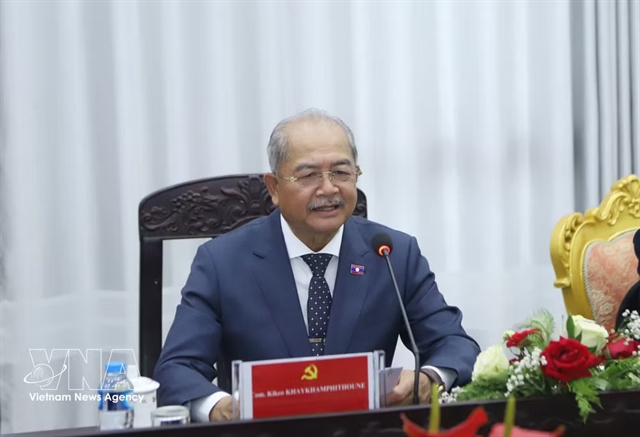 |
| Prof. Dr. Kikeo Khaykhamphithoun, Politburo member, President of the Lao Front for National Construction Central Committee, and Chairman of the Theoretical Council of the LPRP, speaks at the event. |
They also discussed solutions for developing infrastructure, human resources and innovation ecosystems to generate fresh momentum for rapid and sustainable growth.
Promoting integration and strategic connectivity between the Vietnamese and Lao economies was a particular focus of the seminar. The two sides said that amid increasingly deep regional economic integration, they need to strengthen connectivity in transport, energy, trade, investment, logistics and supply chains, while making full use of their geo-economic advantages, strategic positions and close ties.
Effective implementation of cooperation agreements and key connectivity projects would not only create fresh development momentum for each country but also enhance the linkages and complementarity between the two economies, facilitating the flow of goods and services and people-to-people exchanges.
The delegates stressed the need to maintain and promote the annual theoretical seminar mechanism, viewing it as a special cooperation channel of strategic significance to relations between the two Parties. They said the mechanism helps consolidate their ideological and political foundations, strengthen trust and build a shared understanding, providing a basis for the two sides to jointly study and seek solutions to emerging issues in the development process. — VNA/VNS
Politics & Law
 Politics & Law
 Politics & Law
 Politics & Law
 Politics & Law
 Politics & Law
 Politics & Law
 Politics & Law
 Politics & Law
 Politics & Law
 Politics & Law
 Politics & Law
 Politics & Law
 Politics & Law
 Politics & Law



