 Politics & Law
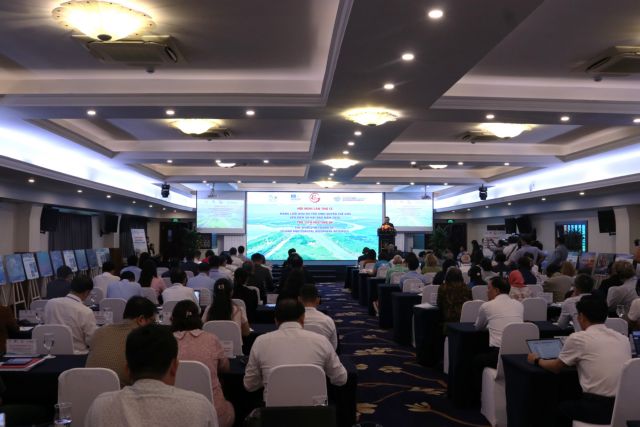
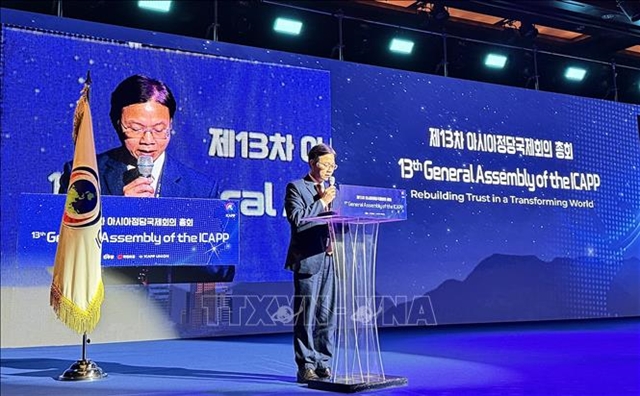
Việt Nam attends 13th ICAPP General Assembly in Seoul
1.
|
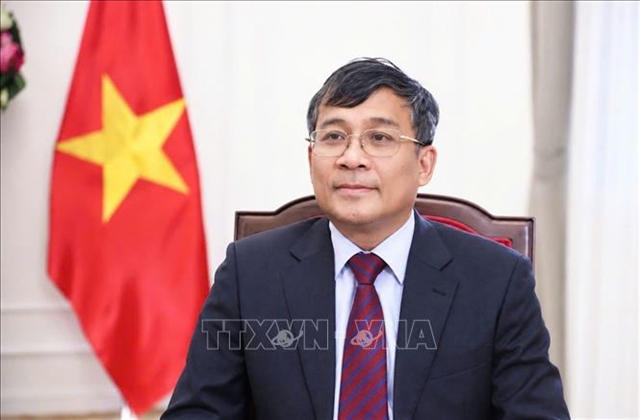
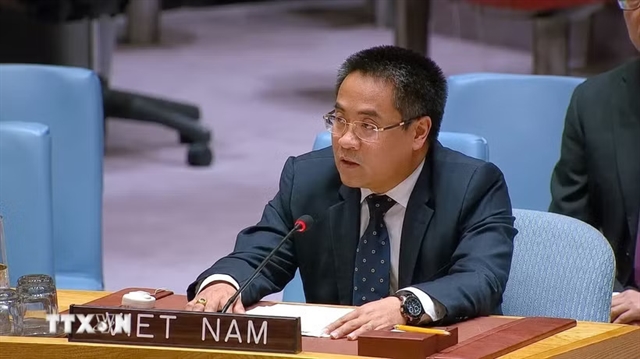
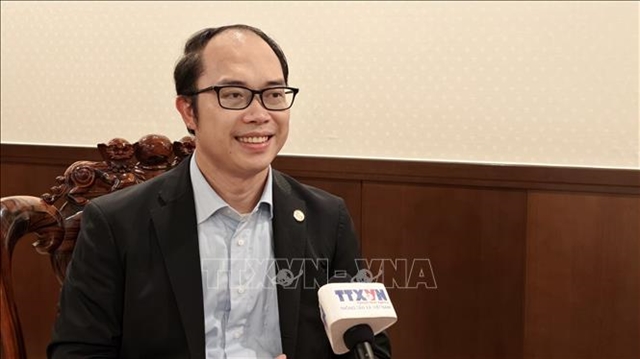
| Permanent Deputy Foreign Minister Nguyễn Minh Vũ. — VNA/VNS Photo |
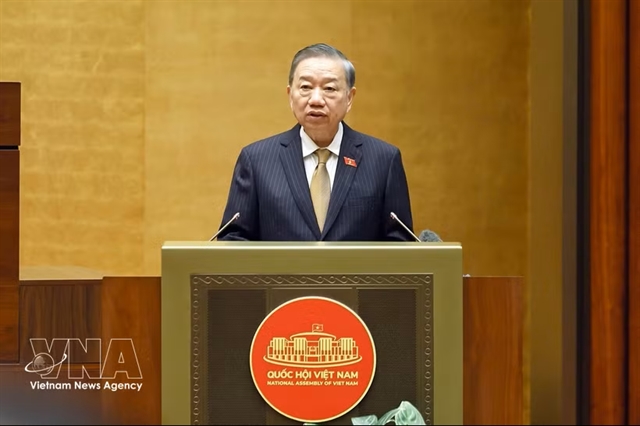
HÀ NỘI — The official visit to Japan by General Secretary of the Communist Party of Việt Nam Central Committee and President Tô Lâm from November 8 to 11 carries three major strategic implications, Permanent Deputy Foreign Minister Nguyễn Minh Vũ told the press ahead of the visit.
He said the visit, the first to Japan by the leader in his new capacity and the first visit to Japan by a General Secretary of the Communist Party of Việt Nam in 11 years, will first set the overall strategic direction for bilateral relations in the new period, enabling leaders of the two countries to identify long-term cooperation orientations and priority areas that meet the development needs of both sides.
Second, it will help shift ties beyond conventional economic, trade and investment cooperation towards stronger linkages between the two economies, with greater emphasis on partnership and co-creation, as well as enhancing each country's economic autonomy and resilience.
Against the backdrop of global supply chains being restructured, deeper economic ties with partners, including Japan, will create opportunities for Việt Nam to strengthen its production capacity and participate more deeply in global value chains.
Third, the visit will provide momentum for breakthroughs in science and technology, innovation and the transformation of development models, areas of particular importance to the future of bilateral relations, said the Deputy FM.
He held that Japan has strengths in technology, capital, management experience and manufacturing, while Việt Nam has a young workforce, a dynamic market, substantial development potential and a strong determination to promote innovation. Combining these strengths effectively will open up numerous cooperation opportunities in strategic technologies, digital transformation, green transition, energy and high-quality human resources training. This will enable Việt Nam to acquire and master technologies, strengthen its endogenous capabilities and enhance the long-term competitiveness of its economy, he said.
These strategic orientations are also reflected in the planned programme of the visit. Besides meetings with the Emperor and Empress, the Prime Minister, and the Presidents of the House of Councillors and the House of Representatives of Japan, General Secretary and President Lâm is expected to meet leaders of Japanese economic organisations and major businesses, attend and deliver a speech at the Vietnam-Japan Public-Private Forum on Economic and Science-Technology Cooperation, and visit a Japanese company investing in high technology.
The Deputy FM noted that more than 50 years after the establishment of diplomatic relations and three years since the elevation of ties to the Comprehensive Strategic Partnership, bilateral relations have made remarkable progress, becoming increasingly comprehensive, substantive and effective.
He said the relationship rests on a solid foundation underpinned by three important factors: growing political trust, increasingly intertwined economic interests and ever-closer people-to-people ties. These provide favourable conditions for the two sides to further elevate their Comprehensive Strategic Partnership.
Political trust has continued to be consolidated and strengthened, with the two countries regularly maintaining high-level and other exchanges and visits while expanding cooperation at all levels and through various channels, including Party, Government and parliament channels. Both countries attach great importance and give high priority to each other in their respective foreign policies.
Dialogue mechanisms have been maintained effectively, while shared perceptions, commitments and agreements reached by senior leaders and by ministries, agencies and sectors of the two countries had been implemented in earnest, providing a firm political foundation for bilateral relations, he said.
Building on this political trust, economic interests have become increasingly intertwined, with many notable achievements. Japan has consistently been one of Việt Nam's leading economic partners and its largest provider of official development assistance (ODA).
An increasing number of Japanese businesses in high-tech sectors, particularly artificial intelligence (AI), has shown interest in and expanded their operations in Việt Nam. Major Japanese retail groups, notably AEON, has regarded Việt Nam as a key market while also helping Vietnamese products gain deeper access to the Japanese market, which has particularly stringent quality requirements.
Cooperation in energy security and green transition, especially projects under the Asia Zero Emission Community (AZEC), is also being actively promoted by both sides, he noted.
Science-technology and innovation have emerged as as a new pillar of bilateral cooperation. The two sides have been implementing practical initiatives ranging from joint research and semiconductor workforce training to cooperation in space technology, while seeking to expand into new areas such as AI and quantum technology.
Meanwhile, joint projects on digital transformation, green transition, renewable energy and disaster prevention and control were also making effective progress, he said.
He also highlighted the increasingly close ties between the peoples and among localities of the two countries. Việt Nam and Japan now have more than 100 pairs of localities with established cooperation ties. In 2026 alone, more than 10 large-scale festivals were held in the two countries, helping promote mutual understanding, cultural exchanges and friendship between their peoples.
The nearly 700,000 Vietnamese people living, studying and working in Japan had also become an important bridge connecting the two countries and their peoples. The increasingly close bonds between the two peoples constituted one of the most enduring and vibrant foundations of bilateral relations, he said.
Alongside bilateral cooperation, Việt Nam and Japan have stepped up coordination at regional and international forums, regularly exchanging views on issues of mutual concern and strengthening coordination on regional and international matters.
Vũ expressed his expectation that, building on the achievements made, Việt Nam and Japan would continue to uphold the spirit of trust, sincerity and mutual benefit, taking bilateral relations to a new level through deeper political trust, closer economic cooperation, breakthroughs in science and technology, and stronger bonds between their peoples.
He said this is also the deeper meaning of the spirit of “partnership and co-creation” that the two countries should continue to nurture for the benefit of their peoples and for peace, stability, cooperation and prosperity in the region and the world. — VNA/VNS
Politics & Law
 Politics & Law
 Politics & Law
 Politics & Law
 Politics & Law
 Politics & Law
 Politics & Law
 Politics & Law
 Politics & Law
 Politics & Law
 Politics & Law
 Politics & Law
 Politics & Law
 Politics & Law
 Politics & Law