 Society

Go Where Flavors of Hunan Abound: Showcasing the Greater Zhangjiajie International Tourism Area Through Local Cuisine
1.
|
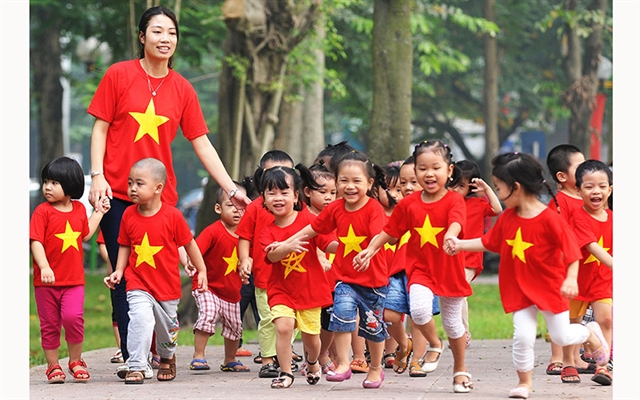
| Children must be further protected from abuse, violence and forced labour. Photo chinhphu.vn |
HÀ NỘI — The Government has outlined a series of mechanisms to enhance the protection of children and bring an end to abuse, violence and child labour.
The move is part of measures to ensure all children live in a safe and healthy environment and are given opportunities to learn and develop in later life.
The decision was signed by Deputy Prime Minister Phạm Thị Thanh Trà as part of the national programme on child protection and child labour prevention and reduction for 2026–2030.
The programme seeks to reduce child abuse nationwide and provide timely protection and comprehensive support for child victims of violence, sexual abuse and illegal child labour, children at risk of violence, exploitation and neglect, as well as those of other special circumstances.
Also, by the end of the decade, all students will be taught valuable life skills, self-protection, and become knowledgeable about age-appropriate education on life skills, self-protection against abuse, school violence and online violence, and child labour prevention.
It also aims to ensure that all officials, public employees and service providers working in child protection, health care, education and social assistance are equipped with stronger professional capacity, while 90 per cent of businesses, cooperatives, business households and service establishments will receive guidance on preventing, detecting and reducing child labour.
The programme sets a target of reducing child violence and sexual abuse cases by at least 5 per cent annually and lowering the child labour rate among those aged 5–17 to below 1.1 per cent.
The decision also pushes investigations to quickly uncover cases of child abuse and provide timely support for victims, managing cases through a database system that utilises the application of information technology and digital transformation in child protection work.
To achieve these goals, the programme sets out measures to strengthen the legal framework and child protection services, raise public awareness, improve professional training, prevent child labour, expand international cooperation and promote digital transformation.
A key task is to amend the Law on Children and related legislation in line with national policies and Việt Nam’s international commitments, particularly provisions supporting those who provide child protection services.
The programme also calls for service standards and procedures, clearer criteria for identifying child labour and children at risk, and stronger inter-agency coordination to prevent violence, sexual abuse and child labour.
Sectors highlighted as being at risk of employing children include agriculture, supply chains, business households and individuals, small production facilities and craft villages. Children removed from child labour will receive support to access education, vocational training and social welfare services while their families will be assisted in improving livelihoods and reducing poverty.
Businesses and cooperatives are encouraged to develop self-monitoring mechanisms to assess the risk of child labour in their supply chains and implement appropriate preventive measures.
It calls for a multi-layered approach, with coordination and integration from other government sectors, including health, education, justice, legal aid and social security services, to develop a comprehensive, interconnected network, ensuring that children and families are provided timely and effective services.
Regarding strengthening international cooperation, the programme requires accelerating the implementation of international cooperation activities in the region and around the world and utilising technical support resources from global organisations and development partners to carry out child protection work, prevent and combat violence and sexual abuse against children and prevent and reduce child labour. VNS
Society
 Society
 Society
 Society
 Society
 Society
.jpg) Society
Society
 Society
 Society
 Society
 Society
 Society
 Society
 Society
 Society