 Society

AIMCONNECT 2026 Held in Singapore, Bringing Global Automotive Leaders Together to Explore the Future of AI, Trust and Connected Mobility
1.
|
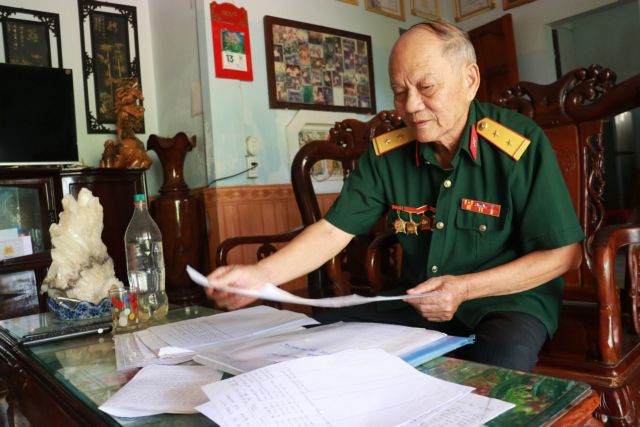
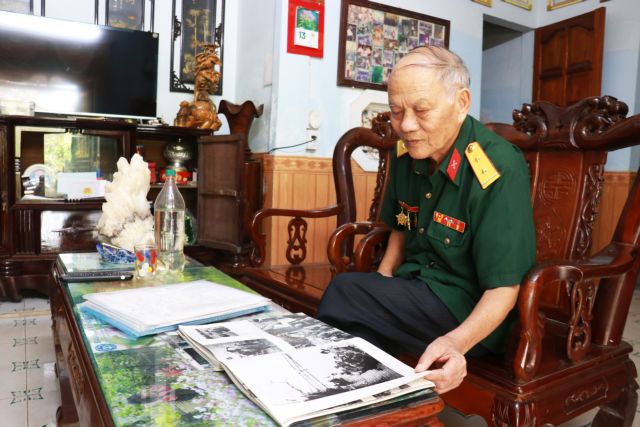
| Veteran Nguyễn Thanh Bình holds one of his notebooks containing meticulously recorded names, dates of sacrifice, military units, hometowns and family information of fallen soldiers. — VNA/VNS Photo Tường Vi |
QUẢNG TRỊ — For more than 40 years, former soldier Nguyễn Thanh Bình has dedicated his life to finding comrades who never returned from the battlefield.
Armed with little more than his memories of the fierce 1972 Battle of Quảng Trị Citadel and an unwavering sense of duty, the 73-year-old veteran has helped recover the remains of more than 100 fallen soldiers and reconnect nearly 2,500 families with long-lost information about their loved ones.
For many families, his efforts have brought an end to decades of uncertainty.
A promise to fallen comrades
Leafing through faded wartime photographs, Bình recalled volunteering to join the army in 1972. He was assigned to Battalion 8 (K8) of the Quảng Trị Provincial Military Command and fought during the legendary 81-day defence of the Quảng Trị Citadel, one of the fiercest battles of the war.
As a reconnaissance soldier, he became intimately familiar with every trench, defensive position and troop deployment. More importantly, he remembered where many of his comrades had fallen.
"So many of them died," he said softly. "One day we were talking together, the next they were gone. Some had to be buried three times because bomb craters kept disturbing their graves. I personally buried many of my comrades."
After leaving the military in late 1980, Bình was offered a civilian position with the Bình Trị Thiên State Trading Company. Although he had the opportunity to remain in Huế, where living and working conditions were more favourable, he chose to return to Quảng Trị.
"This is where I fought, and where many of my comrades are still lying," he said. "I wanted to come back so that if their families ever came looking, there would be someone here to help them."
Almost every day after returning, he cycled to the Quảng Trị Citadel and along the banks of the Thạch Hãn River, retracing the old battlefields.
Drawing on his wartime memories, he contacted fellow veterans who had fought alongside him. Together, they reconstructed battlefield maps, identified former combat positions and pinpointed burial sites.
As more pieces of information came together, they began searching in earnest.
"Every fallen soldier has a different story," Bình said. "Some families came five or six times, even ten times, before we found their loved one. Every time we recover remains, I feel deeply happy because another comrade has finally returned home."
Guided by memory
Among the many cases that have stayed with him is that of martyr Trương Quát from Thanh Hóa Province.
Based on a faint memory of a combat position near Trí Bưu Church, Bình and fellow veterans patiently searched the area. After days of digging, they discovered the soldier's remains beside an old well.
"The whole family broke down in tears," he recalled.
When Quát's remains were taken back to Thanh Hóa for burial, Bình quietly accompanied the funeral convoy, attended the memorial service and then returned to Quảng Trị.
Another memorable case involved martyr Vũ Quang Bích, whose family had spent years searching in vain.
About a decade ago, while reviewing records at a martyrs' cemetery in Quảng Trị, Bình noticed that one grave bore the name Vũ Quang Bính instead of Vũ Quang Bích.
The difference was only a single letter, but it had prevented the family from finding their relative for decades.
Suspecting a wartime recording error, Bình tracked down former comrades who had buried the soldier, compared military records in Quảng Trị with those in the family's hometown, and requested official verification, including DNA testing.
Nearly three months later, the results confirmed that the grave did indeed belong to martyr Vũ Quang Bích.
When the family finally welcomed him home, tears flowed freely.
Once again, Bình quietly travelled with the funeral procession, this time to Ninh Bình Province, where he paid his final respects to his fallen comrade.
|
| Bình has helped verify or connect information relating to nearly 2,500 martyrs. VNA/VNS Photo Tường Vi |
Inside his modest home, hundreds of files, ageing notebooks and hand-drawn battlefield maps are carefully preserved.
Each notebook contains meticulously recorded names, dates of sacrifice, military units, hometowns and relatives.
"Every name in these notebooks represents a life, a family and more than half a century of waiting," he said.
To date, Bình has helped verify or connect information relating to nearly 2,500 martyrs. He has personally participated in the search and recovery of more than 100 sets of remains, including 40 whose identities were confirmed before being returned to their families for burial.
'As long as I can, I will keep searching'
Over the years, Bình's home has become a familiar destination for families of missing soldiers from across Việt Nam.
Many arrive carrying faded photographs, old letters or only fragments of information about relatives who never came home.
"There were times when people came every week," he recalled.
"Sometimes four or five groups would arrive from northern provinces in a single week, with nearly 40 people altogether. They travelled hundreds of kilometres hoping to find a father, husband or brother. If I had any information, I always shared it and joined the search."
On many occasions, he paid his own travel expenses to visit families in provinces such as Thanh Hóa, Nam Định and Quảng Ngãi, informing them that clues had been found and urging them to come to Quảng Trị.
Now in his seventies, his health has declined and old war injuries frequently trouble him. Yet whenever he hears reports of possible martyrs' remains being discovered, he sets out once again.
"Only those who have been through war truly understand this feeling," he said.
"We were the lucky ones who survived, while so many comrades remained behind. In a way, they sacrificed their lives so that we could live. That is why I have always believed I must do everything I can to find them. It is something that has become part of my heart and my blood."
Bình believes the search has become increasingly difficult as the years pass and memories fade. For that reason, he warmly welcomed the Government's 500-day campaign to accelerate the search, recovery and identification of fallen soldiers' remains.
"It is a deeply meaningful policy," he said. "What I hope most is that as many martyrs as possible can finally return to their families." — VNS
Society
 Society
 Society
 Society
 Society
 Society
 Society
 Society
 Society
 Society
 Society
 Society
 Society
 Society
 Society