 Society
Vietnamese Prime Minister meets Cambodian National Assembly President
1.
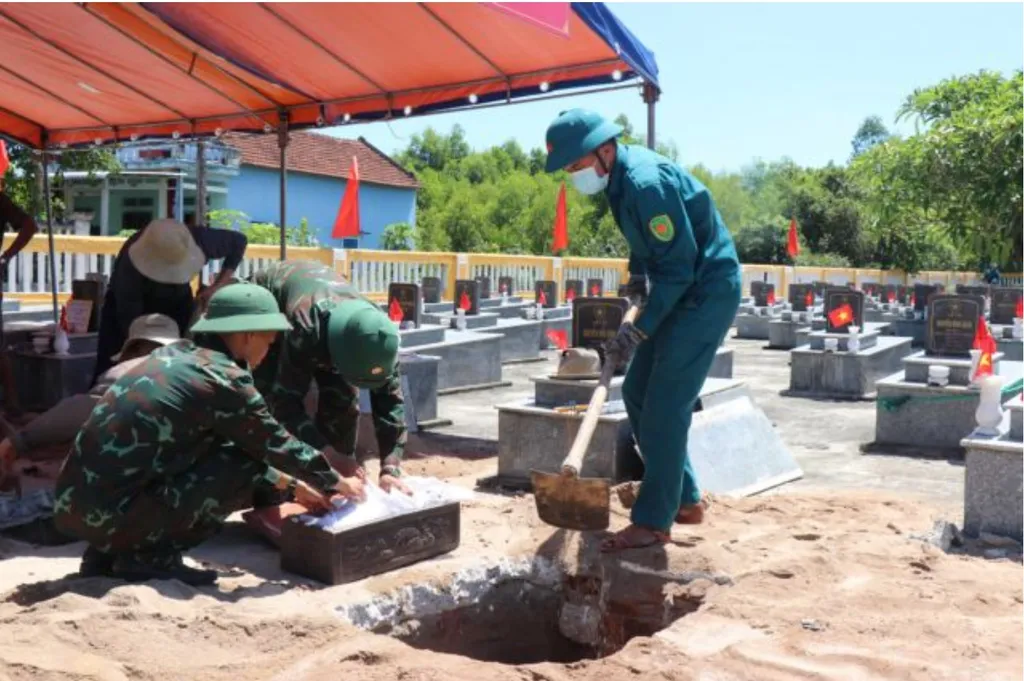 |
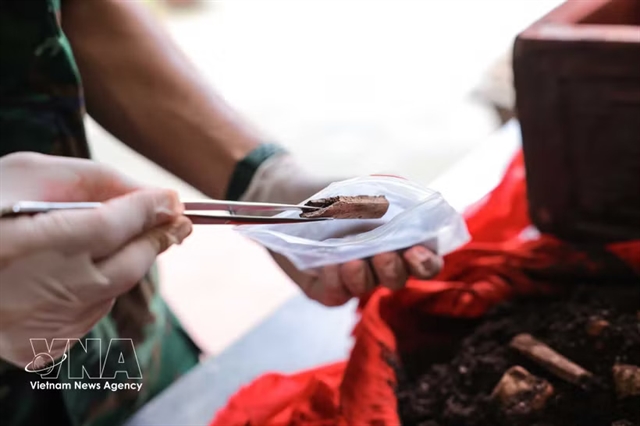
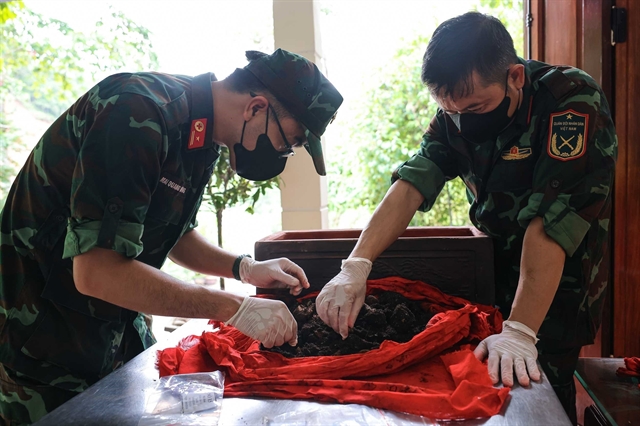
| The exhumation and sampling of graves is carried out in extremely hot, harsh conditions. VNA/VNS Photos Phạm Cường |
QUẢNG NGÃI — In Quảng Ngãi – one of the central provinces with a large number of unidentified war graves – hundreds of officers and soldiers are diligently carrying out the '500 days and nights campaign', collecting biological samples and digitising records for DNA testing.
They work in the hope of discovering the true identities of the heroes and martyrs who sacrificed their lives for the nation.
During the past ten days, from early morning until dark, dozens of officers, soldiers, local militia and medical personnel have been working at the martyrs’ cemeteries in Trà Câu Ward to collect samples for DNA testing.
At the Phổ An Martyrs’ Cemetery, the resting place of 353 martyrs, including 68 graves whose occupants remain unidentified, the teams are coordinating closely and carrying out tasks to ensure the intensified timetable is met.
Lieutenant Colonel Nguyễn Hữu Hoàng, Deputy Political Commissar of Regional Defence Command 1, and also leader of the Sampling Team No. 3, said that under the '500 days and nights campaign' his unit was assigned to take samples from 2,598 martyrs’ graves across 11 eastern communes and wards of the province.
Sampling at the Phổ An Martyrs’ Cemetery began from the end of last month.
After an initial period of unfamiliarity, the combined teams are now working in harmony and following the required procedures and schedule.
According to Hoàng, the sampling work at Phổ An posed several difficulties. Many graves were displaced during previous restoration works, with some shifted by more than one metre. Some graves still contain remains, while others have decomposed over time.
In addition, the coastal weather is extremely hot during the day and prone to thunderstorms in the afternoon.
After each rainstorm they resume excavations and sampling into the evening to keep on schedule.
"The sampling process demands meticulous attention and accuracy at every stage," Lieutenant Colonel Hoàng said.
"Despite harsh weather conditions, the officers and soldiers are determined to brave sun and rain to complete the mission on schedule."
Highest sense of responsibility
At excavation sites, tarpaulins have been erected to shield personnel from the intense sun.
With his shirt soaked in sweat, Major A Ka, a recovery specialist from Team K53, Political Department under the Quảng Ngãi Provincial Military Command, said that because of the harsh conditions each team member has a specific role and handles a single step in the process. When one person becomes fatigued another takes over.
"Every officer and soldier performs their duty with the highest sense of responsibility. Taking part in sample collection to help identify the martyrs is a sacred task and a great honour for each of us," Major Ka said.
Working alongside the military throughout the campaign, Nguyễn Mạnh Hùng of the Quảng Ngãi Forensic Centre said that after many years of reburial, remains in many cemeteries had decomposed and were no longer suitable for sampling.
He added that at the Phổ An Martyrs’ Cemetery many tooth and bone samples recovered remain intact. These specimens are valuable for DNA testing.
Hùng said: "The sampling procedure is strictly controlled, from collection during excavation to cleaning, packaging, preservation and transport, to avoid cross-contamination between samples.
"We hope to contribute to restoring the identities of the martyrs who sacrificed their lives for the country’s independence and freedom."
Alongside sampling, the digitisation of grave information is being carried out rigorously.
Lieutenant Colonel Ngô Duy Trà, a digitisation officer with Team K53 and a member of the Sampling Team No. 3, said the '500 days and nights campaign' not only offered a chance to recover the identities of unidentified martyrs but also helps build a digital management system for graves and cemeteries.
Each excavated grave is photographed, assigned an identification code, and fully documented with location data and the details of the excavation to create an electronic file.
All data, images and biological samples are cross-checked and carefully verified to ensure accuracy for DNA testing and long-term grave management.
Shortening sampling time
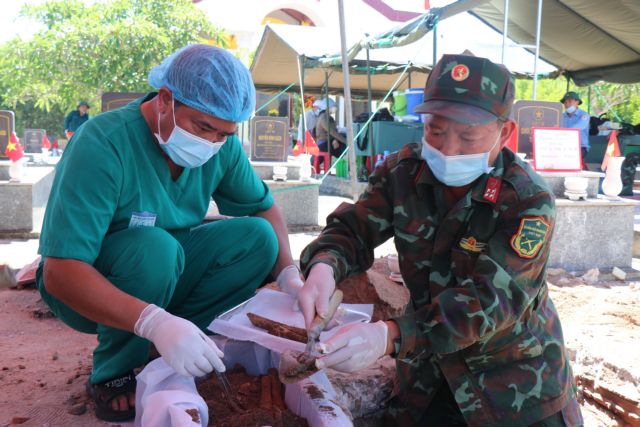 |
| Biological specimens are taken from the martyrs’ graves at the Phổ An Cemetery, Trà Câu Ward, Quảng Ngãi Province. |
At the Quảng Ngãi Provincial Martyrs’ Cemetery in Nghĩa Giang Commune, sample collection and digitisation are also being carried out urgently.
Trương Văn Trung, deputy chairman of the Nghĩa Giang Commune People’s Committee, said the commune had three martyrs’ cemeteries: Hội Bắc 1 Village Cemetery, Quảng Ngãi Provincial Martyrs’ Cemetery and Hòa Chánh Village Cemetery.
Together the three cemeteries contain 540 unidentified graves.
At the provincial cemetery alone there are 194 unidentified graves.
Under the campaign, the commune has proactively assigned forces to ensure security and order at the cemeteries, coordinated with sampling teams to digitise information and hand over bone samples.
After sampling is completed, teams will restore the graves, clean and care for them.
Lieutenant Colonel Võ Nguyên Vũ, Deputy Political Commissar of Regional Defence Command 5, said that graves at the provincial cemetery were solidly constructed, so teams must work with extreme care to both ensure safety during sampling for DNA testing and preserve the grave structures.
With close cooperation and active support from local party committees and authorities, and the united spirit of officers and soldiers who 'brave sun and rain', Sampling Team No. 4 collects about 30 samples a day on average.
At the current pace, sampling at the provincial cemetery is expected to finish about three days ahead of the initial plan. The remaining time will be used to return graves to their original condition and tidy the cemetery grounds in time for commemorations marking the 79th Anniversary of War Invalids and Martyrs’ Day.
Quảng Ngãi Province has 127 martyrs’ cemeteries with 37,689 graves, including 26 collective graves; 16,758 graves have full information, 5,134 graves have partial information and 15,771 graves have no information.
The province still has around 6,000 martyrs whose remains have not been found.
Quảng Ngãi is collecting specimens from 13,650 martyrs’ graves and aims to complete this work by October this year.
The campaign not only helps build a DNA database for martyrs but also raises hopes of identifying and returning heroes to their names, hometowns and families after many years of waiting.
During a recent inspection of the sampling work at Quảng Ngãi Provincial Martyrs’ Cemetery, Y Ngọc, permanent deputy chairman of the Quảng Ngãi Provincial People’s Committee, emphasised that each DNA sample collected rekindled the hope of restoring a fallen person’s name, hometown and family embrace after decades of waiting.
He noted that sampling at the provincial cemetery and other cemeteries in the locality had proceeded smoothly. However, under severe hot-weather conditions, frontline personnel must work for extended periods and face many hardships.
Ngọc asked localities to assign additional volunteers – including youth union members, women’s union members and community organisations – to support and share the burden with the officers and soldiers on duty.
He also stressed that sampling must follow full procedures, ensuring scientific rigour and solemnity. After sampling, graves must be promptly restored to their original, clean and respectful condition to show due reverence to the martyrs. — VNS
Society
 Society
 Society
 Society
 Society
 Society
 Society
 Society
.jpg) Society
Society
 Society
 Society
 Society
.jpeg) Society
Society
 Society
 Society