 Society

Sơn La holds second coffee festival, targeting stronger businesses in future
1.
.jpg) |
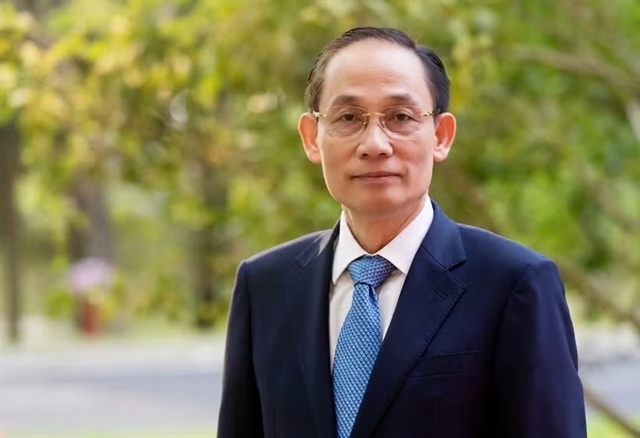
| Phan Thanh Bình, former chairman of the National Assembly's Committee on Culture, Education, Youth, Teenagers and Children, speaks at the seminar on the Bill on Urban Development in HCM City on July 20. — VNA/VNS Photos Xuân Khu |
HCM CITY — HCM City has proposed that the National Assembly should advance the passage of the Law on Urban Development to October 1, or nine months earlier than scheduled, to fast-track administrative decentralisation and urban planning autonomy.
It also wants non-fiscal mechanisms to be implemented immediately in October to clear institutional bottlenecks.
Tax incentives and state budget adjustments will take effect on January 1, 2027, to align seamlessly with the new fiscal year.
These were highlighted at a seminar on Monday organised by the city delegation of National Assembly deputies to gather feedback on the bill.
Nguyễn Thị Hồng Hạnh, director of the municipal Department of Justice, said the bill builds on and expands the earlier Bill on Special Cities.
Rather than focusing solely on HCM City, it broadens the scope to include other special cities, such as Hà Nội, and special economic zones, creating a unified legal framework for the country's key growth poles.
The bill is scheduled to be tabled at a National Assembly special session in early August.
Chapter 2 contains seven major policies tailored specifically for special cities.
Local governance: Grants cities the autonomy to decide staffing levels within a ceiling of 20 per cent above central allocations, issue legal documents that differ from central regulations to remove operational bottlenecks, and introduce regulatory sandboxes for new models.
Urban planning: Streamlines planning into a single master plan, while delegating the management of underground and overhead space, as well as transit-oriented development.
Economic development: Facilitates free trade zones, integrated logistics hubs, and the establishment of an international financial centre in HCM City.
Socio-cultural development: Expands the use of public-private partnerships, promotes the night-time economy, engages private healthcare providers in public services, and attracts international medical specialists.
Science and technology: Allows regulatory sandboxes for artificial intelligence, big data, and new business models alongside incentives to attract high-tech talent.
Finance and land: Allows the city to retain all newly created special revenues, receive targeted transfers capped at 70 per cent of increases in central budget revenues, and exercise greater authority over land acquisition and urban renewal.
Regional integration: Designates HCM City as the coordinating hub for the southeastern region, supported by a proposed regional development fund to address inter-provincial issues such as transport, flooding, and pollution.
Hạnh said implementation powers would be vested directly in local authorities rather than requiring Government decrees or ministerial circulars.
To ensure the law can be implemented immediately once approved, the city is preparing legal documents, and completed 99 out of a proposed 109, he said.
Delegates and experts at the seminar offered a number of recommendations to strengthen the legislation.
Phan Thanh Bình, former chairman of the National Assembly's Committee on Culture and Education, said the law should establish a superior institutional framework rather than simply standardising preferential policies.
"This is not an ordinary urban development law, but legislation designed to create special cities capable of fulfilling key national strategic tasks.
"The law must create the conditions for these cities to develop and lead, rather than level the playing field or merely hand out privileges."
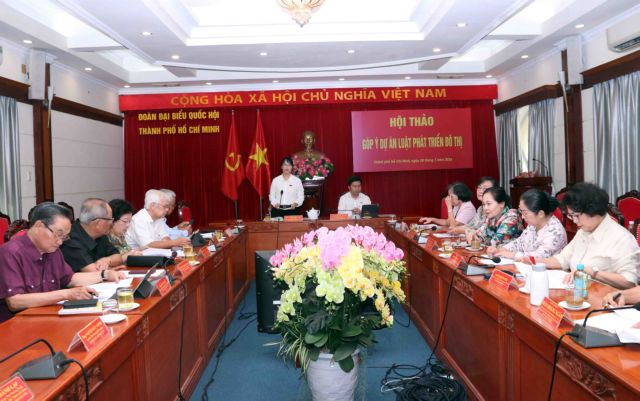 |
| A seminar was held to discuss the Bill on Urban Development by the HCM City delegation of national assembly deputies on July 20. |
On local autonomy, Trần Du Lịch, former deputy head of the city delegation of national assembly deputies, said the law should specify only what the city is prohibited from doing, rather than listing everything it is allowed to do.
"Beyond key safeguards to ensure actions do not conflict with national interests, local authorities should be granted full autonomy."
Former chairwoman of the city People's Council, Phạm Phương Thảo, called for scrapping the mandatory consultations with central ministries and other localities in the case of issues that fall entirely within local jurisdiction.
"Authority should be delegated directly to department heads rather than requiring every decision to pass through the city People's Committee."
The draft law marks a shift from traditional urban administration towards a more modern model of governance.
By seeking an earlier implementation date, while simultaneously preparing the necessary local regulations, the city hopes to remove legal bottlenecks more quickly and make better use of its resources.
If enacted, the law is expected to provide a major institutional boost, strengthening the country's economic hub as a regional growth engine and international centre for innovation. — VNS
Society
 Society
 Society
 Society
 Society
 Society
 Society
 Society
 Society
.jpeg) Society
Society
 Society
 Society
 Society
 Society
 Society