 Society

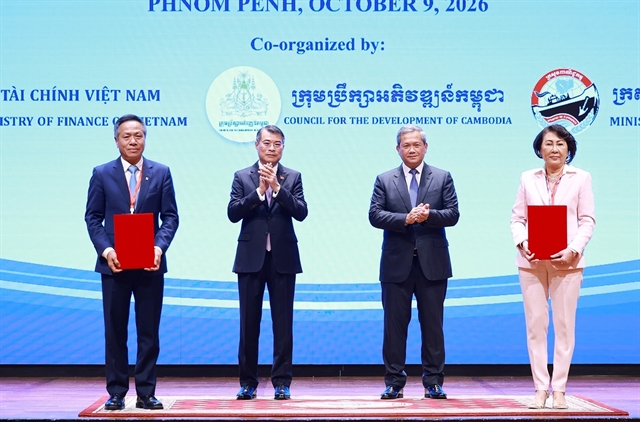
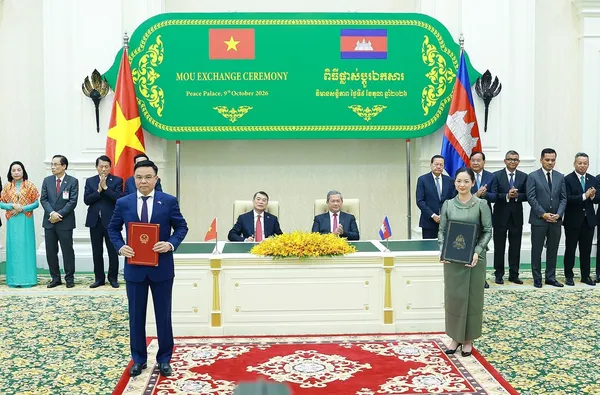
Vietnamese Prime Minister meets Cambodian National Assembly President
1.
 |
| Illustrative photo TNO |
HÀ NỘI — The Ministry of Public Security is attempting to expand the scope of administrative sanctions to include foreign individuals and organisations that are not present in Việt Nam but commit violations within the country’s territory, under a new proposal that is seeking feedback from relevant authorities.
Under the current Law on Handling Administrative Violations, foreign individuals and organisations that commit administrative offences within Việt Nam are subject to sanctions. However, the ministry said the existing provisions leave unresolved cases involving foreign entities with no commercial presence in Việt Nam whose actions nonetheless have domestic impacts.
According to the ministry, current implementing decrees neither define nor establish specific enforcement principles for foreign legal entities that are not registered or do not operate in Việt Nam. This gap has created difficulties for authorities, particularly in sectors such as e-commerce, technology and cross-border media services.
To address the issue, the ministry has proposed in a draft amendment to the law that the scope of enforcement be broadened to cover foreign individuals and organisations, whether present or not present in Việt Nam, that commit administrative violations within the country’s territory.
The proposal has attracted feedback from several ministries and agencies.
The Ministry of Finance called for an assessment of the feasibility of enforcing penalty decisions against foreign individuals and organisations that have neither a physical presence nor assets in Việt Nam.
It noted that authorities could face obstacles in delivering sanction decisions and implementing coercive measures if offenders fail to comply voluntarily.
Responding to the concerns, the Ministry of Public Security said that, in addition to amendments to the Law on Handling Administrative Violations, bilateral and multilateral treaties would be needed to establish a legal basis for international cooperation in enforcement.
The Ministry of Culture, Sports and Tourism proposed explicitly covering foreign entities that operate online by providing or disseminating information, products, services and content to users in Việt Nam.
The ministry pointed to the growing number of cross-border platforms offering film-streaming services to Vietnamese users without maintaining a commercial presence in the country. In some cases, such platforms have failed to classify films, display age ratings, issue content warnings or implement age-verification measures.
The Ministry of Public Security responded that the draft provision covering entities 'present or not present in Việt Nam' had already encompassed violations committed in cyberspace.
The Ministry of Industry and Trade highlighted the unique challenges posed by e-commerce, where businesses can operate beyond geographical boundaries and without a commercial presence in Việt Nam.
The ministry said this would complicate efforts to identify offenders and apply traditional administrative penalties such as fines or the suspension of licences and professional certificates.
To improve enforcement, it proposed that authorities consider additional measures, including blocking access to platforms, suspending transaction functions, removing offending content and temporarily suspending or terminating violating accounts.
The Ministry of Public Security said it had incorporated provisions allowing for other preventive measures as stipulated in specialised laws, in addition to the mechanisms already provided under current regulations. — VNS
Society
 Society
 Society
 Society
 Society
 Society
 Society
.jpg) Society
Society
 Society
 Society
 Society
.jpeg) Society
Society
 Society
 Society
 Society