 Society
Outstanding Vietnamese women honoured for remarkable achievements
1.

|
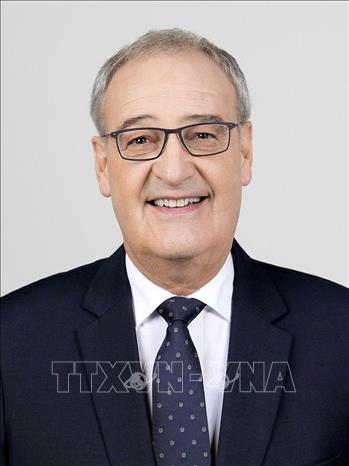
| Nguyễn Trọng Diện, director of Hà Nội's Department of Health. — Photo nhihanoi.vn |
Nguyễn Trọng Diện, director of Hà Nội's Department of Health, spoke with reporters about the city's newly launched programme offering free health screenings to residents.
Hà Nội has begun rolling out free health screenings for residents. What's the thinking behind giving everyone a check-up once a year, and why does it matter?
Resolution 72 is what set this programme in motion. We've paired up commune-level health stations with hospitals across the city, so local facilities get extra hands – qualified medical staff and modern equipment – right where they need it.
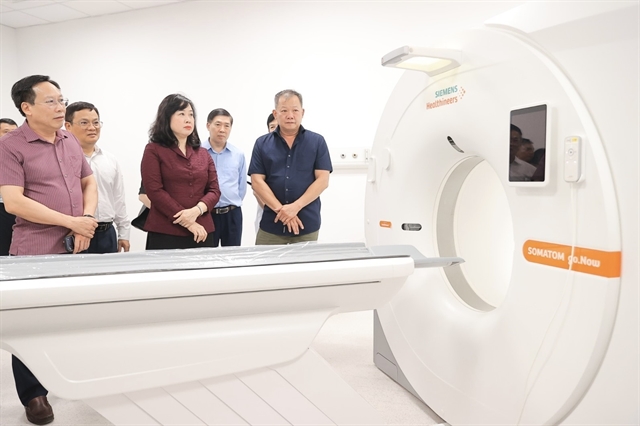
Residents get checked across a range of specialties, plus a chest X-ray, blood work, a blood chemistry panel and a urine test, all aimed at catching common conditions early.
We've even sent mobile X-ray units out to commune-level health stations and pop-up screening sites. Blood and urine samples are taken on the spot and sent off to hospitals for testing – though at stations that already have the right equipment in place, we just run the tests there.
The real point of all this is to start building lifelong health tracking for people. Every result gets fed into the electronic health records system, so each person ends up with their own health profile.
Once that data is updated regularly, doctors can actually see a patient's history and steer them toward specialist care at a city hospital when it's needed, instead of starting from scratch each time.
It also means we can start piecing together a citywide picture of what's actually making people sick – which is exactly the kind of evidence we need to plan hospital investment, build up the right specialties and get ahead of non-communicable diseases in particular.
For older residents, this is really just a first step toward more programmes down the line. But the bigger picture is that this screening drive is the foundation for a long-term strategy to look after people's health across the whole city.
How are you figuring out who's eligible, and what does the rollout look like over the next few years?
Some groups are already covered elsewhere — workers get check-ups through their employers, civil servants have their own statutory healthcare and police and military have their own screening programmes.
Everyone outside those groups, in every commune and ward, qualifies for a free screening paid for by the city. That's about six million people.
|
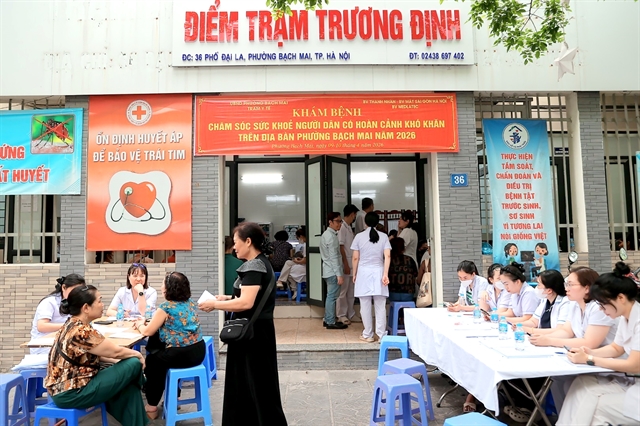
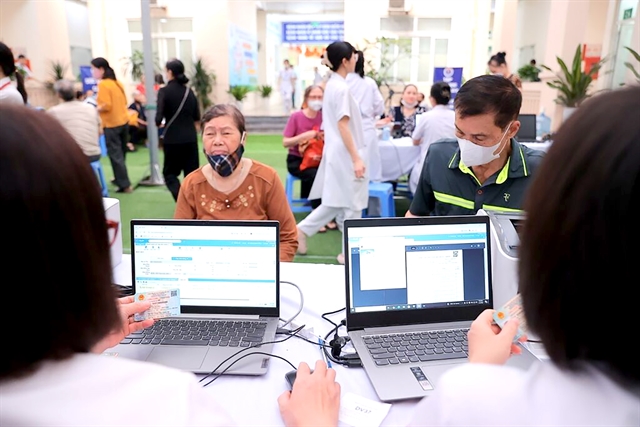
| Residents gather for free health screenings at a health station in Hà Nội's Bạch Mai Ward on April 9. — VNA/VNS Photo |
As for timing, we're not running this on a calendar-year cycle. It's continuous: screenings happen every day, and the programme just keeps rolling from one year into the next.
For each person, the clock simply resets a year after their last check-up. So if you're screened this July, your next one comes around next July, and the same logic applies, whatever month you start in.
Right now, we're focused on making sure the funding stretches to cover everyone at least once a year. As the budget grows, we want to add more specialised screenings on top of that so people can get real, ongoing access to care.
What needs to happen at the local level to make sure these screenings are actually of good quality?
We've been moving staff from hospitals down to commune-level health stations, and honestly, quite a few doctors, pharmacists and technicians have asked to make that move themselves.
That tells us something's working – it's a real vote of confidence in strengthening local healthcare.
To back that up, we've put money behind it. The People's Council approved a resolution granting doctors who relocate to local posts a one-time payment ranging from VNĐ250 million ($ 9,500) to over VNĐ500 million ($19,000), depending on their qualifications.
As the citywide push for lifelong healthcare picks up, local facilities will get even more resources – which matters, because it gives doctors and health workers a reason to stay, keep learning and grow their skills while serving their own communities.
In the longer term, we're working with the Municipal People's Committee on a plan to put a general clinic in every commune and ward, building toward a family doctor model so people can get quality care without having to travel far from home. — VNS
Society
 Society
 Society
 Society
 Society
 Society
 Society
 Society
 Society
 Society
 Society
 Society
 Society
 Society
 Society