 Society
Việt Nam, Singapore promote cooperation through Party-to-Party channel
1.

|
| Deputy Prime Minister Phạm Gia Túc delivers his speech on Tuesday morning. — VNA/VNS Photo Lâm Khánh |
HÀ NỘI — Authorities uncovered and dealt with nearly 68,000 cases involving smuggling, trade fraud and counterfeit goods in the first six months of this year.
The number is up over 36 per cent from the same period last year, according to a report by the National Steering Committee on Anti-Smuggling, Trade Fraud and Counterfeit Goods.
The report showed that the authorities detected 5,220 cases involving the illegal trading and transportation of prohibited and smuggled goods, down 51.83 per cent year-on-year.
Meanwhile, nearly 57,000 cases of trade and tax fraud were recorded, an increase of about 60 per cent, while 5,723 cases involving counterfeit goods and intellectual property (IP) rights infringements rose 75.02 per cent.
The State budget revenues generated from enforcement activities totalled VNĐ9.648 trillion (approximately US$368 million), up 49.36 per cent from a year earlier.
Law enforcement agencies launched criminal proceedings in 1,676 cases, involving 2,789 suspects.
The figures were released on Tuesday morning during the National Steering Committee's nationwide online conference reviewing anti-smuggling, trade fraud and counterfeit goods enforcement in the first half of this year and outlining priorities for the remainder of the year.
Addressing the conference, Deputy Prime Minister Phạm Gia Túc, head of the committee, said smuggling, trade fraud, counterfeit goods and intellectual property infringements remained widespread and increasingly sophisticated during the first half of the year, undermining business activity, public health and consumer confidence.
He said the Government, the Prime Minister and the committee had issued a series of directives to strengthen efforts against smuggling, trade fraud, counterfeit goods and IP violations, including Official Dispatch No. 38/CĐ-TTg, which calls for stronger measures to prevent and tackle intellectual property infringements.
The Ministry of Public Security has instructed police nationwide to investigate and prosecute numerous cases involving IP violations and counterfeit and imitation goods.
The Ministry of Science and Technology; the Ministry of Culture, Sports and Tourism, together with other ministries, agencies and local authorities, have also stepped up enforcement against related offences.
These efforts demonstrate the Party and Government's political commitment to curbing smuggling, trade fraud, counterfeit production and sales, and intellectual property violations, Túc said.
"The United States has also recognised Việt Nam's proactive and determined efforts to combat intellectual property infringements," he added.
"If we continue to perform well in the area, the US will properly acknowledge our commitment, decisive actions and sustained leadership before reaching its conclusions."
Following the report, cyberspace and e-commerce have become the most challenging areas for enforcement.
Criminal networks are exploiting platforms such as Facebook, TikTok, Shopee and Telegram, as well as livestream selling, to distribute smuggled, counterfeit and IP-infringing products on a large scale.
Many operators no longer maintain permanent retail outlets, instead renting apartments and private homes as storage facilities.
Transactions are conducted entirely online using bank accounts registered under other people's names, while app-based delivery drivers are hired to transport the goods.
Authorities have also detected the growing use of artificial intelligence and deepfake technology to manipulate images of doctors, experts and celebrities in misleading advertisements promoting dietary supplements, cosmetics and medicines.
Key hotspots
The report said land borders with China, Laos and Cambodia remain major routes for smuggling and the illegal trafficking of narcotics, fireworks, foreign cigarettes and alcohol, sugar, cosmetics, foreign currencies, gold, silver, household goods and frozen livestock and poultry products.
In key border provinces including Lạng Sơn, Quảng Ninh, Lào Cai, Tây Ninh and An Giang, smugglers continue to exploit informal border crossings, cross-border resident activities, customs clearance policies and disguised transport vehicles to move illegal goods into the country.
A common tactic involves breaking shipments into smaller consignments, storing them in warehouses near the border before transporting them inland in multiple stages to evade surveillance.
Criminal groups also exploit goods in transit to move IP-infringing products from overseas through Việt Nam en route to third countries.
Some smuggling rings use contracted freight vehicles, interprovincial passenger buses and logistics transfer services to move contraband rapidly and are prepared to resist law enforcement when intercepted.
The groups frequently change communication methods, relying on closed groups on Telegram, Zalo and WeChat to coordinate operations, while deploying lookouts along major highways to monitor the movements of enforcement agencies.
Smuggling by sea continues to involve narcotics, fireworks, explosives, foreign cigarettes, sugar, alcohol, fuel, coal, used imported goods and frozen food products, particularly through the coastal waters and ports of Quảng Ninh, Hải Phòng, Đà Nẵng City, Quảng Ngãi, HCM City, Cà Mau and An Giang.
Offenders exploit temporary import-for-re-export schemes, goods in transit and customs clearance procedures to facilitate smuggling and trade fraud.
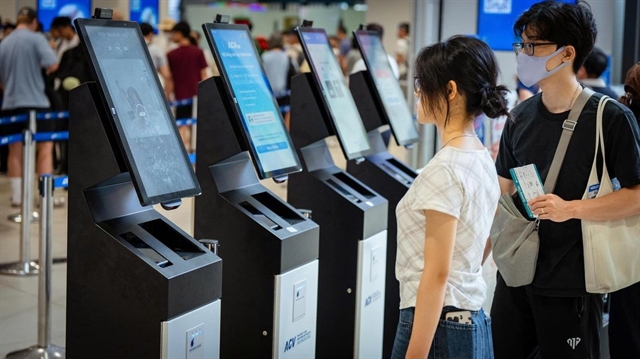
Meanwhile, gold smuggling, illegal foreign currency transfers, counterfeit luxury goods, electronic components, narcotics and other prohibited items continue to pose significant challenges on air routes.
Smugglers exploit checked baggage, carry-on luggage, international courier services and gift consignments to transport illegal goods across borders.
Increasingly sophisticated concealment methods include creating false-bottom suitcases, hiding contraband inside electronic equipment, melting gold and recasting it as electronic or mechanical components, and splitting shipments into multiple smaller packages to avoid detection.
Authorities have uncovered numerous cases involving the illegal transportation of gold, foreign currencies and other high-value goods through Nội Bài International Airport and Tân Sơn Nhất International Airport. — VNS
Society
 Society
 Society
 Society
 Society
 Society
 Society
 Society
 Society
 Society
 Society
 Society
 Society
 Society
 Society