 Society

Việt Nam, Singapore promote cooperation through Party-to-Party channel
1.
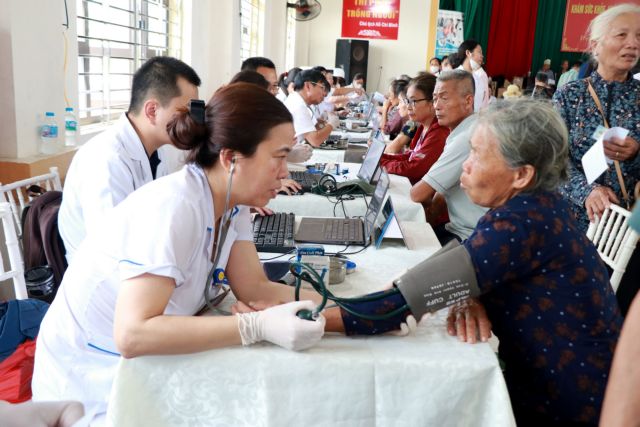 |
| Doctors from Trực Ninh General Hospital provide free health screenings for elderly people, disadvantaged residents and policy beneficiaries in Trực Ninh Commune, Ninh Bình Province. VNA/VNS Photo Nguyễn Lành |
HÀ NỘI — Free periodic health screenings for all citizens, mobile clinics reaching remote communities, electronic health records and advanced medical technologies at provincial hospitals are beginning to transform healthcare delivery across Việt Nam.
This is a result of localities putting the goals of Politburo Resolution No 72-NQ/TW into practice.
The nationwide initiatives reflect a broader shift in healthcare policy from treating illness after it occurs to promoting preventive care, strengthening grassroots healthcare and placing people at the centre of the health system.
One of the resolution's key objectives is to improve the quality and effectiveness of primary healthcare while encouraging regular health monitoring instead of relying solely on hospital treatment.
Several provinces have already begun implementing large-scale free health screening programmes.
Tây Ninh is one province that has launched a 90-day campaign providing free periodic health checks and disease screening for residents across the province. The programme aims to detect diseases at an early stage while gradually building electronic health records for every citizen to support long-term healthcare management.
Chairman of the provincial People’s Committee Lê Văn Hẳn said the campaign seeks to raise public awareness of preventive healthcare and encourage residents to take greater responsibility for monitoring their own health rather than seeking medical attention only after symptoms develop.
Health workers are preparing personnel, medical equipment and digital infrastructure while working with local authorities to identify eligible residents, organise screenings and update health records following examinations.
Bringing healthcare closer to communities
Other provinces are focusing on expanding access by delivering healthcare directly to communities.
In Ninh Bình Province, where many communes remain far from district and provincial hospitals, local health authorities have organised mobile health clinics for elderly residents, people with disabilities and those with limited mobility.
The programme has enabled tens of thousands of residents to receive free medical examinations close to home. Screenings have identified many previously undiagnosed cases of hypertension, diabetes and other chronic diseases, allowing patients to begin treatment earlier and reducing the risk of serious complications.
Mountainous provinces are adopting similar approaches.
In Điện Biên Province, mobile clinics have travelled to remote villages to overcome geographical barriers that have long prevented ethnic communities from accessing regular healthcare.
Doctors and nurses have volunteered during weekends to provide examinations using portable ultrasound machines, electrocardiographs and other diagnostic equipment. The initiative is also helping cultivate the habit of periodic health check-ups among residents who previously had limited access to healthcare services.
The expansion of community-based services is expected to strengthen grassroots healthcare, allowing more diseases to be detected and managed locally while easing pressure on overcrowded central hospitals.
Technology driving healthcare reform
Technology is also playing an increasingly important role in improving healthcare quality.
The newly operational Bạch Mai Hospital of Ninh Bình Campus has demonstrated how advanced medical services can be decentralised from Hà Nội to provincial hospitals. Within a short period, the hospital has successfully treated stroke patients, performed cardiovascular interventions, laparoscopic surgery and other specialised procedures.
Modern facilities, including digital angiography systems, intravascular ultrasound equipment and advanced surgery rooms, allow patients to access high-quality treatment closer to home, reducing travel costs and waiting times while helping relieve pressure on central-level hospitals.
Elsewhere, hospitals are increasingly adopting cutting-edge technologies.
A recent scoliosis surgery performed using the Mazor X Stealth robotic guidance system marked another milestone for Vietnamese surgery. Robotic-assisted procedures improve surgical precision, reduce complications and expand treatment options for patients with complex conditions.
Digital transformation is also accelerating across the healthcare sector.
Hospitals nationwide are introducing electronic medical records, digital imaging systems, cashless payment services, online appointment booking and integrated data sharing with the national social insurance system.
Artificial intelligence is also emerging as a valuable tool to support clinicians.
In Thanh Hóa Province, several private hospitals have invested in AI-integrated magnetic resonance imaging (MRI) systems that improve image quality, shorten scanning and diagnostic times and assist doctors in handling more complex cases.
Beyond improving clinical outcomes, digital technologies are helping reduce administrative procedures, shorten waiting times and enhance transparency in hospital management.
As primary healthcare continues to expand, digital transformation gathers pace and advanced medical technologies become more widely available, Việt Nam is laying the foundation for a more modern, equitable and sustainable healthcare system. This places greater emphasis on prevention, improves access to quality care and better meets the healthcare needs of its rapidly developing society. — VNS
Society
 Society
 Society
 Society
 Society
 Society
 Society
 Society
 Society
 Society
 Society
 Society
 Society
 Society
 Society