 Society
Việt Nam, Singapore promote cooperation through Party-to-Party channel
1.
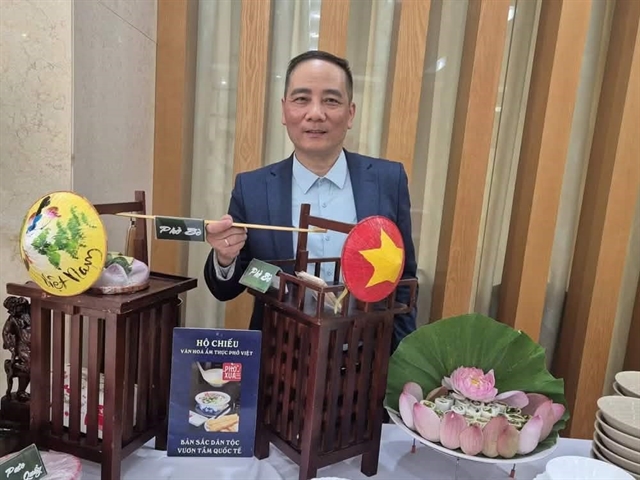 |
| Mai Hải Lâm, an overseas Vietnamese in Poland and chairman of We Love Phở. — Photo courtesy of Mai Hải Lâm |
HÀ NỘI — Việt Nam’s external strength is generated not only by diplomatic missions, international agreements and official diplomatic activities, but also by Vietnamese communities living, studying, working and integrating into societies around the world.
This has been stated in the Politburo’s Resolution 23-NQ/TW on affairs concerning Vietnamese people living abroad.
Mai Hải Lâm, an overseas Vietnamese in Poland and chairman of We Love Phở, an international non-profit association, said that Resolution 23 not only confirmed the strategic position of overseas Vietnamese, but also opened up a new way of thinking: turning the social and cultural networks of Vietnamese people abroad into part of the country’s foreign relations infrastructure in the new era.
In Europe, Vietnamese people are present in a wide range of fields, including business, science, healthcare, education, the arts, services and society. Alongside them are thousands of restaurants, shops and small businesses that are bringing Vietnamese products, cuisine and stories into everyday life.
A Vietnamese restaurant may be where a European first encounters phở. A community festival may help a city gain a better understanding of Vietnamese Tết. A Vietnamese entrepreneur may open up a new trade relationship. A scientist may establish a new research partnership. A young person of Vietnamese heritage may introduce the Vietnamese language and culture to friends of the same generation.
According to Lâm, such activities are often viewed as separate and individual contributions. From the perspective of foreign relations, they can be seen as links in a social network connecting Việt Nam with the world. This is broadly consistent with the new approach reflected in Resolution 23.
The resolution identifies Vietnamese people abroad as an inseparable part of Việt Nam's national community and one of the country’s important strategic resources. It also regards them as a bridge between Việt Nam and the world, supporting and directly participating in building, developing and safeguarding the Fatherland.
From a European perspective, the most noteworthy word is ‘resource’. A resource can become a genuine source of strength only when it is connected, organised and given the conditions necessary to fulfil its potential.
Over the years, in many European cities, Vietnamese communities and associations have held numerous activities to promote Vietnamese cuisine and culture. The 2026 Phở Cultural Roadshow Europe is a recent example. With the participation of communities, artisans, businesses, associations and Vietnamese representative missions, a dish can become the starting point for broader encounters involving culture, people and the country.
“What matters is not simply how many more people come to know about phở, but how Việt Nam itself is perceived. A dish presented merely as a consumer product creates a different experience from one placed within a broader story about the land, its ingredients, culinary techniques and the lives of Vietnamese people. This is also the difference between promoting a product and building soft power,” Lâm said.
Talent map
Assessing the role of overseas Vietnamese in the country’s development, Mạc Quốc Anh, deputy chairman and secretary-general of the Hà Nội Association of Small and Medium Enterprises, said that more than six million Vietnamese people living abroad represented a unique resource – not only in terms of remittances, investment capital and market relations, but also in knowledge, technology, management expertise, networks and international standing.
To effectively harness this resource, Anh proposed that the State establish specific mechanisms, such as creating a global database or talent map of Vietnamese people, organised by fields including digital technology, semiconductors, AI, biomedicine, finance, energy, education, logistics, urban management, international trade and international law.
Once such a map is in place, the State, local authorities, universities, research institutes and domestic businesses could commission specific forms of expertise: a semiconductor strategy consultant, a digital transformation specialist, a specialist in green standards or an adviser on international fundraising, for example.
When a clear problem is identified, talented people will be able to find the solution.
“I believe that overseas Vietnamese intellectuals are a resource that can create power for the nation by providing Việt Nam with new technologies, new markets, new standards, new capital and a new position,” Anh confirmed.
Strategic connection hubs
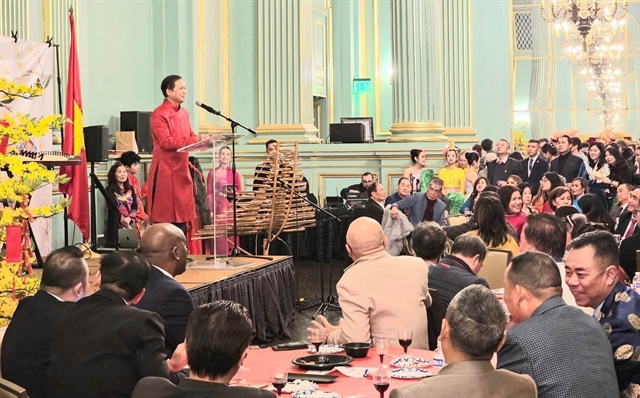 |
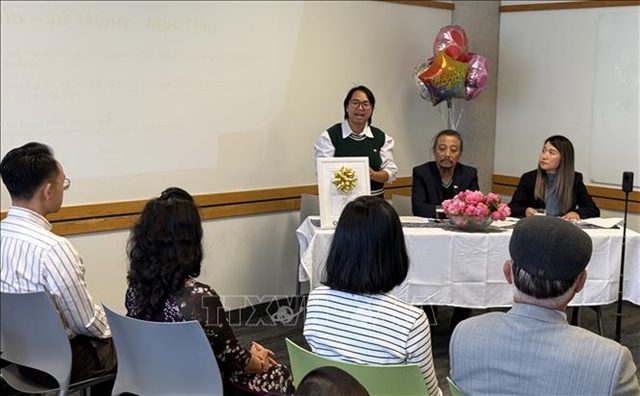
| Consul General of Việt Nam in San Francisco Hoàng Anh Tuấn speaks at a gathering of overseas Vietnamese to celebrate the traditional Lunar New Year. — VNA/VNS Photo Ngọc Quang |
In mobilising resources from overseas Vietnamese, the role of Vietnamese representative missions abroad cannot be overlooked. These missions are not merely places where consular and traditional diplomatic affairs are conducted; they are also hubs linking overseas Vietnamese communities with domestic development needs.
Immediately after Resolution 23 was issued, the Embassy of Việt Nam in Russia held discussions with the leadership of the Union of Vietnamese Associations in the country and received positive feedback from the community.
Việt Nam’s Ambassador to Russia Đặng Minh Khôi said the embassy would communicate the Resolution’s spirit to the community through appropriate channels, while translating its content into practical activities.
According to Khôi, the resolution’s innovation lies in changing the perceived role of Vietnamese communities abroad.
While the previous Resolution 36-NQ/TW placed considerable emphasis on mobilising and encouraging overseas Vietnamese to turn their attention towards their homeland, Resolution 23 notes that Vietnamese people abroad are an inseparable part of the Vietnamese national community.
At the same time, it identifies them as one of the country’s most important strategic resources, helping to enhance Việt Nam’s overall strength.
Vietnamese communities abroad are also identified as a bridge between Việt Nam and the world, helping to build, develop and safeguard the Fatherland.
“This is a strategic shift, consistent with the development requirements of the new era, and it will certainly create additional momentum for overseas Vietnamese to make greater contributions to the country,” Khôi said.
The ambassador welcomed the idea of harnessing the strategic resources of Vietnamese people abroad for national development, especially in science, technology, innovation, digital transformation, AI, semiconductors, biotechnology and the start-up ecosystem.
Hoàng Anh Tuấn, Consul-General of Việt Nam in the US city of San Francisco, said that Resolution 23 represented a continuation of Resolution 36. It inherited the spirit of great national unity, while taking the approach to overseas Vietnamese affairs to a new level.
According to Tuấn, the resolution will create additional momentum for attracting the resources and expertise of overseas Vietnamese, enhancing the effectiveness of their contributions to the country’s socio-economic development.
With Resolution 23 in place, the consul-general expressed the hope that Vietnamese representative missions would enjoy more favourable conditions for the effort to attract and harness the resources of overseas Vietnamese.
The resolution shows the determination of Party and State leadership, as well as the entire political system, to develop a fuller understanding of the role of Vietnamese communities abroad, acknowledge the contributions of overseas Vietnamese and renew the methods used to engage and mobilise their resources. — VNS
Society
 Society
 Society
 Society
 Society
 Society
 Society
 Society
 Society
 Society
 Society
 Society
 Society
 Society
 Society