 Society
Việt Nam, Singapore promote cooperation through Party-to-Party channel
1.
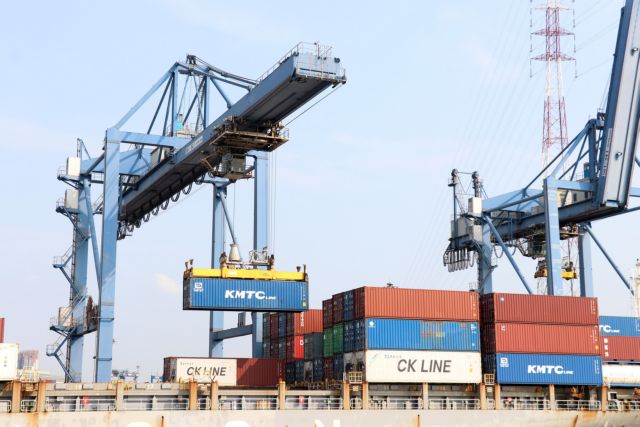 |
| Cargo operations at Tân Cảng–Cát Lái Port in HCM City, Việt Nam's largest container port and one of the world's busiest container terminals. — VNA/VNS Photo |
HCM CITY — HCM City is studying a roadmap to relocate its remaining inner-city seaports, but experts say reorganising cargo flows rather than moving ports outright should be the priority to ease congestion and improve environmental quality.
The municipal People's Committee has tasked the Department of Construction with working alongside the Ministry of Construction to develop a relocation plan for ports still operating in the urban core.
The proposal forms part of a broader strategy to reduce heavy truck traffic, reshape the city's logistics network and unlock riverfront land for future urban development.
Urban planners and logistics specialists, however, argue that relocating port infrastructure alone will not solve long-standing transport bottlenecks.
Instead, they say the city should first redirect cargo movements, expand inland logistics facilities and strengthen waterway transport before any large-scale relocation takes place.
Container traffic strains urban roads
The debate centres largely on Tân Cảng–Cát Lái, Việt Nam's largest container port and the country's busiest international gateway.
Covering around 160 hectares with more than two kilometres of wharves, the port handles nearly six million twenty-foot equivalent units (TEUs) of cargo annually.
Its strategic location has helped fuel economic growth, but it has also generated enormous pressure on eastern HCM City's transport network.
Major roads including Nguyễn Thị Định, Đồng Văn Cống, Võ Chí Công and Nguyễn Duy Trinh, together with key intersections such as Mỹ Thuỷ, Phú Hữu and An Phú, must accommodate motorcycles, private vehicles and thousands of container trucks every day.
The city has launched a series of infrastructure projects, including widening Nguyễn Thị Định Street, completing the Mỹ Thuỷ interchange, closing gaps along Ring Road No. 2 and improving road links serving the port area.
Yet many experts believe expanding roads alone cannot keep pace with rising freight demand.
According to urban planning expert Nguyễn Duy Thành, the underlying problem lies in the logistics model itself, which requires tens of thousands of heavy trucks to travel through densely populated neighbourhoods each day.
"The road network cannot continue expanding indefinitely simply to accommodate more container traffic," he said.
"The priority should be to reduce the number of trucks entering residential districts rather than continually widening roads."
Architect Ngô Viết Nam Sơn shared a similar view, warning that relocating ports does not mean shutting down existing facilities overnight.
He noted that Cát Lái had developed into a complex logistics ecosystem that includes customs offices, container depots, warehouses, shipping lines, freight companies and thousands of workers.
Any abrupt relocation without sufficient replacement capacity could disrupt supply chains and drive up logistics costs.
Instead, he suggested gradually shifting cargo flows rather than immediately relocating all port operations.
Long-distance import and export cargo, mother vessel services and international shipping routes that can be efficiently handled at the Cái Mép Thị Vải deep-water port complex should gradually be redirected there.
Meanwhile, Cát Lái could continue serving regional cargo distribution, urban logistics operations and barge transport connecting inland terminals.
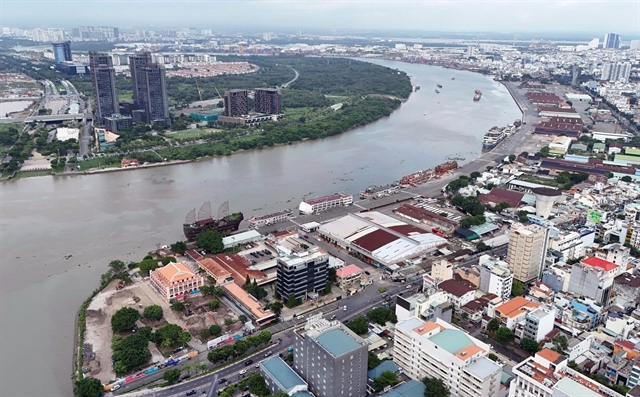 |
| The Nhà Rồng –Khánh Hội port area along the Sài Gòn River is earmarked for redevelopment as part of HCM City's port relocation strategy.— VNA/VNS Photo |
Reshaping the logistics network
Experts say the restructuring should extend well beyond seaport operations.
Container depots and inland container terminals should gradually move closer to industrial parks, manufacturing centres and inland waterways, particularly along Ring Roads No. 3 and No. 4.
Relocating customs clearance facilities, warehouses and distribution centres nearer production areas would shorten transport distances and reduce unnecessary truck movements into the city centre.
Greater use of barges is also viewed as a key solution.
Instead of relying primarily on road transport, cargo could be transferred between inland depots and major seaports via rivers, easing pressure on urban roads while lowering transport costs and emissions.
Following the recent administrative restructuring, HCM City now oversees a much larger maritime system stretching from Bình Dương through Cát Lái and Hiệp Phước to the Cái Mép Thị Vải port complex.
Including offshore oil and gas facilities, the city manages 99 ports, creating an opportunity to coordinate development across the entire network rather than allowing each port to expand independently.
Within this framework, Cái Mép Thị Vải is expected to strengthen its role as the country's principal international gateway, handling direct services to markets such as the US and Europe.
Hiệp Phước, meanwhile, could specialise in urban logistics and cargo currently transported through densely populated districts.
Ngô Viết Nam Sơn said businesses would only agree to shift cargo if alternative logistics routes offer competitive costs and transit times.
"If the new system involves additional procedures, extra handling charges or longer transport times, businesses will continue choosing Cát Lái despite increasing congestion," he said.
Beyond moving ports
Specialists believe any relocation programme should be accompanied by broader reforms across the logistics sector.
These include pricing policies that encourage cargo redistribution, coordinated barge operations, integrated customs procedures and digital platforms enabling real-time cargo tracking from factories and inland depots to international vessels.
A unified logistics management system would allow containers to move seamlessly through the supply chain rather than passing through multiple disconnected platforms.
At the same time, experts stress that the future use of riverfront land released by relocated ports must be clearly defined from the outset.
Former port sites along the Sài Gòn River occupy some of the city's most valuable urban land.
Without transparent planning and effective public oversight, they warn, commercial development could overshadow the original objectives of reducing congestion, improving environmental quality and creating more public space.
The relocation strategy builds on a national policy first approved in 2008, which envisioned moving several inner-city ports to improve transport efficiency while transforming former industrial waterfronts into public and commercial urban areas.
Port areas such as Nhà Rồng Khánh Hội and Ba Son have already undergone redevelopment, while Tân Thuận remains one of the last major facilities awaiting relocation.
Moving Tân Thuận is considered essential for the construction of Thủ Thiêm No.4 Bridge, a key infrastructure project that will strengthen transport links between the city centre and southern districts.
Officials view the broader restructuring of HCM City's port system as part of the city's long-term development strategy.
By integrating logistics planning with transport infrastructure, riverfront redevelopment and industrial growth, the city aims to build a more efficient freight network while improving the quality of life for residents living near its busiest transport corridors. — VNS
Society
 Society
 Society
 Society
 Society
 Society
 Society
 Society
 Society
 Society
 Society
 Society
 Society
 Society
 Society