 Society
Việt Nam, Singapore promote cooperation through Party-to-Party channel
1.
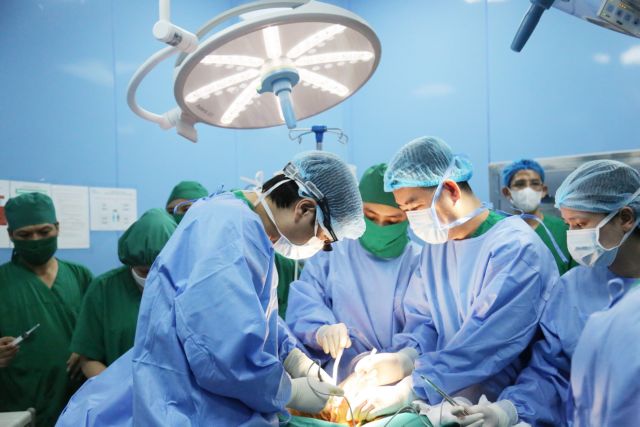 |
| Medical teams perform a multi-organ retrieval procedure from a brain-dead donor at Bãi Cháy Hospital in Quảng Ninh Province on the night of July 25. VNA/VNS Photo |
HÀ NỘI — The Ministry of Health has proposed that people aged 18 to 24 be allowed to donate organs while alive only to family members, while those donating to people outside their family would have to be at least 25 years old.
The proposal is included in a draft Law on Donation, Removal and Transplantation of Human Tissues and Organs and Donation and Removal of Cadavers, on which the ministry is currently seeking public feedback.
According to the draft, after two decades of implementation, the 2006 law has provided an important legal framework for the development of human tissue and organ transplantation techniques in Việt Nam.
As of March 2026, medical staff in Việt Nam had performed a total of 11,187 human organ transplants, including 9,969 kidney transplants, 1,005 liver transplants, 177 heart transplants and 27 lung transplants.
However, the sector still faces several shortcomings that need to be addressed, according to the ministry. One major gap is the lack of a legal framework for retrieving tissues and organs after circulatory death. The current law permits organ and tissue retrieval only after brain death, while globally, organs donated following circulatory death accounted for about 28 per cent of all donated organs in 2024.
Age-related regulations also remain inadequate. Current rules do not allow people under 18 to register as post-mortem donors, while there is no appropriate age threshold for blood donation. In addition, the minimum age of 18 for living organ donation is considered insufficiently stringent to prevent disguised trafficking in human tissues and organs.
Under current regulations, people aged 18 or older who have full civil capacity are entitled to donate their tissues and organs while alive and after death, as well as donate their bodies. The Ministry of Health considers these provisions to have several shortcomings.
Specifically, people aged 18 may still be undergoing physical and cognitive development and may not yet have stable employment or income. Meanwhile, the existing law does not clearly distinguish between donations made to family members and those made to unrelated recipients.
The ministry also cited World Health Organization information indicating that brain regions involved in judgment and decision-making continue to develop into the mid-20s. Kidney function reaches its peak between the ages of 20 and 30 and begins to decline after 40.
People who donate a kidney between the ages of 18 and 25 face a significantly higher risk of developing chronic kidney disease over the following 20-30 years, with an estimated lifetime risk of 0.3-0.5 per cent, compared with 0.03 per cent in the general population. Medical authorities also recommend against kidney donation by people under 25, except when the donation is made to a blood relative.
The draft law therefore proposes separate age requirements for living organ donors. Under the proposal, people aged 18 or older could donate organs to family members, while those aged 25 or older could donate organs to people outside their family.
Conditions for living donations of tissues and cells are also outlined in the draft. People aged 18 or older would be permitted to donate tissues and cells. Those aged 15 to under 18 could donate cells or regenerable tissues for therapeutic purposes, with the consent of both the donor and their legal representative. Children under 15 could donate cells or regenerable tissues for treatment with the consent of their legal representative.
The ministry said the proposed amendments were aimed at strengthening safeguards for living donors while ensuring that organ transplantation continues to develop in a safe, ethical and sustainable manner. — VNS
Society
 Society
 Society
 Society
 Society
 Society
 Society
 Society
 Society
 Society
 Society
 Society
 Society
 Society
 Society