 Society
.jpg)
Nestlé Vietnam CEO honoured with 2026 Thánh Gióng Cup
1.
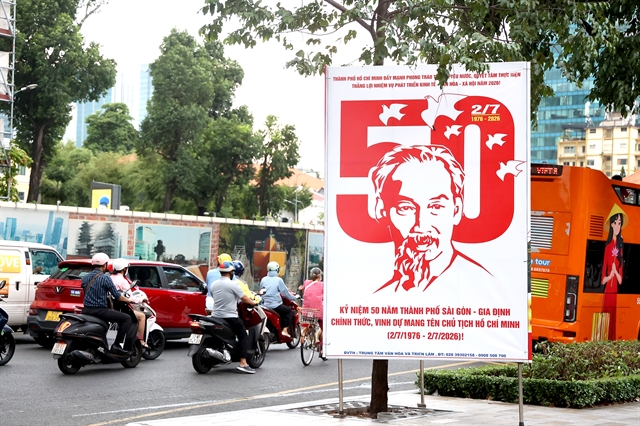 |
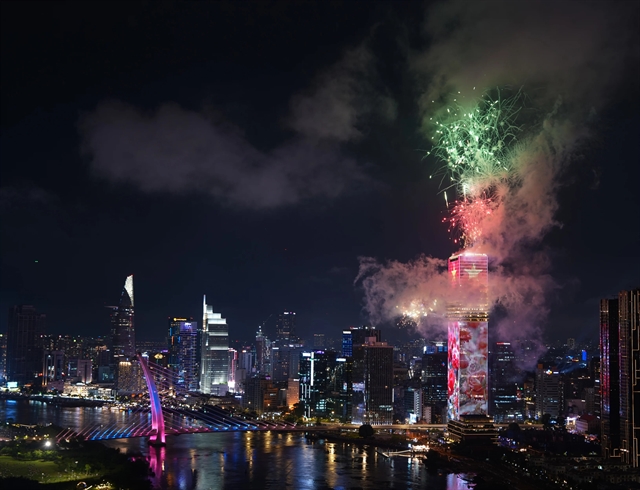
| HCM City has pursued its ambition of becoming a smart, globally competitive metropolis. — VNA/VNS Photo |
HÀ NỘI — Fifty years after being named in honour of President Hồ Chí Minh (July 2, 1976–2026), the southern city has consolidated its position as Việt Nam’s largest economic hub, leading national growth through its pioneering spirit of innovation and reform, while pursuing its ambition of becoming a smart, globally competitive metropolis.
Highlights in pioneering innovation
HCM City’s transformation has been shaped by its willingness to pioneer bold reforms and test new development models.
One of the clearest examples was the development of the Phú Mỹ Hưng urban area in the early 1990s. At the time, the city's southern part was largely undeveloped marshland with poor transport links.
Through strategic vision, innovative mindset, a determination to overcome institutional and policy barriers, and unprecedented cooperation with foreign partners, the city launched Việt Nam’s first modern urban development project, marking a breakthrough in urban planning while pioneering a new approach to market-oriented development and mobilisation of social resources.
Architect Ngô Viết Nam Sơn recalled that the project site could only be accessed by boat before construction began. Few imagined it could become one of Việt Nam’s model urban areas.
He said the city’s readiness to embrace international development practices and overcome institutional barriers turned what once seemed impossible into reality, while pioneering Vietnam’s first public-private partnership in urban development, setting a precedent for developing many new urban areas nationwide.
Phú Mỹ Hưng was not an isolated success. Over the past five decades, HCM City has consistently served as a testing ground for breakthrough policies that were later institutionalised and expanded nationwide.
Former Standing Deputy Secretary of the municipal Party Committee Phạm Chánh Trực said the city has repeatedly pioneered reforms by experimenting with unprecedented mechanisms and policies, creating development models that have benefited both the city and the country.
Among its landmark initiatives were the Tân Thuận Export Processing Zone - the first export processing zone of Việt Nam that paved the way for foreign direct investment; the Quang Trung Software Park - a pioneer in software development and digital transformation; and the Hồ Chí Minh Stock Exchange (HOSE), which laid the foundation for the country’s modern capital market.
Economist Trần Du Lịch noted that many of Việt Nam’s major market-oriented economic policies were first shaped through HCM City’s practical experience. Since the early 2000s, the Politburo and the National Assembly have adopted a series of resolutions granting the city greater autonomy and special mechanisms, enabling it to continue piloting innovative policies and mobilising new development resources.
Growth-driving, innovative hub
From a war-scarred city, HCM City has grown into Việt Nam’s largest economic centre and a strategic growth pole. Following the expansion of its development space on July 1, 2025, the city now has an economy estimated at around VNĐ3 quadrillion (nearly $114 billion), contributing roughly 23.5 per cent of the country’s GDP and nearly one-third of the national budget revenue.
Its development model is also shifting toward science and technology, innovation and the digital economy, which are expected to become the main drivers of productivity, competitiveness and sustainable growth.
Looking ahead, the city aims to sustain double-digit economic growth for many years and raise per-capita GRDP to at least $100,000 by 2075. Its long-term vision is to become a global city that embodies Việt Nam’s dynamism, international competitiveness and development aspirations while continuing to pioneer institutional reform, governance quality and national growth.
According to Dr Huỳnh Thế Du from the Fulbright School of Public Policy and Management, HCM City should evolve beyond its role as an economic engine to become a centre for creating new value, strengthening regional linkages and addressing institutional bottlenecks that can stimulate development nationwide.
Chairman of the municipal People’s Committee Nguyễn Văn Được affirmed that the municipal authorities remain committed to their longstanding principle of developing 'for the whole country and together with the whole country' in all their policies.
As it celebrates half a century of bearing President Hồ Chí Minh’s name, the southern metropolis is entering a new chapter, with the proposed Special Urban Law expected to provide an unprecedented institutional framework to unlock its full potential and accelerate its journey toward becoming a modern, globally connected and highly liveable city, he said. — VNA/VNS
Society
 Society
 Society
 Society
 Society
 Society
 Society
 Society
 Society
 Society
 Society
 Society
 Society
 Society
 Society