 Society

Hà Nội's National Assembly deputies urged to fulfill commitments to voters
1.

|
| Pupils at Nguyễn An Ninh Primary School in Tam Hiệp Ward, Đồng Nai City take part in a lesson using artificial intelligence. — VNA/VNS Photo |
ĐỒNG NAI — Đồng Nai City is stepping up investment in schools, digital technology, and teacher training as mandated by the Politburo's Resolution No. 71, which aims to drive major reforms in education.
Since the resolution was issued in August 2025, the southern city has launched a wide-ranging programme to improve teaching quality, strengthen the education workforce, modernise school infrastructure, and accelerate digital transformation.
Schools are putting the reforms into practice through professional development, training courses, workshops, and action plans tailored to local needs.
The focus is on modernising teaching methods, expanding the use of information technology and artificial intelligence (AI), developing digital learning resources, and assessing students on competencies rather than rote learning.

|
| Pupils at Nguyễn An Ninh Primary School in Tam Hiệp Ward work on a STEM group project in class. — VNA/VNS Photo |
At Nguyễn An Ninh Primary School in Tam Hiệp Ward, the reforms have been introduced across all teaching departments.
The school has expanded experiential and play-based learning to encourage pupils to become more active, independent, and creative.
Its principal, Hoàng Thị Ngọc, said detailed action plans had been drawn up for every area of the school while ensuring teachers and staff understood the aims of the resolution.
The school is also expanding digital learning, integrating AI into teaching, and developing science, technology, engineering, and mathematics (STEM) education to improve learning outcomes, she said.
Trần Ngọc Thắng, deputy director of the city Department of Education and Training, said the Party and State's key education policies, particularly Resolution No. 71, would be scrupulously implemented.

|
| Students from Lạc Hồng University in Trấn Biên Ward performed hands-on trials for their "Your Voice" software on people with hearing impairments, and received positive feedback. — VNA/VNS Photo |
Alongside the 2018 General Education Programme, the city is strengthening its teaching workforce, upgrading schools, and expanding digital transformation across the education system.
It is also investing in a modern education network to meet the growing demand for a skilled workforce.
With more than one million students and almost 53,000 teachers and administrators, Đồng Nai has one of the country's largest education systems.
Under its master plan for 2021–30, the city seeks to expand its modern school network, promote digital education, and improve access to learning, particularly in remote and border areas.
It also aims to become a regional centre for education, training, and vocational education by developing new digital learning models and establishing major university precincts in the urban areas of Long Thành, Nhơn Trạch, Long Khánh, and Đồng Xoài.
This year, the city is accelerating a VNĐ700 billion (US$26.6 million) project to improve teaching and learning in the eight communes of Lộc Thành, Lộc Tấn, Lộc Thạnh, Tân Tiến, Thiện Hưng, Hưng Phước, Đăk Ơ, and Bù Gia Mập.
Its education system includes 1,350 pre-schools and general education schools.
Some 71 per cent of public schools currently meet national standards.
|
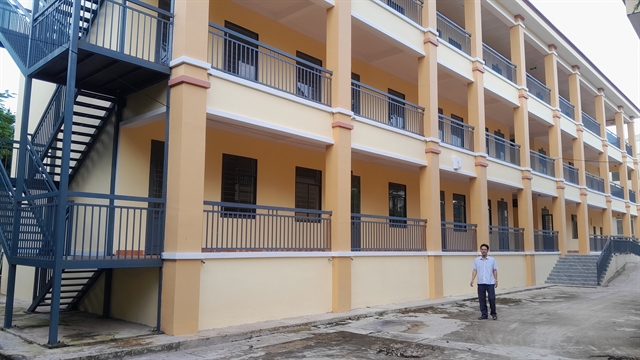
| A view of some of the facilities at the Bù Đốp Ethnic Minority Boarding Secondary School in Thiện Hưng Commune. — VNA/VNS Photo |
Investment will continue in boarding schools, classrooms, specialist facilities, and multi-purpose buildings. Authorities are also reviewing land-use plans to ensure every border commune has at least one combined boarding school covering between five and 10 hectares.
The education sector also plans to recruit more teachers, particularly to teach English and information technology, offer incentives to attract staff to national border areas, and strengthen teachers' professional and digital skills.
At a recent meeting with the Department of Education and Training, Nguyễn Văn Út, chairman of the city People's Committee, called for a long-term road map to expand the network of nationally recognised schools.
He also urged authorities to prepare serviced land to attract private investment while prioritising funding and land allocation for areas under the greatest pressure.
He said the sector should also modernise management, improve teaching quality, and speed up the adoption of digital technology and AI to build an integrated education database capable of supporting the city's future workforce needs. — VNS
Society
 Society
 Society
 Society
 Society
 Society
 Society
 Society
 Society
 Society
 Society
 Society
 Society
 Society
 Society