 Society

Sang proves talent in virtual taekwondo
1.
|
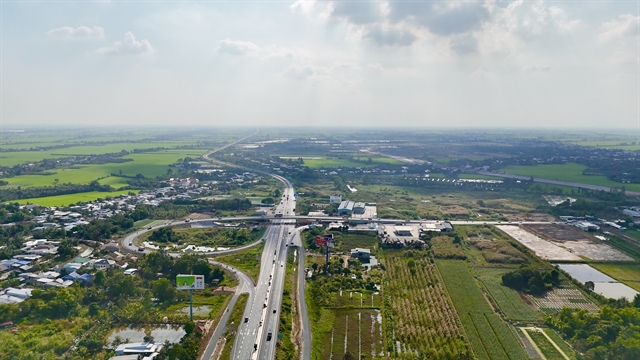
| A section of the western section of the strategic North–South transport corridor in An Giang Province. The proposed Đức Hòa–Mỹ An expressway project is expected to be a part of this corridor. — VNA/VNS Photo Thanh Sang |
HCM CITY — The Đức Hòa–Mỹ An expressway project is estimated to cost nearly VNĐ45.5 trillion (US$1.7 billion), according to a recent proposal by the Mỹ Thuận Project Management Board.
A proposal recently submitted to the Ministry of Construction states that the project is expected to help complete the western section of the strategic North–South transport corridor, strengthening connectivity between the Mekong Delta and HCM City.
The 63.6km route will pass through Tây Ninh and Đồng Tháp provinces, with four fully completed lanes and a design speed of 120km/h.
Its starting point would connect with HCM City’s Ring Road 4, about 10km from the Hòa Khánh interchange in Đức Huệ Commune, Tây Ninh Province. The endpoint would link to the Phase 1 section of the Mỹ An–Cao Lãnh Expressway in Đốc Binh Kiều Commune, Đồng Tháp Province.
The project management board has also proposed different investment scenarios for the project.
Under Scenario 1, the expressway would be built on a conventional embankment foundation, combining road embankments with bridge structures. The preliminary investment cost for this option is estimated at nearly VNĐ37 trillion ($1.4 billion).
Scenario 2 involves constructing the expressway entirely on viaducts, except at interchange areas. The preliminary investment cost under this option is estimated at nearly VNĐ45.5 trillion.
The project management board has recommended the second option, based on assessments of technical factors, climate change adaptability, lower land clearance requirements and minimised impacts on communities and irrigation systems, as well as considerations for spatial development along the route.
A representative of the board said that the project is expected to share traffic volumes and ease pressure on National Highway N2 and the surrounding road networks, in addition to its contribution to the strategic North–South transport corridor and the connectivity between the Mekong Delta region and HCM City.
“The project will also help enhance transport capacity, promote socio-economic development and ensure national defence and security in the country’s southwestern border region,” said the representative.
If approved, construction will begin in 2027. The entire project is scheduled to be completed and put into operation in 2030. — VNS
Society
 Society
 Society
 Society
 Society
 Society
 Society
 Society
 Society
 Society
 Society
 Society
 Society
 Society
 Society