 Society
Việt Nam, Denmark issue joint statement on establishment of Comprehensive Strategic Partnership
1.
|
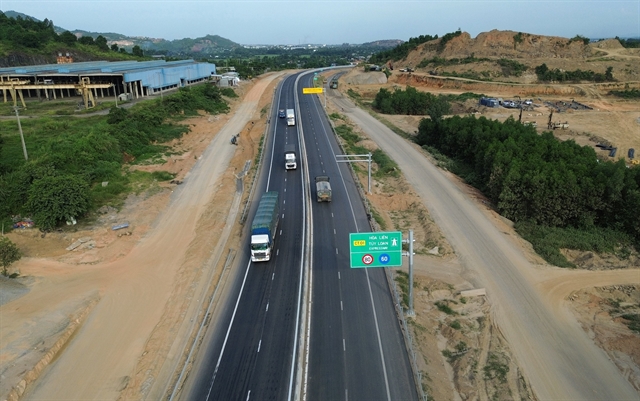
| A section of the North-South Expressway. VNA/VNS Photo |
HÀ NỘI Investment in the North–South Expressway will be implemented in phases, prioritising sections based on urgency, transport demand and the ability to balance resources and helping create a major breakthrough in socio-economic infrastructure, according to the Ministry of Construction.
In a meeting on preparations for expanding sections of the eastern North–South Expressway, Minister of Construction Trần Hồng Minh said that the route is the country's main transport artery and plays a particularly important role in socio-economic development, national defence and security.
The expressway has gradually been completed and put into operation, but many sections have so far only been built in stages, with some limited to four lanes, Minh said.
Expanding and improving the eastern expressway is essential for comprehensive development of socio-economic infrastructure, he added.
The main objective is to meet growing transport demand and create new momentum for the nation's growth.
Minh asked project managment units (PMUs) and consultancy units to assess the current state of the entire expressway, which is divided into three sections: Cao Bằng - Hà Nội, Hà Nội - HCM City and HCM City - Cà Mau.
For each component route and project, the assessment includes traffic flow, scale and technical standards to use as a basis for proposing the scope of project investment.
The construction ministry agreed on an investment research plan to look into expanding the four-lane highways to six lanes as planned, limiting the need to continue expansion projects into the future, wasting time, resources and affecting the usage of the entire route.
Minh asked the PMUs and consulting units to coordinate with relevant agencies to review, supplement and clarify the legal and practical basis in the pre-feasibility study to more fully demonstrate the need to invest in expanding the expressway.
In particular, the content of the report needs to evaluate the effectiveness of project investment, with a focus on accounting for socio-economic efficiency in resource use, assessing the impact of construction activities, creating jobs and contributing to economic growth to provide quantitative assessment results as a basis for consideration.
As for the medium-term public investment portfolio over the next five years, the ministry agreed to prioritise projects after allocating capital for urgent tasks, including newly started expressway projects, to ensure the target of 5,000km is reached by 2030.
With three existing component projects invested in through a public-private partnership (PPP) method, namely Diễn Châu - Bãi Vọt, Nha Trang - Cam Lâm and Cam Lâm - Vĩnh Hảo, the minister assigned the Việt Nam Road Administration to work with existing BOT project investors to agree on an expansion investment plan and update work results in the project pre-feasibility report.
For component projects that have previously received public investment, the ministry recommended continuing to evaluate the feasibility of investing from the State budget compared with the PPP method to report to authorities proposing expansion in public investment. Fees would be paid after completion and research would also be done on plans to recover State capital.
The ministry’s Department of Planning and Finance has been assigned to coordinate with project management boards to review the tasks and ongoing workload of each board, as a basis for advising investors in implementing next steps for component projects. VNS
Society
 Society
 Society
 Society
 Society
 Society
 Society
 Society
 Society
 Society
 Society
 Society
 Society
 Society
 Society