 Opinion


Hong Kong's First Five-Year Plan sets out long-term vision for development
1.
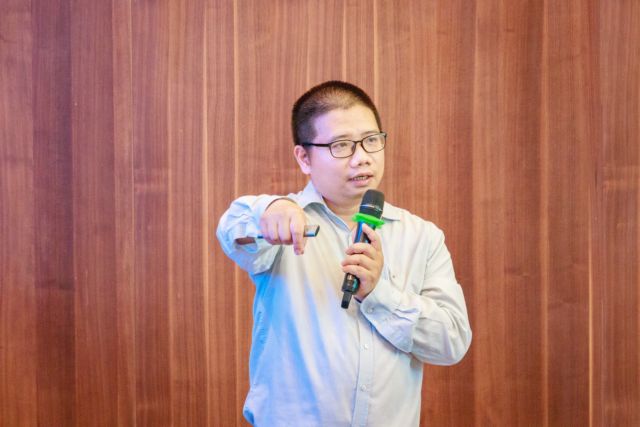 |
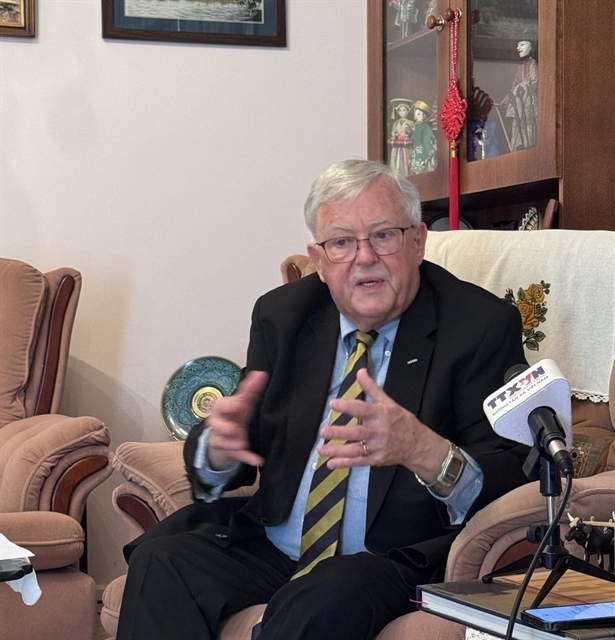
| Dr Nguyễn Xuân Dũng, Head of the Quantum Physics Research Group at the Institute for Interdisciplinary Research in Science and Education. Photo ICISE |
Dr Nguyễn Xuân Dũng, Head of the Quantum Physics Research Group at the Institute for Interdisciplinary Research in Science and Education (IFIRSE, ICISE) spoke to Việt Nam News reporter Nguyễn Khánh Chi about the importance of quantum technology in Việt Nam's development strategy in the new era.
To foster new drivers for double-digit growth, what must Việt Nam do when it can no longer rely on traditional engines but must instead focus on innovation driven by science and technology?
Việt Nam is currently an economy with a GDP size ranked roughly between 31st and 33rd in the world, yet its GDP per capita ranks only around 118th (these figures may vary slightly depending on the data source, but the gap between the two rankings remains significant). Escaping the 'middle-income trap' is a difficult challenge for the country, as the advantage of cheap labour is gradually diminishing alongside an aging population, while natural resources are finite.
As far as I’m concerned, the solution to this problem lies in Việt Nam shifting toward a growth model based on labour productivity, meaning the creation of production value based on knowledge and technology, rather than relying on capital, cheap labour and raw resources as in the past.
To achieve this transformation, Việt Nam naturally needs systematic and well-directed investment in basic science, applied science and technology. The Party and the State have been insightful and timely in identifying the development of science and technology as an urgent requirement for the current period. However, since the country’s resources are limited, it is essential to select the right strategic focal points and aim for technological autonomy, avoiding fragmented investments that waste the budget without yielding proportional results.
As a researcher, I believe that we first need to dismantle the heavy administrative management mechanisms that currently hinder the execution of scientific tasks. This must be accompanied by a shift in mindset: accepting the inherent risks and time lags of scientific research. The journey from a research result to a practical application is often long and does not always guarantee success. Furthermore, there needs to be stronger coordination between the public and private sectors in commissioning and implementing science and technology tasks, ensuring that research is closely linked to the real needs of the economy while mobilising all available resources for development.
Most importantly in the current stage, in my view, is the investment in high-quality human resources for science and technology. To achieve this, it is necessary to build in-depth STEM programmes starting from the general education level, reform higher education toward a research-oriented model, and establish large, prestigious research centres capable of both training and developing a domestic workforce. Additionally, there must be policies to support talent and attract overseas Vietnamese intellectuals, creating the right conditions for them to feel secure in contributing to the country.
Finally, international cooperation in science and technology must be intensified. Through such collaboration, domestic experts can gain access to the cutting-edge knowledge the world is pursuing, while young students can mature rapidly to meet the country’s demand for high-quality human capital.
 |
| Party General Secretary and State President Tô Lâm chairs the meeting of the standing board of the Central Steering Committee on Science, Technology, Innovation and Digital Transformation in Hà Nội on May 21. VNA/VNS Photo Thống Nhất |
In recent remarks, Party General Secretary and State President Tô Lâm called for a unified understanding that quantum technology is a matter of national strategy, rather than just pure scientific research, and the development of quantum technology must be integrated into the overall implementation of Resolution No 57-NQ/TW. Could you elaborate on these points?
As a physicist, I understand why quantum technology is far more than just 'pure scientific research'. Today, quantum technology has moved beyond the laboratory to become a vital foundation for national capability. This is precisely why developed nations are allocating substantial resources to invest in both quantum science and quantum technology.
The first priority, as emphasised by General Secretary and President Tô Lâm, is security. While current quantum algorithms cannot yet decrypt the cryptographic systems in use today, if Việt Nam does not proactively research post-quantum cryptography to prepare for the future, it will create an extremely dangerous vulnerability for national security.
Furthermore, the development of quantum technology must be integrated into the broader framework of science and technology development under Resolution No 57, advancing in parallel with other spearhead sectors. The synergy between these advanced technologies is both natural and logical. In my view, this is a very profound insight within the statement made by General Secretary and President Tô Lâm.
How would you evaluate the role of quantum technology in meeting the country's requirements for strategic autonomy in the new era?
As previously noted, I highly commend the policy of integrating quantum technology into the overall framework for science and technology development and digital transformation established by the Party and State. Beyond the strategic importance of digital security mentioned earlier, quantum technology contributes to our autonomy in various other strategic sectors - and interestingly, this synergy is bidirectional.
On one hand, semiconductor technology plays a vital role in manufacturing the hardware for quantum devices. Conversely, quantum simulation can lead to breakthrough contributions in developing new materials, which are essential for both the semiconductor industry and national defence. This represents a natural and logical resonance between advanced technologies.
Furthermore, quantum sensors play a critical role in digital transformation. With GPS-independent quantum positioning technology, coordinates can be determined accurately even in the absence of satellite signals or in the presence of jamming, a capability of immense significance for specialised environments and national defence scenarios. In another direction, quantum magnetic sensors can measure ultra-weak electromagnetic signals from the brain and heart without physical contact. This opens up new sources of biomedical data for AI-driven diagnostics, a burgeoning field within digital healthcare.
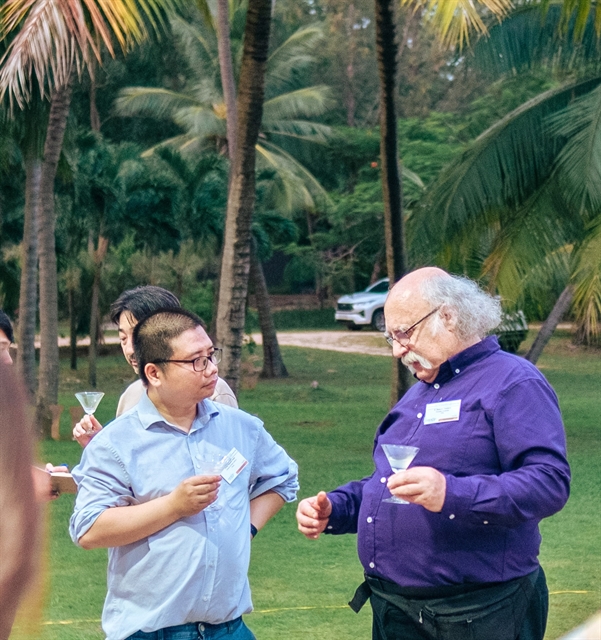 |
| Dr Nguyễn Xuân Dũng in talks with Prof. Duncan Haldane – laureate of the Nobel Prize in Physics in 2016 on the sidelines of an event hosted by the Gia Lai Province-based International Centre for Interdisciplinary Science and Education (ICISE). Photo ICISE |
Quantum technology is a nascent, complex and rapidly evolving field that spans many disciplines, requiring deep and systematic research. How should Việt Nam identify a path that is suitable for its national conditions?
The first principle is to choose based on advantages and needs, rather than following 'fads'. This point has been emphasised in the speeches of General Secretary and President Tô Lâm. Quantum technology is a vast field, ranging from computing and communications to sensors and materials. Việt Nam cannot, and should not, attempt to do everything.
Based on that principle, I believe we can categorise the directions into three levels of priority. I must emphasise that this is a subjective personal opinion and certainly has its limitations, as my knowledge cannot fully cover or deeply encompass every facet of quantum science and technology.
High priority: Act immediately, as it is both urgent and feasible. First and foremost is Post-Quantum Cryptography (PQC). This is a task that needs to be done now; the technological barriers are low (primarily involving mathematics and software without requiring expensive infrastructure), yet its significance for national security is vital. Next are Quantum Sensors; certain types have much lower manufacturing barriers compared to quantum computers and offer early practical applications in national defence and digital healthcare.
Medium-term: Invest in foundations and participate selectively. Regarding Quantum Computing, in my view, Việt Nam should not rush into manufacturing 1,000-qubit hardware to compete with the US or China—that is an incredibly expensive race where our chances are slim. Instead, we should focus on quantum algorithms and software, accessing hardware through international cloud platforms, and building quantum communication capabilities using existing fibre optic infrastructure. This allows us to 'join the game' without bearing massive hardware costs. Additionally, we can develop quantum simulation to serve research into new materials, which simultaneously masters quantum technology and advances material science.
Long-term and continuous investment: human resources and basic research. This is the point I want to emphasise most from the perspective of a basic scientist. Việt Nam possesses a real advantage that we often undervalue: a strong tradition in mathematics. Theoretical quantum research is the 'cheapest' endeavour; it doesn't require clean rooms or million-dollar equipment, it only requires brilliant minds. Investing in training human resources and basic research is the investment with the highest multiplier effect and is the most sustainable, because while technology changes rapidly, a team of elite experts can adapt to any shift.
Finally, because this field is 'fast-moving and involves many sectors', international cooperation is not just an option - it is a prerequisite. No single country can go it alone in the quantum field. Việt Nam needs to proactively connect with the world’s leading centres so that domestic experts can access the most advanced knowledge and the younger generation can grow quickly in a world-class environment.
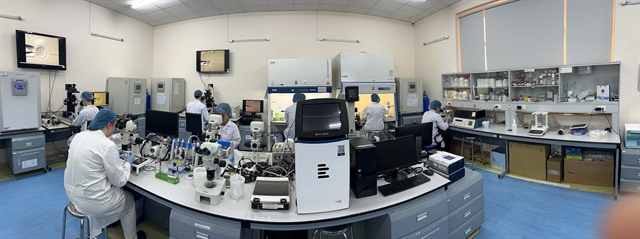 |
| A laboratory of Vietnam National University, Ho Chi Minh City. The university has invested in many modern practical laboratories for both domestic and international students to conduct research, study, and develop science, engineering and technology. VNA/VNS Photo Thanh Vũ |
In which fields should Việt Nam prioritise quantum technology development to achieve the most practical results for national development over the next five to 10 years?
I would like to propose four priority areas for the next five to ten years, ranked by the urgency of national interest and the certainty of the outcomes.
First and most important is Post-Quantum Cryptography (PQC). This is an immediate priority with a relatively low barrier to entry because it relies primarily on mathematics and software. However, its security implications are existential. The specific goal must be to transition critical systems - such as banking, e-government and national defence databases - to quantum-resistant cryptographic standards.
Second is Quantum Sensing. This field offers 'low-hanging fruit' because the manufacturing hurdles are lower than those for quantum computers. Potential applications include biomedical sensors for digital healthcare, sensors for mineral exploration, and infrastructure monitoring.
Third is Quantum Key Distribution (QKD). The objective here is not nationwide coverage, but rather the implementation of selective pilot projects for ultra-secure communication lines serving a few vital government agencies.
Fourth is Software, Algorithms, and Human Capital. To be blunt, a practical result in the next five to ten years is not a 'Made in Vietnam' quantum computer. Instead, it is a robust team of experts and several research groups capable of mastering algorithms and utilising international cloud-based hardware to solve Việt Nam’s specific challenges.
To develop quantum technology, to what extent does Việt Nam need to prepare its infrastructure, human resources and international cooperation?
This question encapsulates three key conditions, each requiring a different level of intensity.
Infrastructure investment should be sufficient, centralised, and shared, rather than massive and fragmented. Instead of building numerous scattered laboratories, resources should be concentrated into a few key national centres. This involves accessing quantum computing hardware via international cloud services, utilising existing fibre optic networks for communication pilots, and limiting manufacturing investment to selected areas such as sensors and materials, ideally integrated with semiconductor infrastructure for shared utility.
Human resources is where the greatest effort must be concentrated. The goal is not to mass-train thousands of people, but to build a 'critical mass' of several hundred genuine experts over the next 10 years. This can be achieved through in-depth domestic training, sending top talent abroad and creating conditions for their return, and tapping into the knowledge of the overseas Vietnamese community. Việt Nam has a genuine advantage in its tradition of mathematics and theoretical physics, which should be leveraged to the fullest.
International cooperation is not an option but a mandatory requirement, at a deep yet selective level. It is essential to establish joint laboratories, exchange experts, send students to world-class centres, and participate in international standards. However, depth must go hand-in-hand with selectivity. In sensitive areas such as post-quantum cryptography or national defence, Việt Nam must maintain its autonomy and choose partners carefully. We must cooperate to grow, not to become dependent.
In summary, these three levels are not equal: infrastructure needs to be restrained and focused, human resources require maximum investment, and international cooperation must be deep but selective. If a top priority must be chosen, I place human resources above all else. With a talented team, infrastructure and cooperation will follow; without the right people, no amount of money poured into equipment will create real value. VNS
Opinion
 Opinion
 Opinion
 Opinion
 Opinion
 Opinion
 Opinion
 Opinion
 Opinion
 Opinion
 Opinion
 Opinion
 Opinion
 Opinion
 Opinion




