 Society

Singapore Media Festival Returns for its 13th Edition with Refreshed Industry Focus and New Creator Summit
1.
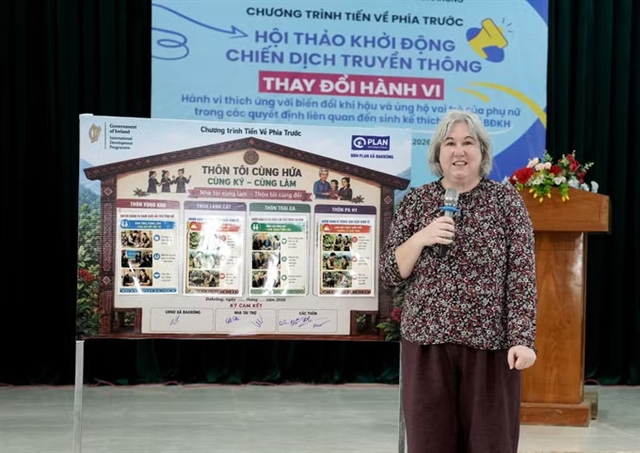 |
| Edel Cribbin, Head of Development Cooperation at the Embassy of Ireland in Việt Nam, hopes the programme will help strengthen communities' capacity for self-reliance and sustainable development. Photos Courtesy of the Embassy of Ireland in Việt Nam. |
Along the western reaches of Quảng Trị Province, beneath the towering Trường Sơn mountain range, many villages and hamlets in communes such as Đakrông, A Dơi and Lìa continue to face significant challenges posed by harsh weather conditions, rugged terrain and limited infrastructure and livelihood opportunities.
Yet from these same remote and disadvantaged communities, climate-resilient community initiatives, women-led green livelihood models and safe highland schools are gradually driving positive change towards sustainable development.
Behind these transformations is the Resilience First Programme, which is helping strengthen local capacity so that highland communities can better adapt to climate change, improve their livelihoods and move confidently towards the future.
Empowering communities through practical solutions
The Resilience First Programme is funded by the Irish Government through the Embassy of Ireland in Việt Nam and implemented by Plan International Vietnam, CARE International in Việt Nam and the Research Centre for Initiatives in Community Development (RIC). The programme operates in Quảng Trị, Phú Thọ and Tuyên Quang provinces, with annual funding of approximately 1.4 million euro.
Edel Cribbin, Head of Development Cooperation at the Embassy of Ireland in Việt Nam, said the programme aims to strengthen communities' capacity for self-reliance and sustainable development.
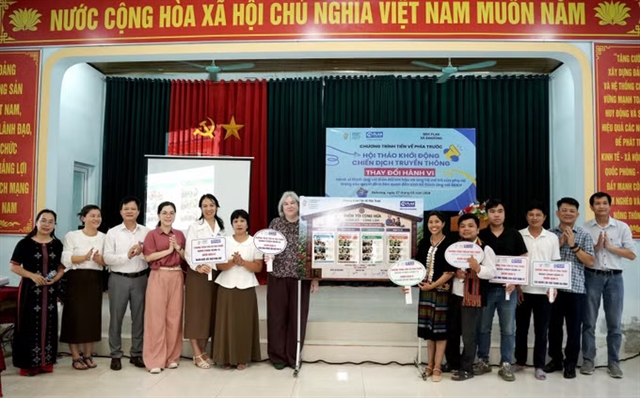 |
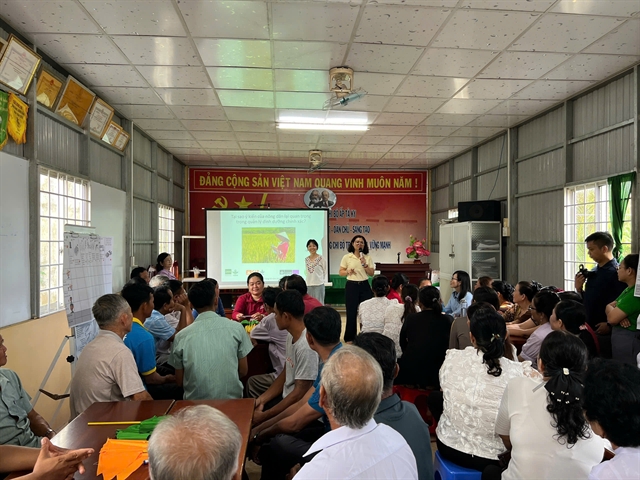
| Representatives of the Embassy of Ireland in Việt Nam take part in a women-led behaviour change communication session on climate change adaptation in Đakrông Commune, Quảng Trị Province. |
In Quảng Trị Province, the programme has been implemented since June 2022 and is scheduled to run until September 2028 in the communes of A Dơi, Tân Lập, Lìa, Đakrông and Tà Rụt.
These mountainous areas are home to large populations of Pa Cô and Vân Kiều ethnic minority communities, where poverty rates remain high and residents are particularly vulnerable to natural disasters and climate change.
A defining feature of the programme is its community-centred approach. Local residents are directly involved in identifying needs, setting priorities, developing plans and operating community models.
To date, the programme has helped 130 households improve their livelihoods and strengthen their resilience to climate change. Some 7,405 people have benefited from 42 climate-resilient micro-infrastructure projects, while 19 schools have implemented climate-resilient and safe-school initiatives.
Beyond improving livelihoods and strengthening resilience, the programme has also enabled local communities to take a more active role in shaping their own development.
During a field visit in late May with representatives from the Embassy of Ireland in Việt Nam and international development organisations to project sites in Đakrông, A Dơi and Lìa, it was clear that local authorities and residents have made determined efforts to adapt to climate change and secure more stable livelihoods.
In Đakrông Commune, the delegation attended a women-led behaviour change communication session on climate change adaptation. Rather than relying on theoretical presentations, the session focused on practical aspects of everyday life, including sharing household responsibilities, adjusting farming practices, conserving water and caring for family members.
The story of Hồ Văn Bôn, an ethnic minority resident of Klu Village in Đakrông Commune, touched many participants.
Bôn is living with a disability, while his wife suffers from a neurological condition. Despite the difficulties facing the family, he continues to do everything he can to support and care for his loved ones.
For Bôn, mutual support within the family provides the motivation needed to overcome hardship and build a better future.
He noted that women in ethnic minority communities often face considerable disadvantages and therefore deserve greater care, understanding and support. In addition to caring for their families, many women work alongside their husbands in the fields and shoulder significant responsibilities in difficult circumstances.
Even simple acts of support, he said, can become a powerful source of encouragement.
Through stories such as these, the programme is helping to bring about changes not only in livelihoods but also in community awareness of gender equality, shared responsibility and inclusive development.
Small initiatives, lasting impact
In many remote villages across Quảng Trị Province, access to clean water remains a pressing concern. Rugged terrain and dependence on rivers and streams leave many households facing water shortages during the dry season, while sanitation conditions remain limited.
Under the Resilience First Programme, a gravity-fed water supply system in Vùng Kho Village, Đakrông Commune, has been developed as a community-managed micro-infrastructure project.
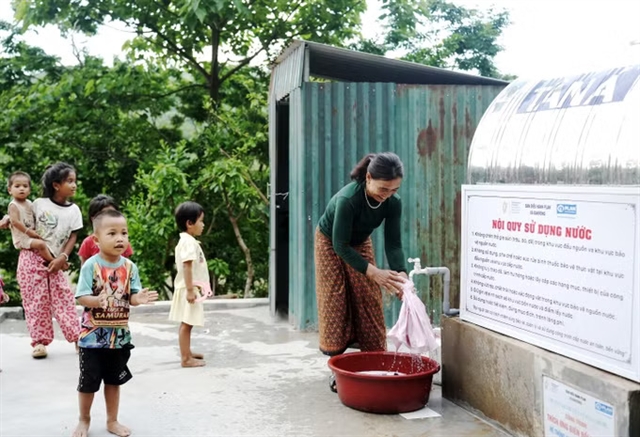 |
| Residents of Vùng Kho Village in Đakrông Commune, Quảng Trị Province, are delighted to have access to a clean and reliable water supply. |
Where residents once relied largely on untreated natural water sources, many households now have access to a more reliable and safer water supply, improving living conditions and reducing health risks.
Hồ Văn Phanh, head of Vùng Kho Village, said one of the project's strengths is that local people are involved not only as beneficiaries but also in planning, selecting options and maintaining the infrastructure after completion.
This approach encourages greater community ownership, strengthens local responsibility and lays the groundwork for sustainable development models in remote areas.
In A Dơi Commune, Ba Tầng Ethnic Minority Boarding Primary and Secondary School is one of 19 schools participating in the programme's climate-resilient and safe-school initiatives.
A range of climate adaptation activities have been introduced, including waste sorting systems, composting facilities and the production of organic fertiliser for school vegetable gardens.
Principal Hoàng Vũ Bằng Giao said the programme has helped improve school facilities while also enhancing students' awareness and skills related to climate change adaptation.
Teachers are particularly encouraged by the growing enthusiasm of students to protect the environment, prepare for natural disasters and serve as "climate ambassadors" within their families and communities.
The spirit of green adaptation is also evident in community livelihood initiatives.
In Lìa Commune, the VANPA model, a women-led green livelihood initiative, is creating more sustainable income opportunities through the production and commercialisation of environmentally friendly organic and bio-fertilisers.
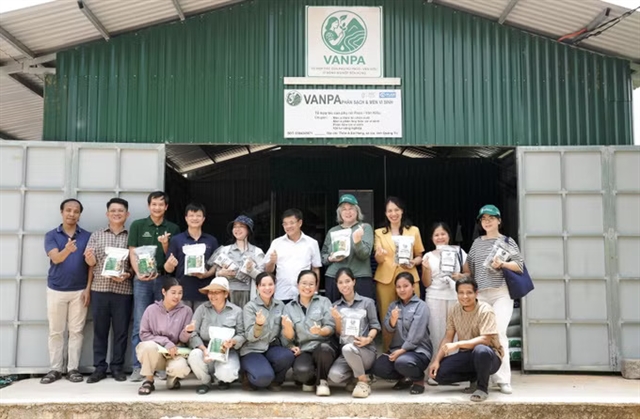 |
| The VANPA model, a women-led green livelihood initiative in Lìa Commune, Quảng Trị Province, is helping create sustainable livelihoods for communities vulnerable to natural disasters. |
What began as small-scale production has evolved into a model in which ethnic minority women are increasingly taking on leadership roles, engaging with markets and improving their financial management skills.
According to Lê Quỳnh Lan, Country Director of Plan International Vietnam, mountain communities today face multiple challenges simultaneously, including natural disasters, climate change and global economic volatility.
As a result, climate-adaptive livelihood models and sustainable community development initiatives are becoming increasingly important.
She noted that the Irish Government not only supports long-term development programmes but also works alongside communities in recovering from natural disasters and stabilising their livelihoods.
Quảng Trị Province has also begun to develop an effective approach to climate adaptation, from promoting green livelihoods to designing policies that reflect the realities of ethnic minority communities.
Looking ahead, Plan International Vietnam hopes to continue working with partners to develop long-term programmes that provide women, ethnic minority groups and other vulnerable communities with greater opportunities to secure sustainable livelihoods and achieve lasting development. VNS
Society
 Society
 Society
 Society
 Society
 Society
 Society
 Society
 Society
 Society
 Society
 Society
 Society
 Society
 Society


.jpg)