 Society

Cambodian PM Hun Manet chairs welcome ceremony for Vietnamese counterpart Lê Minh Hưng in Phnom Penh
1.
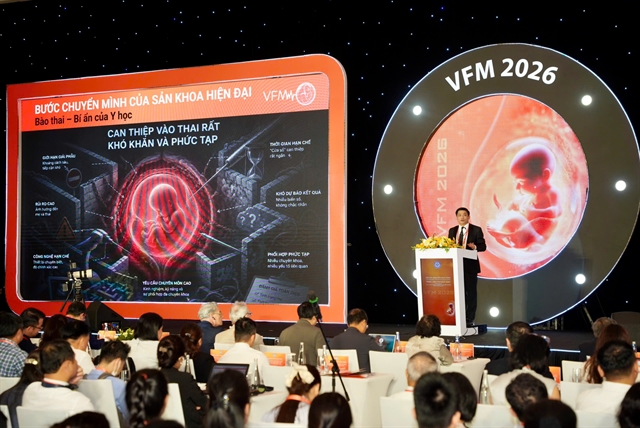 |
| Director of the National Obstetrics and Gynaecology Hospital and People's Physician, Professor Nguyễn Duy Ánh, speaks at the event. — VNS Photo Thanh Hải |
HÀ NỘI — Local and international health experts and scientists gathered in Hà Nội to attend the fourth Vietnam Foetal Medicine Annual Conference held by the National Obstetrics and Gynaecology Hospital on Friday.
Opening the event, National Obstetrics and Gynaecology Hospital director and People's Physician Professor Nguyễn Duy Ánh said: "Foetal intervention is a cutting-edge technique that helps save the lives of children with severe birth defects or complex complications that would be beyond saving if left until birth.
"The rapid development of foetal medicine worldwide opens up new opportunities for early diagnosis, timely intervention and even life-saving treatment of foetuses while they are still in the womb.”
As a pioneer in laying the foundation for the field of foetal intervention in Việt Nam, Ánh noted: “To develop Vietnamese foetal medicine to an international level, the core principle is to treat the foetus as a real human being, a genuine patient, to be cared for, treated and saved.”
“Many emergency cases only have a few golden hours for intervention. If there is a delay, the foetus may progress to another pathological stage, and all treatment measures will become meaningless,” Ánh added.
In Việt Nam, thanks to the dedication of medical professionals and extensive international cooperation, we have gradually mastered many advanced foetal detachment techniques, bringing hope to many families and contributing to improving the quality of maternal and child healthcare,” Ánh said.
Ánh called on leading obstetrics and gynaecology hospitals nationwide to unite and act together to improve the quality of Vietnamese healthcare.
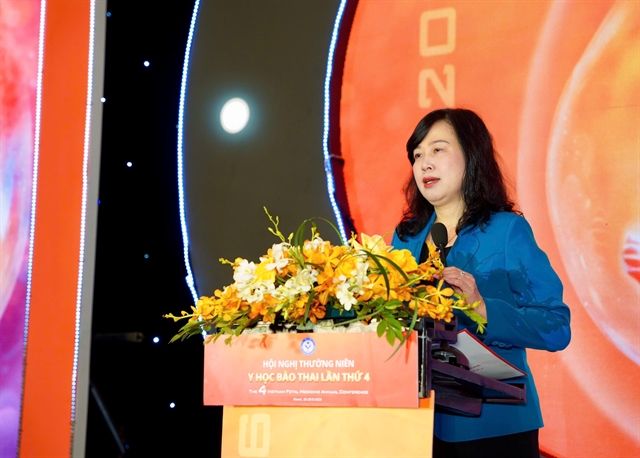 |
| Health minister Đào Hồng Lan speaks at the event. — VNS Photo Thanh Hải |
Speaking at the event, Minister of Health Đào Hồng Lan highlighted the importance of foetal medicine in Việt Nam.
She said the country's maternal mortality rate has decreased fourfold, from 165 cases per 100,000 live births in 2000 to the current rate of just over 40 cases per 100,000 live births. The infant mortality rate has also dropped sharply, to less than 10 cases per 1,000 live births.
Thanks to these achievements, Việt Nam is recognised by the international community as a shining example, making good use of the previous Millennium Development Goals for mothers and children as well as the current Sustainable Development Goals.
These results are largely due to the significant contributions of the obstetrics and gynaecology sector and especially foetal medicine, according to the health minister.
“Recently, a number of foetuses have been saved thanks to foetal cardiac catheterisation techniques, with close collaboration between obstetrics and paediatrics in HCM City. This shows that foetal medicine is no longer limited to diagnosis, but has made remarkable progress in treating and saving foetuses,” Lan said.
To fully develop the field of foetal medicine in the years ahead, the health ministry is continuing to refine the legal framework, develop policies and issue professional procedures and economic and technical standards to facilitate the widespread availability of prenatal screening services, early detection of foetal abnormalities, and the development of advanced intervention techniques.
Lan also said that in the new phase of Việt Nam's healthcare development strategy, the Ministry of Health identifies foetal medicine as one of the key specialities that must be prioritised for development, along with precision, genetic and high-tech medicine.
This is seen as a crucial step in improving the quality of maternal and child healthcare, while also aligning with advanced medical standards worldwide.
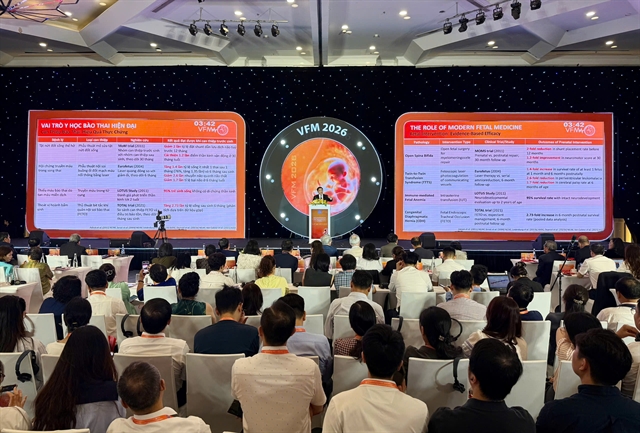 |
| The conference is an opportunity for participants to exchange expertise, provide updates on the latest advances and strengthen professional cooperation. — VNS Photo Thanh Hải |
The conference is an opportunity for more than 500 participants to exchange expertise, provide updates on the latest advances and strengthen professional cooperation.
During the two-day event, participants focused on discussing key issues and future trends in global foetal medicine.
Topics included twin pregnancies and twin-to-twin complications, congenital malformations and diaphragmatic hernia, foetal arrhythmias, laser techniques in foetal intervention and minimally invasive techniques. These are all prominent developments in modern foetal medicine worldwide.
Experts said that timely intervention in the womb is a golden opportunity to save lives and prevent serious birth defects. The ultimate goal of the field is to leverage significant advances in technology and expertise to minimise birth defects, thus ensuring the birth of healthy children.
Vietnamese doctors have already mastered many complex techniques, such as treating diaphragmatic hernia and foetal cardiac catheterisation, resulting in healthier births. To progress further, leading hospitals should focus on investing in equipment and training highly skilled personnel to keep pace with global trends.
Conference participants also suggested adding foetal intervention techniques to the list of services covered by insurance as a way to reduce the financial burden on patients.
Experts also proposed establishing a specialised association to create a strong connection between screening at the primary healthcare level and advanced treatment at major centres. — VNS
Society
 Society
 Society
 Society
 Society
 Society
 Society
 Society
 Society
 Society
 Society
 Society
 Society
 Society
 Society