 Society

VPBank Đất Sen Hồng Music Marathon returns with 15,500 runners in Đồng Tháp
1.
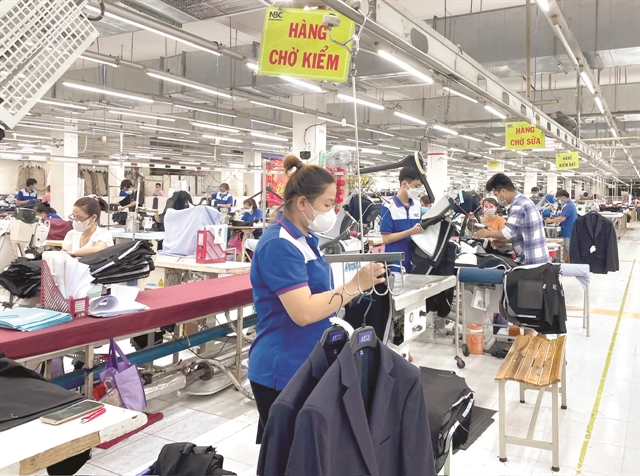 |
| Workers at a garment factory operated by Nhà Bè Garment Corporation in HCM City. — VNS Photo Thu Hằng |
Thu Hằng
For many migrant workers in HCM City, owning a home remains a distant dream, as families squeeze into tiny rented rooms while struggling to cover daily expenses and raise their children in one of the country’s most expensive urban centres.
Thái Thị Nhung and her husband, among those living in an 18-sq.m room at the Youth Workers’ Residential Area 3 in Hồ Chí Minh City’s Tân Thuận Ward, do not dare think about buying a small house.
The couple earn a combined monthly income of VNĐ15 million (US$580), just enough to cover living expenses and their two children’s education.
Đặng Văn Hương, the landlord, said he had kept rents unchanged at VNĐ1.6 million ($62) a month for the past four years to lend a helping hand to the workers.
Living conditions for workers in rented accommodation remained difficult, he said.
HCM City has the country’s largest workforce, comprising more than seven million people and creating enormous demand for social housing and essential services.
Housing has always been the biggest concern for migrant workers.
In the city’s export processing zones and industrial parks, hundreds of thousands of workers continue to live in cramped, poorly equipped dormitories.
Lê Văn Thinh, deputy head of the HCM City Export Processing Zones and Industrial Parks Authority, said providing social housing for workers remained a major challenge.
The city currently has nine worker housing facilities with 1,619 units that accommodate more than 8,900 people, and four more complexes with more than 2,800 units are under development, according to Thinh.
But these numbers are very small compared to the demand from workers employed in export processing zones and industrial parks.
Võ Khắc Thái, vice chairman of the city's Labour Federation, said providing social housing would improve living conditions for workers and help stabilise the workforce, raise productivity, and strengthen the competitiveness of the urban economy.
Many businesses would be willing to provide free housing for workers to retain them and reduce transport costs, he said.
Speaking at a recent conference held in the city to discuss solutions for improving living standards and protecting workers’ rights, Nguyễn Phước Lộc, deputy secretary of the city's Communist Party Committee, called on trade unions and their partners to promote the development of social housing, rental housing, and rent-to-own schemes for workers.
Over the long term, the city should come up with mechanisms to mobilise resources and use public land for workers’ housing schemes, he said.
At the meeting, the Standing Committee of the HCM City Party Committee and the HCM City Labour Federation approved a plan to build 100,000 social housing units for workers in the next five years.
The federation signed agreements with Hoa Sen Group, Phú Cường Group, Tân Thuận Industrial Development Company, and LNT 7979 for building them.
Hoa Sen plans to develop at least 20,000 units in the Bà Rịa–Vũng Tàu area, and LNT 7979 Service Development JSC is considering building 30,000.
Tân Thuận will develop social housing in worker-dense areas such as Hiệp Phước and An Phú Tây communes.
Phú Cường Group plans to build at least 30,000 units for low-income workers.
The federation has established a working group to collaborate with businesses and local authorities to identify suitable land, prioritising development of projects within 10 kilometres of workplaces.
The first is expected to get under way in June this year in Tân Vĩnh Lộc Commune. The 2.8-hectare development will have 1,785 apartments and house more than 4,400 workers.
The other projects are in the process of completing investment procedures.
Võ Hồng Tài, acting general director of Tân Thuận Industrial Development Co Ltd, said the company had signed up for the “Social Housing Development Project for Workers and Labourers in HCM City” as part of the city's efforts to address the housing shortage.
The partnership reflected the company’s social responsibility, he said.
The housing complex would have kindergartens, convenience stores, parks, and community spaces to improve workers’ quality of life, he added.
Workers' welfare
Beyond addressing housing needs, trade unions, in coordination with local authorities and businesses in HCM City, have launched a range of welfare programmes to support workers during Workers’ Month in May.
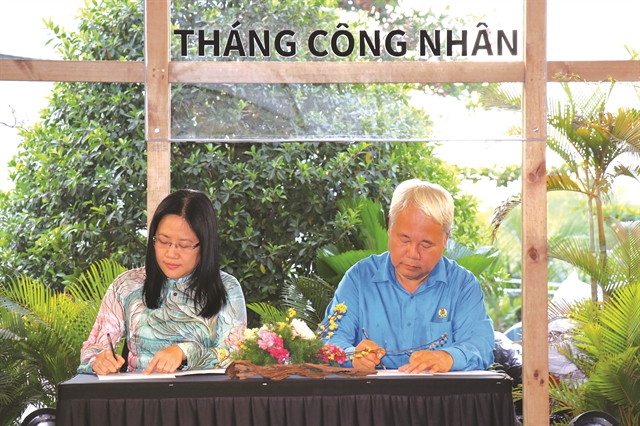 |
| Representatives of HCM City Traditional Medicine Hospital and the HCM City Labour Federation sign an agreement to coordinate health check-ups, consultations and rehabilitation services for workers on April 28. — VNS Photo Thu Hằng |
As many workers struggle with job pressure and rising living costs, Workers’ Month aims to improve both material and spiritual well-being while promoting solidarity and sustainable development.
The federation has signed agreements with seven hospitals to provide free health check-ups and screenings for workers.
The programme aims to provide screenings for 50,000 female workers and occupational disease check-ups for another 30,000 workers during the month.
The programme began at the Workers Culture Palace on May 9, with more than 12,000 female workers receiving free cancer screenings and health consultations.
It is being held on weekends throughout May at seven locations.
According to Trần Hồng Hải, head of the obstetrics and gynaecology department at Phương Chi General Hospital, cervical cancer remains one of the most common cancers among women, but is preventable and curable if detected early.
Early screening plays a major role in reducing mortality rates and treatment costs for both patients and society.
“With the support of artificial intelligence technology, we expect to provide examinations for 700-900 people a day through this programme.”
Huỳnh Xuân Thảo, deputy director of the HCM City Traditional Medicine Hospital, said her hospital and the federation were providing free health check-ups, consultations, and rehabilitation services for workers.
Workers commonly suffer from musculoskeletal and occupational diseases, according to Thảo.
Women working in the garment, electronics, and food-processing industries often face double pressure as they also have to care for their families after work.
Grassroots support
To mark the 18th Workers' Month, the Trade Union of Thạnh Mỹ Tây Ward organised a Workers' Day event on May 16 that attracted more than 500 union members and workers.
There were booths offering discounted essential goods, food stalls providing free meals, and financial support from the CEP Microfinance Organisation.
Workers also received gifts, health consultations and check-ups, disease screenings, and free haircuts, and took part in sports activities.
The trade union gifted electric bicycles to 30 workers, cash of VNĐ2–3 million ($75-110) to 100, and shopping vouchers worth VNĐ300,000 ($11) each to 500.
Nguyễn Thị Hoa, an employee at Trường Sơn Real Estate JSC, received an electric bicycle.
“With my income, buying an electric bicycle for my daughter to travel to school is impossible. I’m really happy,” she said.
Nguyễn Thị Tuyết Thanh, chairwoman of the ward trade union, said each gift reflected the responsibility and gratitude of trade unions and businesses towards workers for their quiet and persistent contributions.
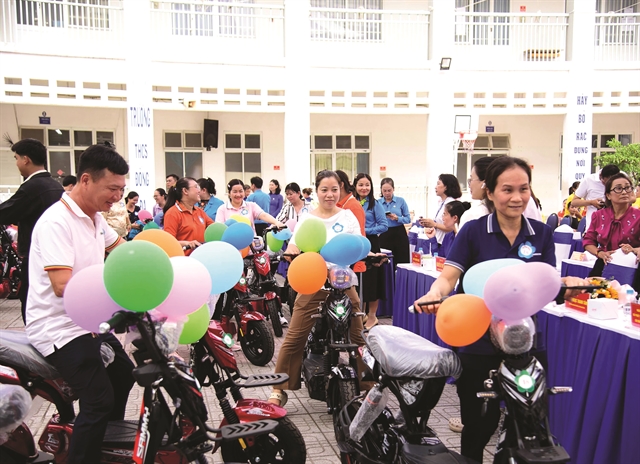 |
| The Thạnh Mỹ Tây Ward Trade Union presents electric bicycles and other gifts to workers on May 16. — Photo courtesy of Thạnh Mỹ Tây Ward’s Trade Union |
Skills training
The federation and Tôn Đức Thắng University signed an agreement on May 15 for 2026–30 to improve workers’ professional skills, vocational training, and digital capabilities.
The university will provide undergraduate and postgraduate programmes as well as short-term courses for trade union officials and workers.
It will also offer scholarships for officials and their children.
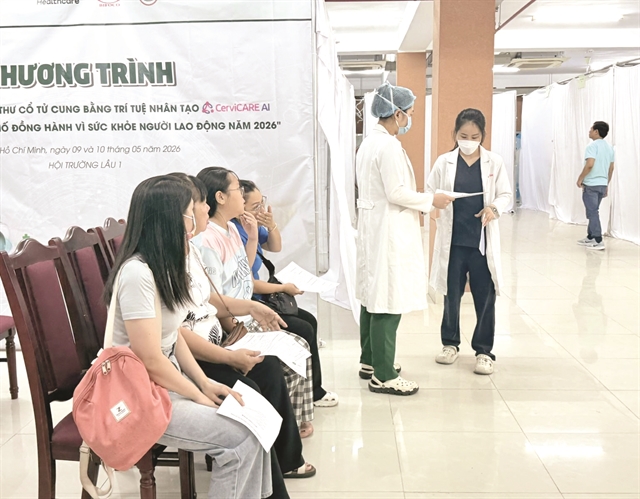 |
| Female workers receive free medical check-ups at the Workers Culture Palace in HCM City on May 9. — Photo Hoàng Tuyết |
The partnership is expected to promote scientific research and technological applications to improve labour productivity, help businesses adapt to digital transformation, and support sustainable development.
Bùi Thanh Nhân, chairman of the HCM City Labour Federation, said trade union officials and workers would have greater opportunities to access training programmes, update skills, and improve professional capacity to meet the demands of the digital economy.
 |
| Workers receive vouchers to purchase essential goods at discounted prices during the opening ceremony of the 18th Workers’ Month 2026 in HCM City on April 28. —VNS Photo Thu Hằng |
Support for workers should not focus solely on immediate assistance, but also on creating steady employment, increasing incomes, and improving living conditions over the long term, he said.
He added that support for workers should go beyond short-term assistance and focus on creating stable jobs, improving incomes and helping workers gradually secure better living conditions.
For many migrant families still living in cramped rented rooms across HCM City, the hope is not only for temporary support, but for the chance to build a more stable and secure future in the city they help sustain every day. — VNS
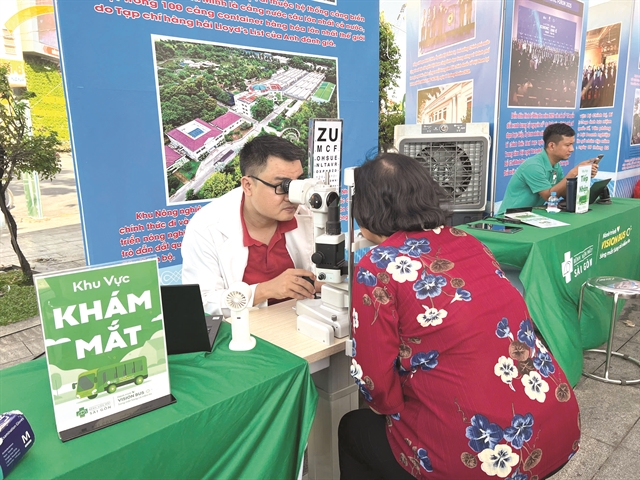 |
Labourers in Thủ Dầu Một Ward receive free eye examinations on May 10. —VNS Photo Việt Dũng |
Society
 Society
 Society
 Society
 Society
 Society
 Society
 Society
 Society
 Society
 Society
 Society
 Society
 Society
 Society