 Society

LANDMARK Launches ‘Destination CENTRAL’: A District-Wide Invitation to Explore the Dynamism, Luxury, and Soul of Central
1.
|
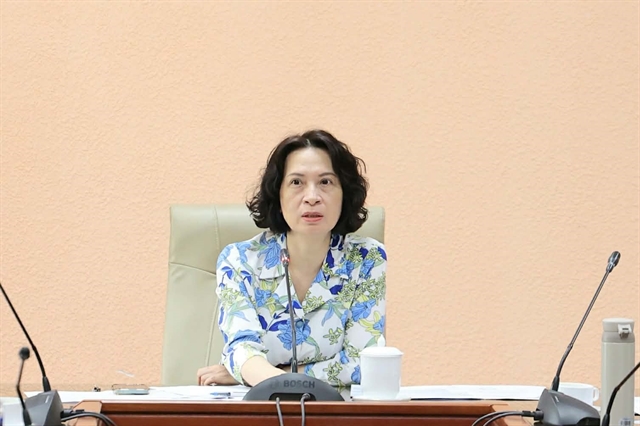
| Nguyễn Thị Liên Hương, Deputy Minister of Health, chairs the meeting. — Photo suckhoedoisong.vn |
HÀ NỘI — The Ministry of Health (MoH) assesses the risk of Ebola entering Việt Nam as currently low but has urged local authorities to strengthen surveillance and proactively implement prevention and control measures.
The view was shared at a hybrid meeting on surveillance and control of Ebola virus disease on Friday morning, chaired by Associate Professor Nguyễn Thị Liên Hương, Deputy Minister of Health, and connected to hundreds of sites nationwide.
At the meeting, Hoàng Minh Đức, director of the Việt Nam Administration of Disease Prevention (VADP), said Ebola is an especially dangerous acute infectious disease that spreads very quickly and can have a case fatality rate of up to 90 per cent.
According to the World Health Organisation (WHO), Ebola outbreaks in the Democratic Republic of Congo and Uganda are evolving in a complex manner.
On May 17, the WHO declared the Ebola outbreaks caused by the Bundibugyo strain in Congo and Uganda a public health emergency of international concern.
Đức said there were four unusual features of the outbreak.
First, there are clusters of unexplained fatal cases in the community with symptoms consistent with Ebola caused by the Bundibugyo virus strain.
In addition, four health care workers have died with suspected infection. This raises concerns about healthcare-related transmission, gaps in infection prevention and control measures and the risk of outbreaks in health facilities.
Second, the true number of infections, the extent of spread and epidemiological links remain uncertain.
Third, a high proportion of tested specimens have returned positive results (eight out of 13 positive samples collected from various areas).
Fourth and finally, cross-border transmission has already been recorded. He raised the question of whether there is a risk of Ebola entering Việt Nam.
“The WHO assesses the public health risk from the outbreaks in Congo and Uganda as high at national and regional levels in the affected countries and as low at the global level, which includes Việt Nam,” he said.
Strengthening surveillance
As of Thursday, Việt Nam had not recorded any Ebola cases. The risk of Ebola entering the country from Congo and Uganda remains low, but the possibility of importation via travellers returning from affected countries cannot be ruled out.
The VADP said the Ebola virus is transmitted to humans from wild animals such as fruit bats, hedgehogs and non-human primates and spreads through direct contact with the blood, secretions, organs or other bodily fluids of infected people, or through contact with contaminated surfaces and materials such as bedding and clothing.
There are six Ebola virus species, of which the three most common are Zaire, Sudan and Bundibugyo ebolavirus.
The Bundibugyo strain has been identified as the cause of the current outbreaks in Congo and Uganda.
Director Đức said that upon receiving the WHO’s declaration, the VADP issued a press release on the Ebola situation in the Democratic Republic of Congo and Uganda to media outlets to advise the public on proactive prevention and to avoid causing panic.
The VADP is working closely with the WHO in Việt Nam to monitor developments in Congo and Uganda, assess the risk of importation to Việt Nam and continuously update outbreak information and Ebola prevention measures.
The VADP has issued directives to localities to enhance surveillance and prevention of Ebola virus disease, including close monitoring of incoming travellers, with particular attention to those arriving from affected countries. The MoH has assigned the National Institute of Hygiene and Epidemiology (NIHE) and the Pasteur Institute to be ready to support local prevention efforts.
Public health institutes have held online meetings with local authorities to provide information, update the situation, share prevention and control measures and technical guidance and agree on nationwide procedures for surveillance, sample collection and specimen transport for testing.
Đức added that some leading institutes under the MoH already had full equipment, staff and biosafety level-three laboratories to conduct confirmatory tests for the Ebola virus.
The NIHE and the HCM City Pasteur Institute have ordered WHO-recommended diagnostic reagents, which are expected to arrive in Việt Nam within seven to 10 days. — VNS
Society
 Society
 Society
 Society
 Society
 Society
 Society
 Society
 Society
 Society
 Society
 Society
 Society
 Society
.jfif) Society
Society