 Society

Quy Nhơn Dialogue on Climate and Transition to provide platform for open discussion
1.
|
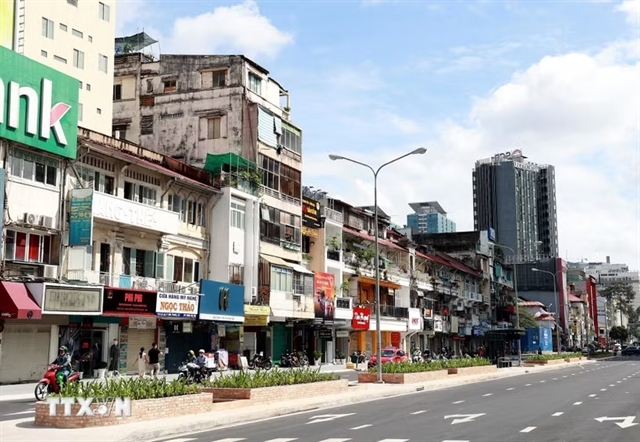
| The sidewalk on Lê Lợi Street in HCM City, linking Nguyễn Huệ Walking Street with Bến Thành Market. — VNA/VNS Photo Hồng Đạt |
HCM CITY — A road and sidewalk management software is expected to be piloted in HCM City, according to the city’s authorities.
The city’s Department of Construction this week formally submitted the proposal to the People’s Committee for approval, with implementation expected to last 18 months from the date of approval.
According to the department, the demand for temporary use of roads and sidewalks for business purposes has increased sharply following the nationwide administrative restructuring last year.
The city also reported rising demand for more EV (electric vehicle) charging stations and battery swapping cabinets, which is expected to reach 20,000 by the end of this year.
The number of permit applications rose by 200 per cent, especially at tourist destinations such as Vũng Tàu, Tam Thắng, Rạch Dừa and Phước Thắng wards in the city’s coastal area.
During the pilot, the software, proposed by HCM City Telecommunications Company (under VNPT Group), will receive and process online permit applications. Data will be linked to the administrative service portal of the Ministry of Construction.
According to the plan, software training for officials and public employees at the Department of Construction and local-level People’s Committees will be conducted in the second quarter of this year.
The funding for the pilot programme will be arranged by VNPT itself.
After 18 months, relevant departments will evaluate the effectiveness of the programme and propose the next steps.
According to the municipal construction department, multiple challenges exist in road and sidewalk management due to technical constraints for real-time and comprehensive monitoring.
The lack of a centralised digital map showing the boundaries of licensed locations and the lack of integration with specialised databases are also considered bottlenecks.
In addition, fee collection and payment verification are still done manually and with delays, making it difficult for authorities to detect cases where permits have been issued but financial obligations have not been fulfilled.
The lack of a common database also hinders inspection teams from verifying licensing information on-site, affecting the handling of violations.
Meanwhile, residents and businesses face numerous difficulties when applying for permits to temporarily use roads and sidewalks, including fragmented legal information, limited tools for identifying permitted locations, and inconvenient payment processes.
Authorities said the complex and time-consuming procedures have led many small businesses to use public spaces without permits, contributing to urban disorder and revenue losses. — VNS
Society
 Society
 Society
 Society
 Society
 Society
 Society
 Society
 Society
 Society
 Society
 Society
 Society
 Society
 Society