 Society

LANDMARK Launches ‘Destination CENTRAL’: A District-Wide Invitation to Explore the Dynamism, Luxury, and Soul of Central
1.
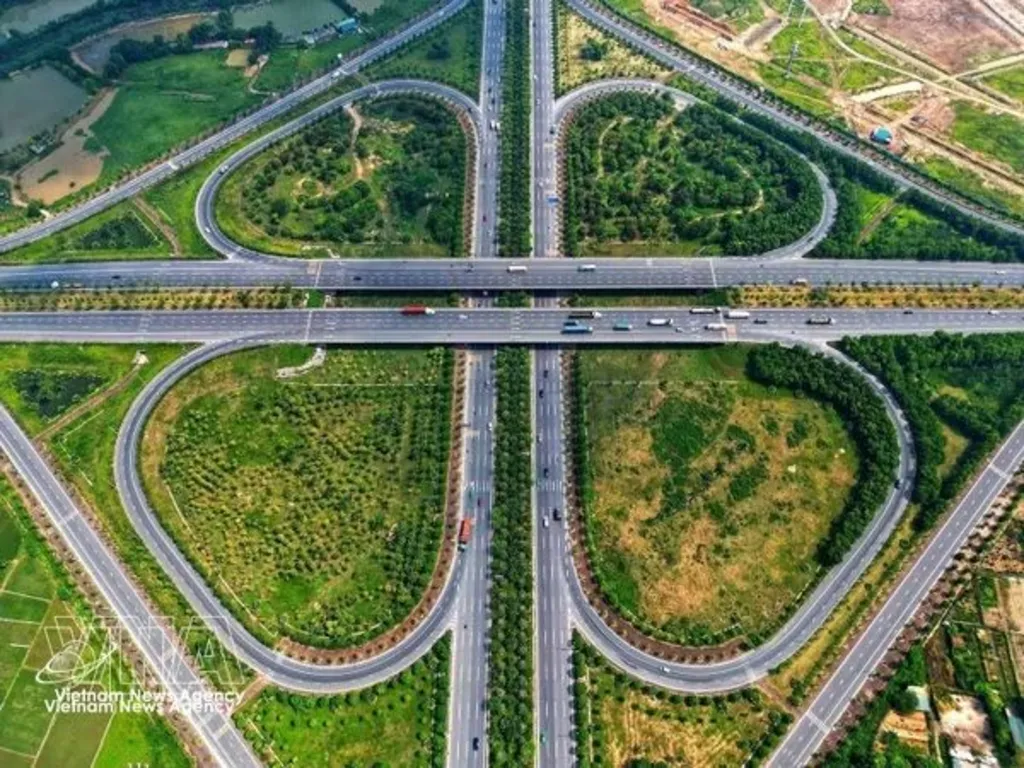 |
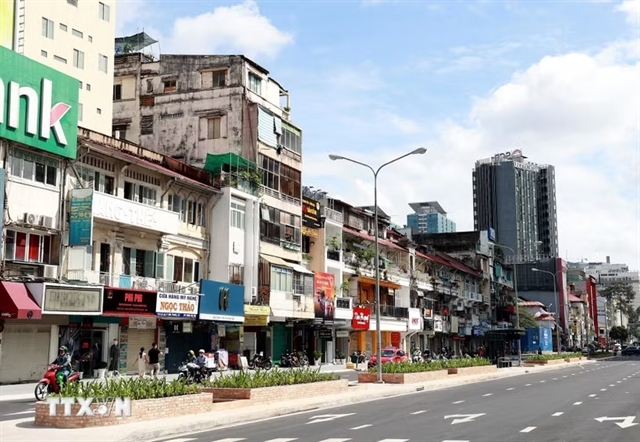
| Increasing green tree coverage rate across streets aims to minimize dust, noise, and improve urban beauty. — VNA/VNS Photo |
HÀ NỘI — Hà Nội is expediting the development of a plan to establish a low-emission zone (LEZ) within Ring Road 1 to align with its environmental protection goals and sustainable urban development agenda. The initiative is seen as a breakthrough not only to curb worsening air pollution in the city's central areas but also to catalyse green transport transition, toward a smarter, cleaner, and more sustainable capital.
Urgent needs and a cautious roadmap
In recent years, air quality in Hà Nội has deteriorated noticeably, particularly in the densely populated urban core where traffic volume is high and socio-economic activity is concentrated. According to studies conducted by the Ministry of Agriculture and Environment between 2023 and 2025, the transport sector accounts for 25 per cent of PM2.5 emissions citywide. However, emissions inventories indicate that within the inner city alone, traffic produces up to 59 per cent of direct emissions, while road dust and construction activities 28 per cent.
Notably, a 2025 quantitative study by the Asian Development Bank (ADB) focusing on the Ring Road 1 area identified road transport as the largest source of fine particulate matter emissions. Motorcycles account for 43.4 per cent of emissions, followed by buses at 30.7 per cent, light-duty vehicles at 20.4 per cent, and cars with fewer than nine seats at 5.5 per cent.
Highlighting the significance of the LEZ initiative, Vice Chairwoman of the municipal People's Council Phạm Thị Thanh Mai described it as a new and complex policy with far-reaching impact on residents, business activities, and urban spatial organisation. She stressed the need to clearly define the scope, target groups, and implementation roadmap, develop feasible policy mechanisms and clarify institutional responsibilities and coordination frameworks.
Ring Road 1 constitutes the core central area of the capital, home to numerous central and municipal administrative agencies, residential areas, historical sites, schools, hospitals, and vibrant commercial and service activities.
To ensure feasibility and balance environmental objectives with residents' mobility, livelihoods, and economic development needs, the city has outlined a three-phase implementation roadmap.
Phase 1 (from July 1 to December 31, 2026) will pilot the scheme in the core area of Hoàn Kiếm ward. Covering 0.5 sq.km with a perimeter of 3.5 km, the zone includes 11 surrounding streets, namely Tràng Tiền, Hàng Khay, Lê Thái Tổ, Hàng Đào, Hàng Ngang, Hàng Buồm, Mã Mây, Hàng Bạc, Hàng Mắm, Nguyễn Hữu Huân, and Lý Thái Tổ; and is home to around 20,000 residents.
Phase 2 (from January 1 to December 31, 2027) will expand the pilot area to include Hoàn Kiếm and Cửa Nam wards. The coverage will increase to 3.6 sq.km, with a perimeter of 8.3 km, encompassing 14 boundary streets: Nguyễn Du, Hàn Thuyên, Trần Hưng Đạo, Trần Khánh Dư, Trần Quang Khải, Trần Nhật Duật, Hàng Đậu, Cửa Đông, Lý Nam Đế, Tôn Thất Thiệp, Điện Biên Phủ, Hàng Bông, Cửa Nam, and Lê Duẩn. The affected population is estimated at approximately 136,947.
Phase 3 (from January 1, 2028, to December 31, 2029) will see the full rollout of the low-emission zone across the entire Ring Road 1 area. This zone spans 26.07 sq.km, with a perimeter of 25 km and a population of about 625,000. It covers nine wards enclosed by major routes, including Hoàng Cầu, Đê La Thành, Ô Chợ Dừa, Xã Đàn, Đại Cồ Việt, Trần Khát Chân, Nguyễn Khoái, Trần Khánh Dư, Trần Quang Khải, Trần Nhật Duật, Yên Phụ, Nghi Tàm, Âu Cơ, An Dương Vương, Lạc Long Quân, Bưởi, and Cầu Giấy.
Ensuring feasible transition in practice
To realise the objectives of the low-emission zone, Hà Nội is not only introducing administrative measures to curb private vehicle use but is also prioritising the development of green transport infrastructure, deploying smart monitoring technologies, and, notably, rolling out practical financial support policies for residents.
To enhance enforcement, the city plans to install an additional 22 AI-powered automatic number plate recognition (ANPR) cameras in June at key entrances to the pilot zone. These will be positioned at major intersections such as Lý Thái Tổ–Tràng Tiền, Nguyễn Hữu Huân–Lò Sũ, Mã Mây–Hàng Bạc, Hàng Đào–Hàng Bạc, and Lê Thái Tổ–Đinh Tiên Hoàng. Data from the system will be integrated to enable automated and transparent detection and handling of violations.
Alongside tighter emission standards, Hà Nội is placing strong emphasis on developing parking infrastructure and green transport systems to support the transition.
The city also intends to introduce a resolution outlining measures and financial support to facilitate the shift toward clean-energy vehicles. Incentives will be designed to encourage businesses to invest in charging stations, battery-swapping facilities, and related infrastructure.
Results from a public consultation involving residents and organisations in the proposed low-emission zone indicate broad support for the initiative. Respondents generally view it as a necessary step to improve air quality, while also calling for a clear implementation roadmap and adequate support mechanisms to ensure they can effectively adapt to the transition.
Field observations in the Old Quarter and the "core zone" of Hoàn Kiếm, where the pilot is expected to begin, indicate broad public support. Nguyễn Thị Lan, a resident of Hàng Bạc street, said that no one wants to live in a polluted environment, making emission reduction both necessary and welcome. Her family, she noted, fully backs the initiative.
However, she also pointed out that daily mobility still relies heavily on motorcycles. If private vehicles are restricted before public transport becomes sufficiently convenient, particularly in the evenings or on weekends, residents' daily lives could be adversely affected. In her view, an effective and reliable alternative transport system needs to be in place before stricter controls are enforced.
While a broad consensus has been observed, some respondents have also voiced concerns over safety during the transition to electric vehicles (EVs), particularly in light of several recent fire incidents involving EV batteries.
These practical insights indicate that while public support for emission reduction policies is clearly evident, it must be accompanied by "soft" policy design and a reasonable transition timeline. Expanding public transport, especially with electric buses and transit infrastructure, combined with financial support, favourable credit options, and clear implementation roadmaps, will be key to making the low-emission zone not just a good idea on paper but also a feasible policy, with active involvement from both citizens and businesses.
With a coordinated approach combining strong political commitment, a well-structured implementation roadmap, and people-centred support policies, the LEZ initiative within Ring Road 1 will create a fundamental shift. By 2030, Hà Nội aims to reduce CO₂ and NO₂ emissions by around 30 per cent and PM2.5 emissions from transport by 20 per cent in the area, bringing the annual average PM2.5 concentration to below 40 µg/cu.m. This represents a strong commitment by the capital to protect public health, foster a more livable, green, clean, and sustainable urban environment, and contribute to national response to global climate change. — VNS
Society
 Society
 Society
 Society
 Society
 Society
 Society
 Society
 Society
.jfif) Society
Society
.jfif) Society
Society
 Society
 Society
 Society
 Society