 Society
Vietnamese Prime Minister meets Cambodian National Assembly President
1.
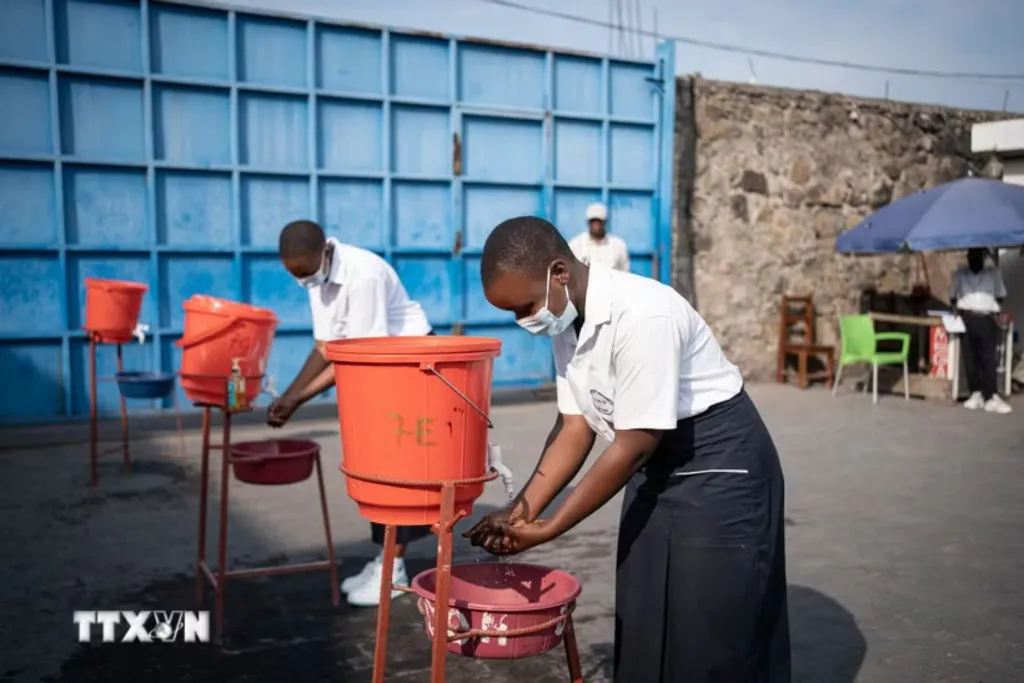 |
| Residents wash their hands to prevent Ebola virus infection in Goma, the Democratic Republic of Congo. — XINHUA/VNS Photo |
HÀ NỘI – Hà Nội's Department of Health has issued an official dispatch directing disease control agencies, hospitals, and local authorities to strengthen surveillance and preparedness against Ebola virus disease, amid a worsening outbreak in central Africa.
In Official Dispatch No. 4612/SYT-NVY, dated May 21, the department tasked the Hà Nội Centre for Disease Control with actively monitoring the global disease situation and tightening health checks on arriving and transit passengers at Nội Bài International Airport – particularly those on flights from the Democratic Republic of Congo and Uganda – to detect any confirmed or suspected cases early and isolate them promptly at the border gate.
The centre has also been directed to coordinate with relevant units at Nội Bài to collect contact information for passengers travelling on the same flight as any suspected case, to support tracing and health monitoring should a suspected case enter the city. It is further assigned to organise training for infectious disease control staff and medical quarantine officers at border gates on preventive measures and the use of personal protective equipment.
The Hà Nội Centre for Disease Control must also work with press and media agencies to provide timely, accurate information on the disease situation, warning signs, and preventive measures, to raise public awareness, prevent panic, and encourage people to follow the health sector's guidance.
The department has asked People's Committees of communes and wards to direct local health stations to strengthen disease surveillance, detect suspected cases early, and coordinate investigations, contact tracing, and health monitoring of people with epidemiological risk factors – such as recent travel from affected areas or potential exposure to blood or bodily fluids of infected persons.
Should a suspected case be recorded locally, health stations must immediately notify the Hà Nội Centre for Disease Control to coordinate isolation, epidemiological investigation, specimen collection, and patient transfer to treatment facilities, to prevent community spread and minimise infections and deaths. Commune and ward People's Committees must also ensure a full and ready supply of disinfectants, materials, and equipment for epidemic response in line with the "four on-the-spot" principle.
Both public and private hospitals in the city have been asked to review and prepare isolation areas, medicines, chemicals, biological products, and consumable supplies for diagnostic and treatment activities, so they are ready to respond should a case arise. Hospitals must be prepared to receive patients, diagnose cases early, isolate them, and provide intensive treatment to minimise severe complications and deaths, while strictly implementing infection prevention measures for patients and caregivers.
According to the World Health Organization (WHO), the Democratic Republic of Congo and Uganda are currently experiencing a complex Ebola outbreak caused by the Bundibugyo virus (BDBV) strain, with high numbers of cases and deaths. From April 24 to May 19, the two countries recorded more than 500 suspected cases, including 130 deaths. On May 16, WHO declared the situation a Public Health Emergency of International Concern under the International Health Regulations (IHR-2005).
Ebola virus disease is a group-A infectious disease with an incubation period of two to 21 days. It spreads from animals – principally fruit bats – to humans, and from person to person through direct contact with blood and bodily fluids of infected individuals or surfaces contaminated with the virus. The disease spreads rapidly, carries a high fatality rate, and currently has no specific treatment or approved vaccine for this strain. — VNS
Society
 Society
 Society
 Society
 Society
 Society
 Society
 Society
 Society
 Society
 Society
 Society
 Society
 Society
 Society