 Society

Việt Nam welcomes removal from EU list of non-cooperative tax jurisdictions
1.
|
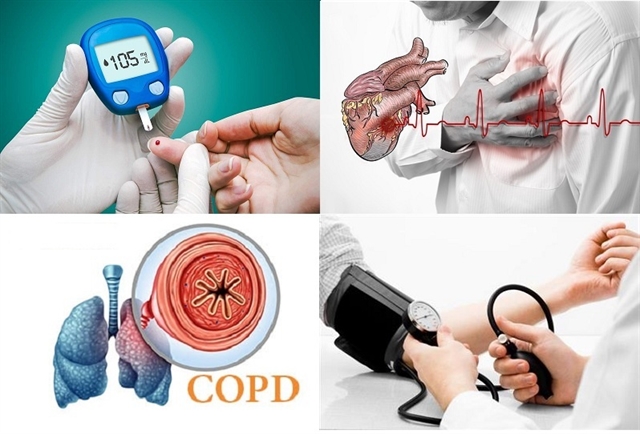
| High blood pressure, diabetes and COPD are leading non-communicable diseases in Việt Nam. — Photo suckhoedoisong.vn |
HÀ NỘI — Non-communicable diseases (NCDs) have emerged as one of the most pressing challenges facing Việt Nam’s health care system in the post-COVID-19 period, medical experts have warned, as chronic conditions account for a growing share of illness, hospital admissions and deaths nationwide.
In Việt Nam, pressure from these diseases is increasingly evident across the healthcare system.
Hospital reports show that around 65 to 75 per cent of inpatients are related to NCDs, while many common illnesses are also rising rapidly in communities.
According to the National Hospital of Endocrinology, about 6 to 7 per cent of the population currently has diabetes.
Meanwhile, the Việt Nam National Heart Institute reported hypertension affecting around 25 per cent of people aged over 25.
It is estimated that NCDs account for about 80 per cent of all deaths in Việt Nam each year.
These figures indicate that chronic diseases are no longer confined to older people or specialist hospitals but are becoming a major health care and economic burden for society as a whole.
The situation also highlights the urgent need for regular health monitoring, early risk detection and stronger community-based management rather than waiting until conditions become severe before treatment.
Speaking at a recent event launching a 24/7 AI-powered health care application, Associate Professor Phạm Nguyên Sơn said the biggest gap in chronic disease management today was the lack of continuous health data.
Under the current periodic check-up model, doctors would typically only understand a patient’s condition at the time of hospital visits, while health status might change daily in between appointments, he said.
He said this gap would be particularly dangerous in managing hypertension, cardiovascular disease, diabetes, lipid disorders and kidney disease. Patients might appear stable during consultations but later experience fluctuations in blood pressure or blood sugar without timely detection.
He said health data should be updated regularly and in real time to improve disease management. When patients measure blood pressure daily, AI systems can provide alerts or basic recommendations based on continuously updated data.
However, experts stressed that AI could not replace doctors and should only be used as a support tool in patient monitoring and care.
“Patients’ health data needs to be updated regularly in real time. When patients measure blood pressure daily, AI systems can provide warnings or basic recommendations. However, AI cannot replace doctors but only support more effective patient management,” he said.
Clinical practice is also showing a concerning trend of chronic diseases appearing at younger ages.
Sơn cited the case of a male patient born in 1999, weighing 102 kilogrammes, who already had blood pressure of 180/120 mmHg, alongside diabetes and lipid disorders.
According to experts, this is no longer an isolated case.
Sedentary lifestyles, unbalanced diets, work pressure and rising obesity rates are contributing to conditions once common among middle-aged people appearing earlier in life.
Dr Hà Anh Đức said continuous monitoring and control of blood pressure would be particularly important in preventing strokes and cardiovascular complications.
Đức said the Ministry of Health had issued a plan to implement electronic health records for citizens as part of the healthcare sector’s digital transformation strategy.
Authorities had also developed a structured system of around 130,000 data fields for electronic medical records, laying the groundwork for standardising and using healthcare data nationwide.
“If all 1,700 hospitals use electronic medical records, the healthcare sector could have hundreds of millions of data points serving healthcare activities. If personal health records are implemented effectively, personalised treatment regimens will have strong prospects in the future,” he said.
However, experts noted that big data would only be valuable when accuracy is ensured and information is updated regularly.
For elderly patients with complex conditions, technology platforms would need the ability to monitor multiple health indicators simultaneously and support screening for various chronic diseases within a single system to improve long-term care management. — VNS
Society
 Society
 Society
 Society
 Society
 Society
 Society
 Society
 Society
 Society
 Society
 Society
 Society
 Society
 Society