 Society

Việt Nam steps up fight against counterfeits, IP violations
1.
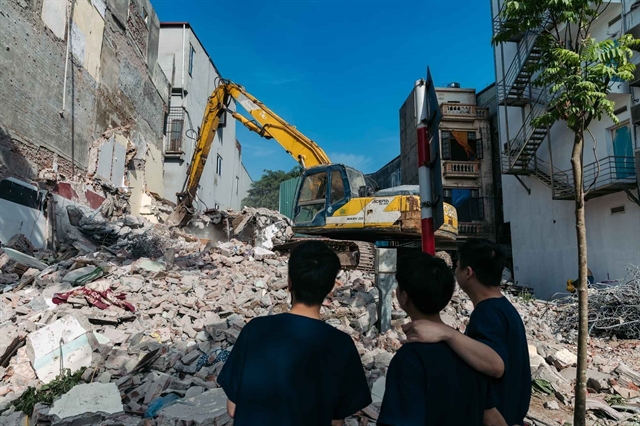 |
| Locals watch the demolition at a land clearance area for the Nguyễn Trãi–Vũ Tông Phan–Khương Đình section of Ring Road 2.5 project. — VNA/VNS Photo Phạm Tuấn Anh |
HÀ NỘI — Hà Nội is accelerating land clearance for more than 1,400 projects across the city, identifying the work as critical to infrastructure development, more efficient land use and the capital’s socio-economic growth, according to the municipal People’s Committee.
City authorities say land clearance efforts are currently underway for around 1,428 projects, including 1,281 funded by the State budget and 147 backed by non-State capital. Of these, 27 are major and strategic projects aimed at removing bottlenecks and boosting the capital’s development.
To achieve its gross regional domestic product (GRDP) growth target and pursue double-digit growth in 2026, Hà Nội has identified faster land clearance and the mobilisation of land resources as an urgent and central task.
The capital city has intensified efforts to remove obstacles in compensation, support and resettlement to accelerate project implementation, particularly for strategic transport infrastructure and regional connectivity projects.
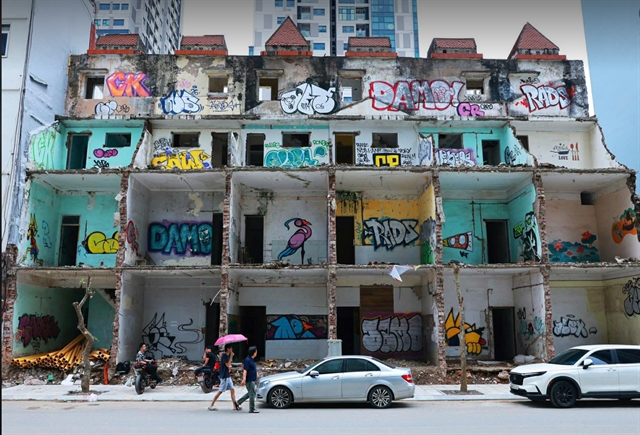 |
| A land clearance site on Nguyễn Tuân Street in Hà Nội's Thanh Xuân Ward, where the street is going to be widened. VNS Photo Trương Vị |
The Standing Committee of the Hà Nội Party Committee has directly overseen site inspections and conducted weekly progress reviews for major projects. A steering committee has also been established for land clearance of key projects, headed by a permanent deputy secretary of the municipal Party Committee, to promptly address implementation bottlenecks.
Authorities say the coordinated and determined involvement of the political system has led to notable progress, particularly since the final two months of 2025.
Several long-delayed projects have completed land clearance, including four Red River bridge projects – Hồng Hà, Mễ Sở, Vân Phúc and Ngọc Hồi – as well as the Ring Road 1 (Hoàng Cầu–Voi Phục section) and Ring Road 4–Capital Region, among others.
The city is currently prioritising land clearance for Ring Roads 2.5, 3 and 3.5, other key transport corridors and the remaining three Red River bridge projects – Tứ Liên, Trần Hưng Đạo and Thượng Cát. Clearance for the bridges and the remaining sections of Ring Road 2.5 is targeted for completion before June 30, 2026.
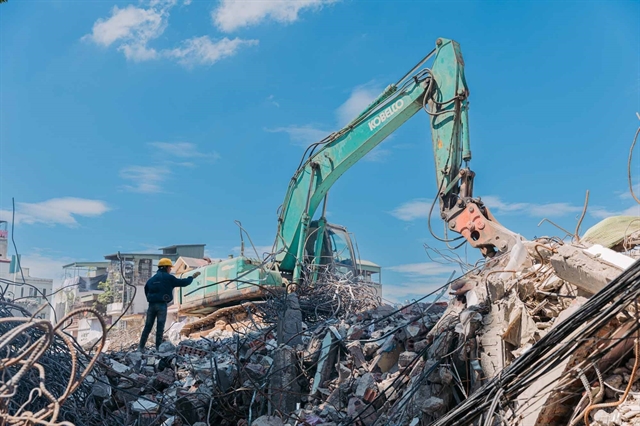 |
| Machinery is deployed to clear buildings on Vạn Kiếp Street for the construction of Trần Hưng Đạo Bridge. — VNA/VNS Photo Phạm Tuấn Anh |
At the same time, Hà Nội is carrying out land clearance and investment procedures for nine major projects, including an Olympic sports urban area, a scenic boulevard along the Red River, a healthcare and elderly care complex linked to the Hà Nội Medical University in Hoàng Mai Ward, and a digital technology park in Phú Diễn and Tây Tựu wards.
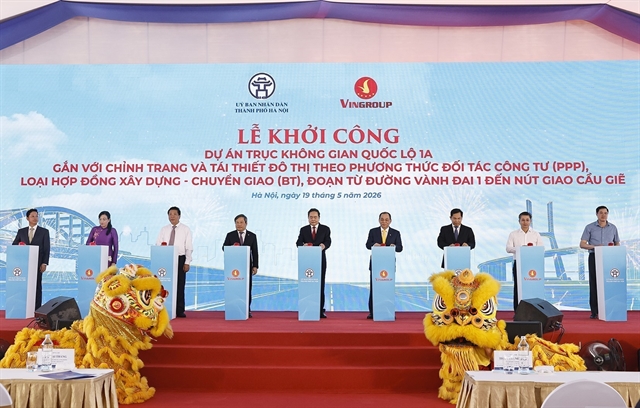
Other major projects include the redevelopment and urban renewal corridor along National Highway 1A under a public-private partnership (PPP) model, several multi-purpose urban developments, and a project to renovate and enhance the value of the West Lake area and surrounding scenic roads.
Key measures
Hà Nội has identified several key measures to accelerate the urgent priority task of land clearance, focusing on decisive, transparent implementation in line with legal regulations while safeguarding the legitimate rights and interests of residents.
The first group of measures is to ensure coordinated action across the political system while increasing accountability of local authorities. Land clearance progress will be used as a key evaluation criterion of their performance, alongside stronger inspections and oversight to ensure the schedule.
The second group includes increasing communication work to build consensus and public understanding of the need for land clearance, as well as ensuring transparency in compensation, support and resettlement plans.
The third group focuses on effectively implementing special policies to ensure long-term livelihood stability for affected residents.
The fourth group is to accelerate investment in multi-purpose urban areas, including resettlement zones and funding for compensation, so that residents can maintain equal or better living conditions at the new locations.
The fifth group includes tightening land management to prevent illegal encroachment and unauthorised construction, while ensuring clear legal grounds for compensation and support plans for residents.
The sixth group focuses on the use of digital tools to monitor land clearance progress, digitise records, improve transparency and strengthen oversight. — VNS
Society
 Society
 Society
 Society
 Society
 Society
 Society
 Society
 Society
 Society
 Society
 Society
 Society
 Society
 Society