 Society
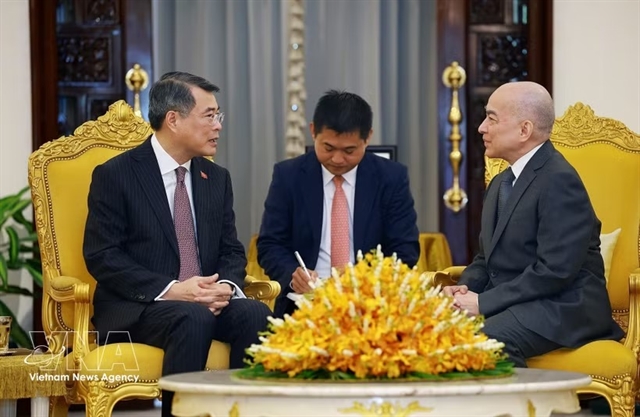
Vietnamese PM pays courtesy visits to Cambodian King, Queen Mother
1.
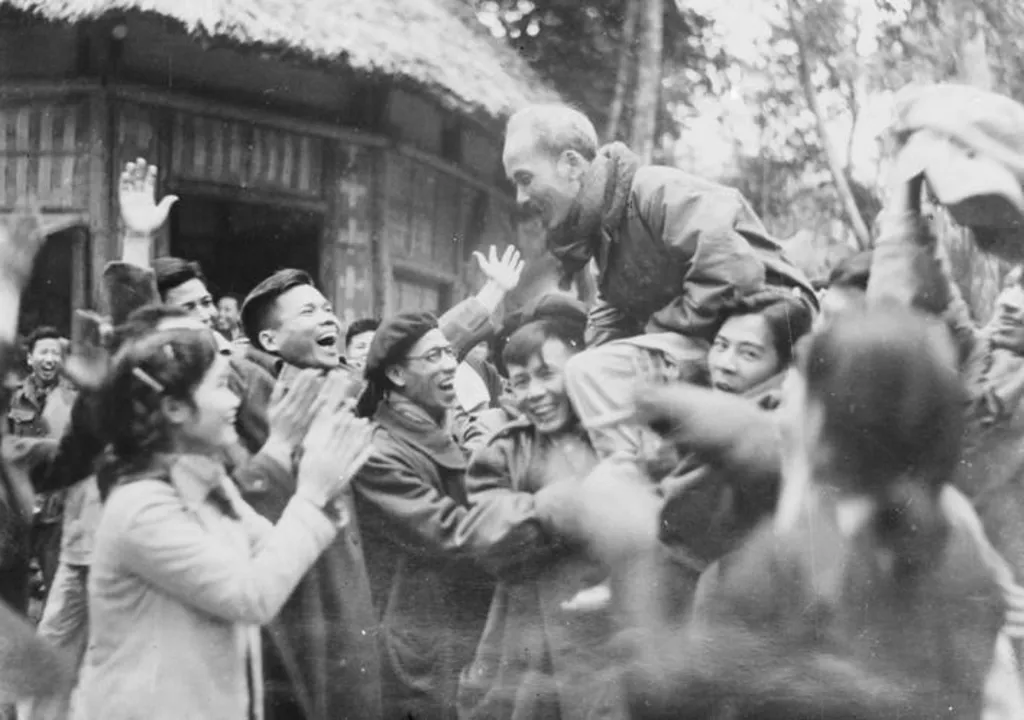 |
| President Hồ Chí Minh with delegates attending the Congress for the Unification of the Việt Minh and Liên Việt fronts in 1951. VNA/VNS Archive photos |
HÀ NỘI — Every year, May 19 holds a special place in the hearts of the Vietnamese people. It marks the birth of President Hồ Chí Minh, a leader whose life became inseparable from the destiny of the nation.
Yet throughout his life, President Hồ Chí Minh never regarded his birthday as a personal occasion worthy of celebration. To him, flowers, cakes and formal congratulations meant little compared with the struggles of ordinary people and the future of the country. But for generations of Vietnamese, each May 19 became something sacred, a day not only to express love and gratitude towards the nation’s beloved leader, but also to reflect on the values he embodied: humility, compassion, simplicity and unwavering devotion to the people.
From the revolutionary base in Việt Bắc to the quiet stilt house inside the Presidential Palace, from the joy of the Điện Biên Phủ victory to the final mornings spent revising his Testament, the birthdays of President Hồ Chí Minh were always deeply human, leaving lasting memories in the hearts of the Vietnamese people.
A birthday celebrated for the first time in an independent capital
On May 18, 1946, the newspaper Cứu Quốc carried a special front-page article titled Hồ Chí Minh and the Vietnamese Nation. For the first time, the public officially learned that President Hồ Chí Minh had been born on May 19, 1890.
The following day marked the first birthday celebration held for him in independent Việt Nam.
From early morning, senior Party and Government officials arrived to offer their congratulations. Later, at Bắc Bộ Phủ in Hà Nội, President Hồ Chí Minh welcomed children from across the capital.
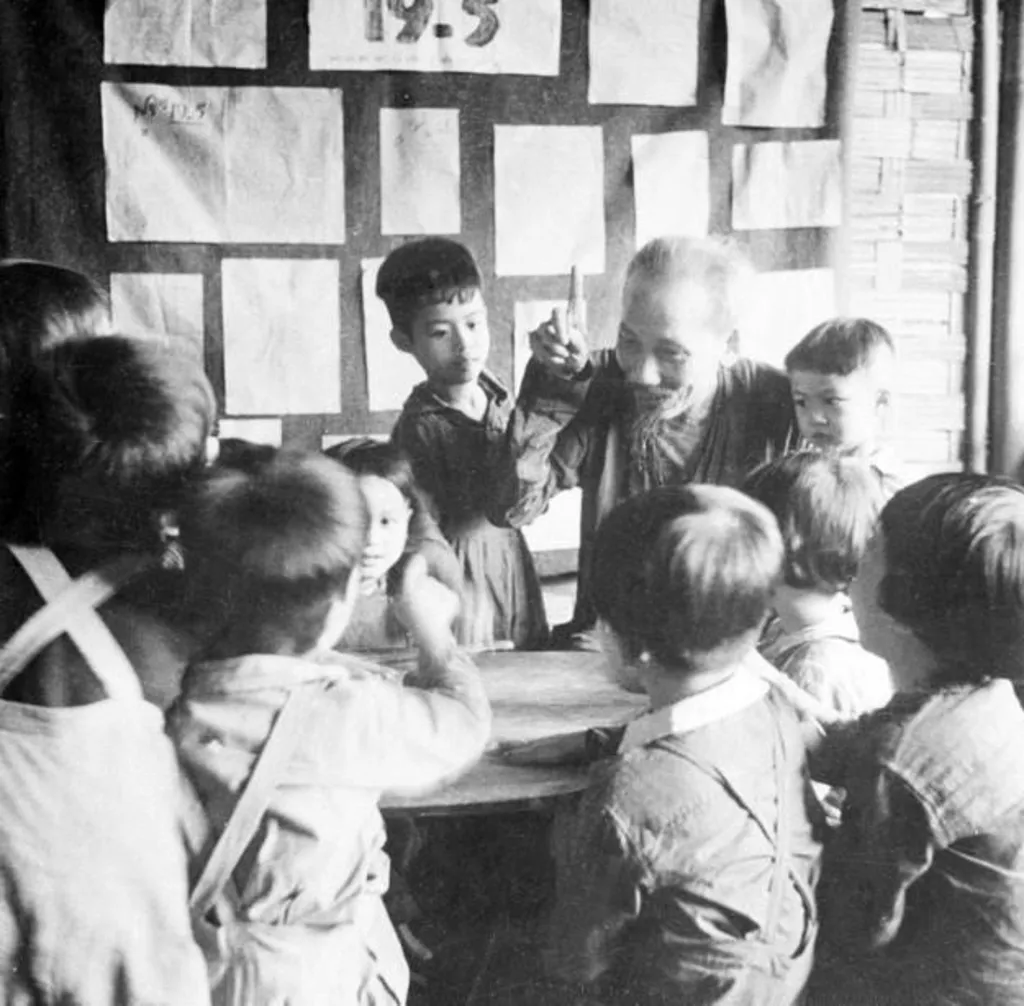 |
| President Hồ Chí Minh held deep affection for children. Despite being burdened with countless responsibilities, he always cared for young people, the future generation of the nation. In the photo, President Hồ Chí Minh visits a children’s camp in the Việt Bắc resistance base in 1950. |
The children excitedly pinned badges onto his shirt and presented him with literacy campaign symbols and small books linked to the Bình dân học vụ movement. In return, Uncle Hồ gave them a young tree and gently told them: “One day this tree will grow a hundred branches. If you care for it well, that means you love me.”
After the children came a delegation of more than 50 representatives from the South. Among them was Nguyễn Thị Định, who would later become one of Việt Nam’s most celebrated female generals.
In her memoirs, Nguyễn Thị Định recalled how moved President Hồ Chí Minh was during the meeting. He asked them to convey a message to southern compatriots: that the hearts of the North and of “Uncle Hồ” would always be with the people of the South.
Throughout the day, delegations, organisations and youth groups came to celebrate his birthday. Young people marched through the streets of Hà Nội, while officials and workers brought flowers and gifts.
But President Hồ Chí Minh appeared almost uncomfortable with the attention.
He reminded everyone that he had always belonged to the people and always would. He gently urged them not to spend money on him while so many compatriots were still living in hardship.
Those words would come to define every birthday that followed.
Quiet birthdays in the Việt Bắc resistance zone
Not long after the August Revolution, French colonial forces returned in an attempt to reoccupy Việt Nam. In late 1946, President Hồ Chí Minh and the central leadership left Hà Nội for the revolutionary base in Việt Bắc, where they led the resistance war for nearly a decade.
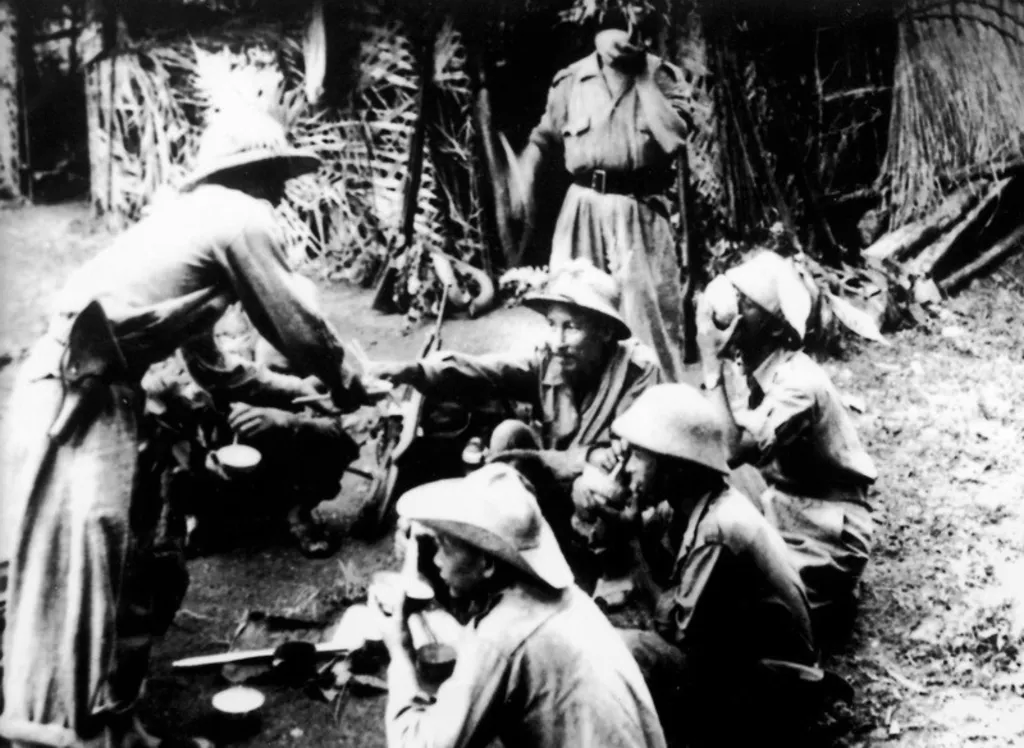 |
| At the Việt Bắc resistance base during the war against the French, President Hồ Chí Minh lived alongside cadres and staff, sharing meals, accommodation and daily life like everyone else. His lifestyle stemmed from a philosophy that valued humility, simplicity, virtue and compassion as guiding principles. Though a national leader, his material life remained as modest as that of ordinary people. In the photo, President Hồ Chí Minh shares a simple meal with soldiers during a working trip in Việt Bắ |
In the forests and mountains of Việt Bắc, birthdays were simple, intimate occasions shared among comrades and local people.
One of the most emotional birthdays came in 1948.
Only days earlier, Nguyễn Văn Ty, known as Lộc, had died from severe malaria. Lộc had worked closely alongside President Hồ Chí Minh for many years, accompanying him through revolutionary activities in Thailand, China and later back in Việt Nam.
On the morning of May 19, attendants brought a bouquet of wild forest flowers to congratulate Uncle Hồ. Instead of accepting them for himself, he suggested taking the flowers to Lộc’s grave.
That year, his birthday became a moment to honour loyalty, sacrifice and a life devoted entirely to the revolution without seeking personal recognition or reward.
The happiest birthday of his life
Perhaps the happiest birthday Uncle Hồ ever celebrated came in 1954, shortly after the historic victory at the Battle of Điện Biên Phủ.
After nine years of hardship and resistance, Vietnamese forces defeated the French stronghold in a battle that “resounded across the five continents and shook the world.”
The victory came only days before his 64th birthday and became the greatest gift the nation could offer its leader.
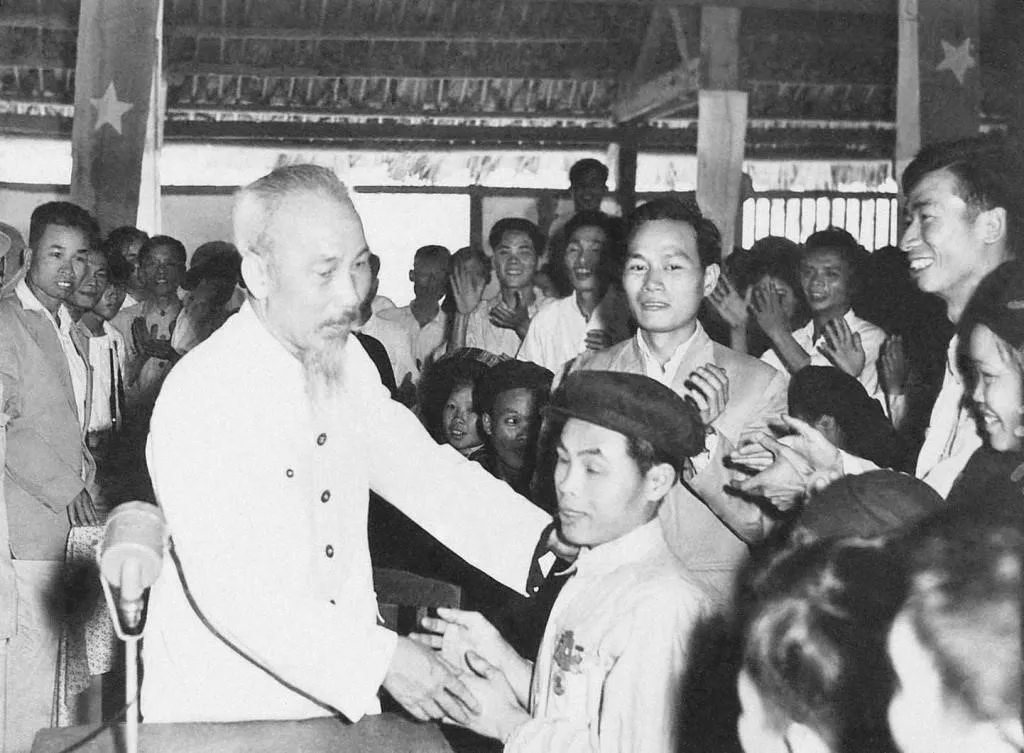 |
| At the Conference of Socialist Youth in the Việt Bắc region, President Hồ Chí Minh visits emulation fighter Phạm Trung Pồn, who, despite being blind in both eyes, made many innovative improvements to farming tools, on March 13, 1960. |
Even amid the celebrations, however, President Hồ Chí Minh remained calm and disciplined. In a letter sent to soldiers at the Điện Biên Phủ front, he reminded them never to become arrogant after victory and to remain ready for whatever tasks the Party and Government entrusted to them.
On May 19, 1954, he hosted outstanding soldiers and Soviet guests at a reception. He listened attentively as soldiers spoke about life on the battlefield and the hardships faced by their families.
Hearing their stories, he reassured them that independence would one day bring a better life for the people.
He personally awarded badges to soldiers, including Hoàng Đăng Vinh, who had captured French commander General De Castries.
Even in victory, the atmosphere around Uncle Hồ remained warm and deeply personal rather than ceremonial.
The May mornings when he wrote his Testament
After peace returned to the North, President Hồ Chí Minh moved into the modest stilt house within the Presidential Palace grounds in Hà Nội in 1958.
Yet every year on May 19, he often arranged to travel or work elsewhere to avoid elaborate celebrations and unnecessary expense.
His 75th birthday in 1965 became especially significant.
On May 10 that year, inside his quiet stilt-house office, President Hồ Chí Minh began writing the first lines of what would later become his historic Testament.
His longtime secretary, Vũ Kỳ, later recalled the silence of that morning: the gentle breeze, the scent of flowers drifting through the garden, and President Hồ Chí Minh sitting quietly at his desk, carefully writing words intended for future generations.
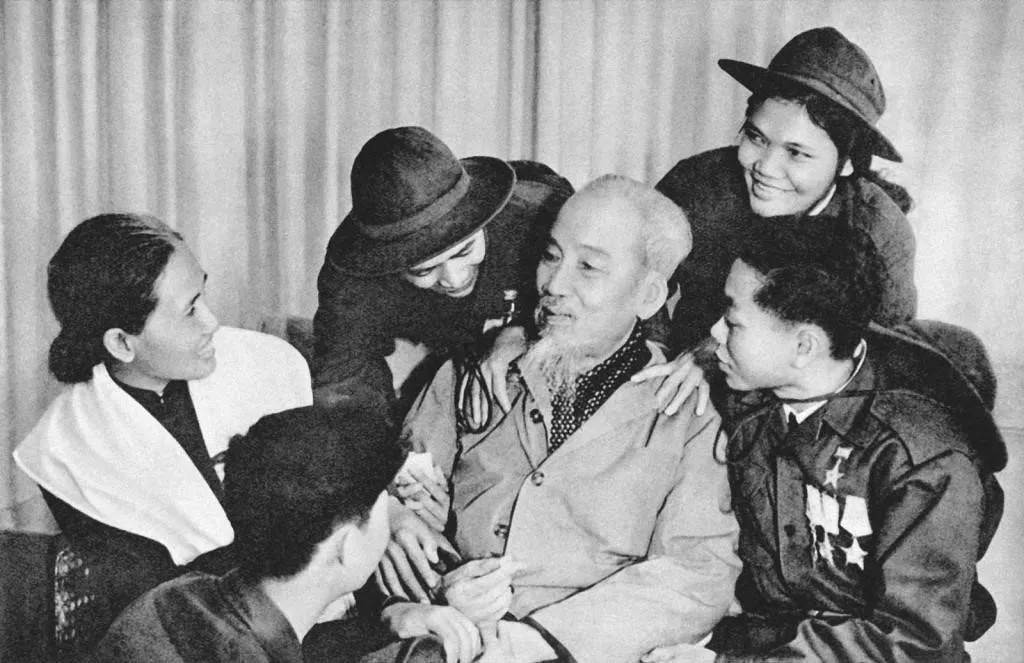 |
| President Hồ Chí Minh was not only a model of a great man and revolutionary leader, but also embodied simplicity, humility and closeness to the people. In the photo, President Hồ Chí Minh receives and talks with a delegation from the National Front for the Liberation of South Việt Nam during their visit to the North from February 28 to March 20, 1969, with the warmth of a father meeting his children. |
He never called the document a “Testament”. Instead, he referred to it simply as “a document” or “a few brief words.” Yet in the margin, he wrote the phrase “Absolutely Secret”, fearing that knowledge of it might affect morale while the resistance war against the United States was still at its fiercest.
Each May afterwards, he continued revising and adding to the text.
By 1969, the health of President Hồ Chí Minh had noticeably declined. Unlike previous years, he no longer made short “working trips” away from Hà Nội during his birthday celebrations to avoid the ceremony and attention.
It was also the first time in four years, from 1965 to 1969, that he began revising his Testament later than usual. On the morning of May 10, 1969, after returning from a Central Committee meeting at the Hồ Tây guesthouse, President Hồ Chí Minh sat down to work on the document from 9.30am to 10.30am.
That day, he rewrote the entire opening section of the Testament on the back page of a special reference bulletin issued by the Vietnam News Agency dated May 3, 1969.
The manuscript reflected his meticulous care. He wrote in blue-black ink, while revisions and additions were made in red ink. Underlined phrases and numbers were marked carefully in red ballpoint pen. Two days later, after attending a Politburo meeting in the morning, he continued revising the document in the afternoon instead, focusing mainly on the opening passage and additions made the previous year.
Even as his health weakened, President Hồ Chí Minh maintained his daily work and continued meeting cadres, soldiers and visitors.
A final day filled with work and affection
On the morning of May 19, 1969, President Hồ Chí Minh woke early as usual and tried to perform several simple exercises despite his weakening condition.
At the stilt house, he patiently practised tossing a ball into a paper basket placed several metres away. Calmly preparing himself for the inevitable, he nevertheless continued striving for more time and strength to remain beside his compatriots while the South remained unliberated and the country still divided.
At 9am on his 79th birthday, he once again sat at his desk to review and revise the Testament.
Even in those final edits, every word mattered deeply to him.
He changed several expressions in the opening passage. He added the word “very” to the sentence describing the clarity of his mind, revised the word “age” to “spring”, and replaced the word “must” with “will” in the line referring to the day he would “meet Marx, Lenin and other revolutionary predecessors”.
Later that morning, he hosted lunch for Phan Thị Quyên, the widow of martyr Nguyễn Văn Trỗi, and Nguyễn Thị Châu, a representative of the youth and student movement from Sài Gòn-Gia Định.
The meal became one of the most touching moments of his final birthday.
President Hồ Chí Minh sat at the head of the table, with Phan Thị Quyên on one side and Nguyễn Thị Châu on the other, beside Prime Minister Phạm Văn Đồng. Around the table were representatives of different generations and all three regions of the country: the North, the Centre and the South.
Witnesses later recalled that Uncle Hồ ate well that day, chatting cheerfully throughout the meal.
That afternoon, doctors arrived to check on his health. Shortly afterwards, he returned upstairs to write a letter praising children from a cooperative in Hà Bắc Province for their achievements in caring for livestock.
It would become the final letter he ever wrote to the children of Việt Nam.
In the letter, he reminded them that even though they were young, they could still contribute meaningful work for the country and the people. He described them as the future masters of the nation and of the cooperative movement.
That same day, he also sent portrait photographs of himself to officials and workers in Nghệ An Province and Hải Phòng Cement Factory, inscribing words that reflected the principles he had lived by all his life: that Party members and officials must lead by example and devote themselves wholeheartedly to serving the people.
To everyone around him, May 19, 1969 seemed like an ordinary working day in Uncle Hồ’s life, quiet, disciplined and filled with care for others. No one realised it would be his final birthday. VNS
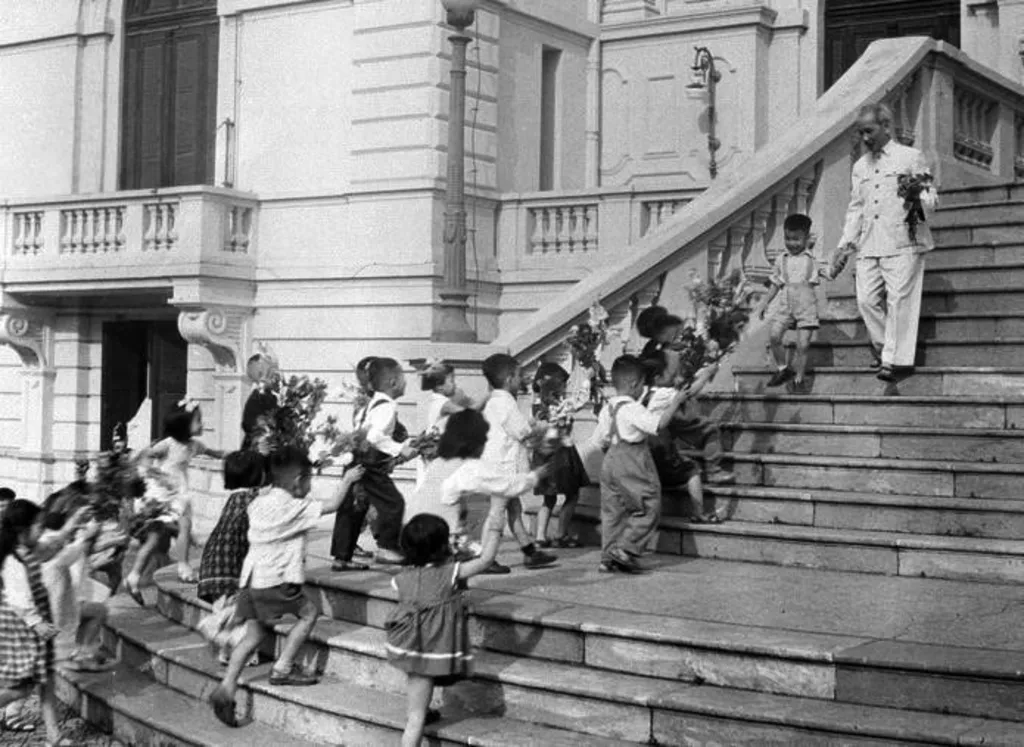 |
| President Hồ Chí Minh always cared deeply for children and reserved special affection for the future generations of the nation. In the photo, on the evening of May 31, 1969, ahead of International Children’s Day on June 1, child delegates from the capital visited the Presidential Palace and performed cultural programmes in honour of President Hồ Chí Minh. |
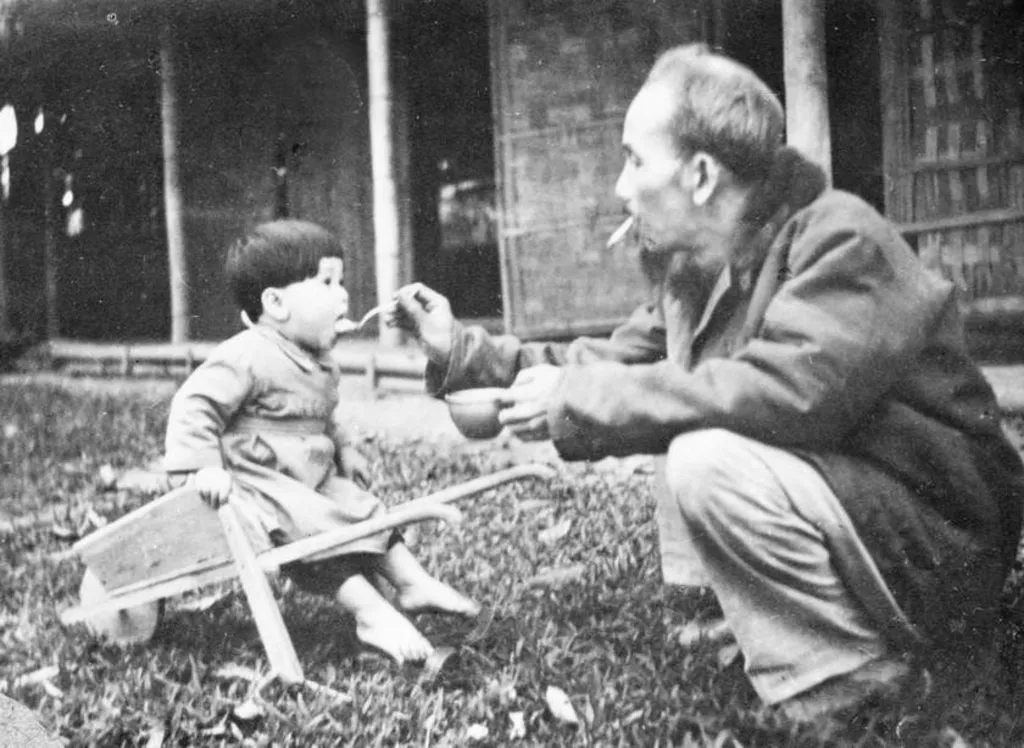 |
| President Hồ Chí Minh held deep affection for children. Despite being burdened with countless responsibilities, he always cared for young people, the future generation of the nation. In the photo, President Hồ Chí Minh feeds a child during a visit to a children’s camp in the Việt Bắc resistance base in 1950. |
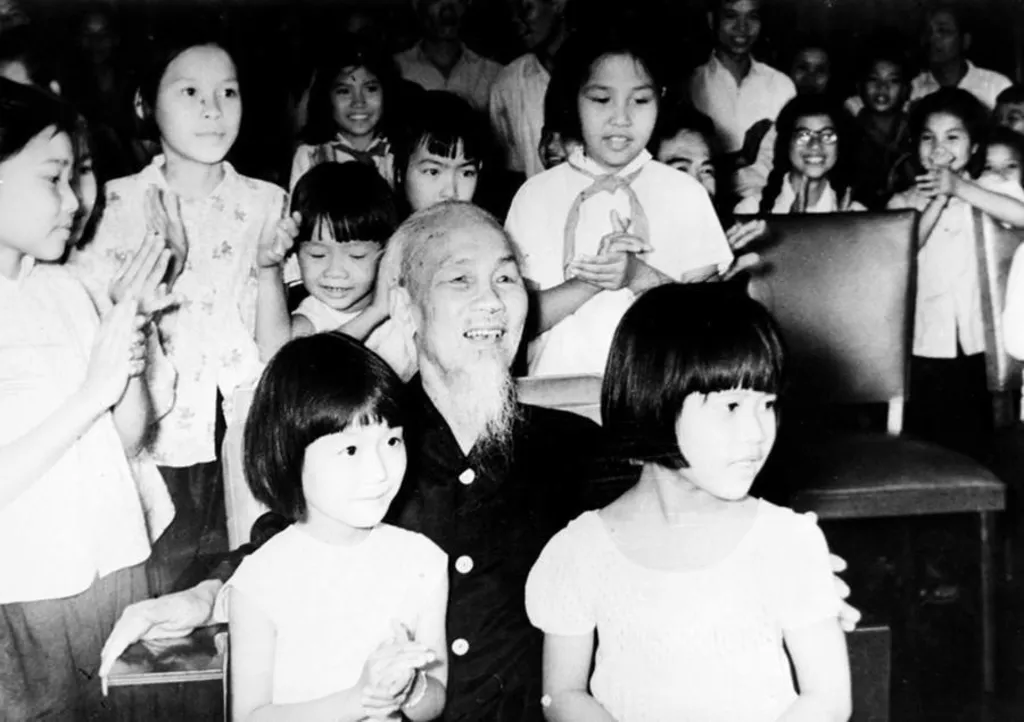 |
| President Hồ Chí Minh always cared deeply for children and reserved special affection for the future generations of the nation. In the photo, on the evening of May 31, 1969, ahead of International Children’s Day on June 1, child delegates from the capital visited the Presidential Palace and performed cultural programmes in honour of President Hồ Chí Minh. |
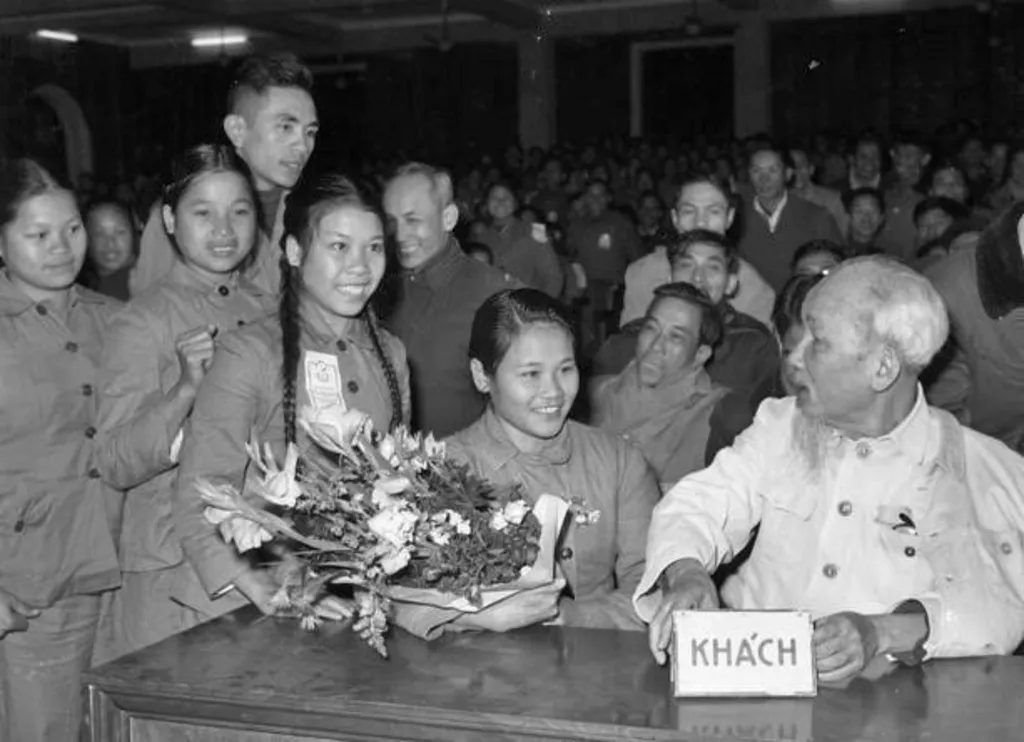 |
| President Hồ Chí Minh talks with outstanding youth delegates attending the Congress of Youth Volunteers Emulating in the Resistance War against the US across northern Việt Nam in January 1967. |
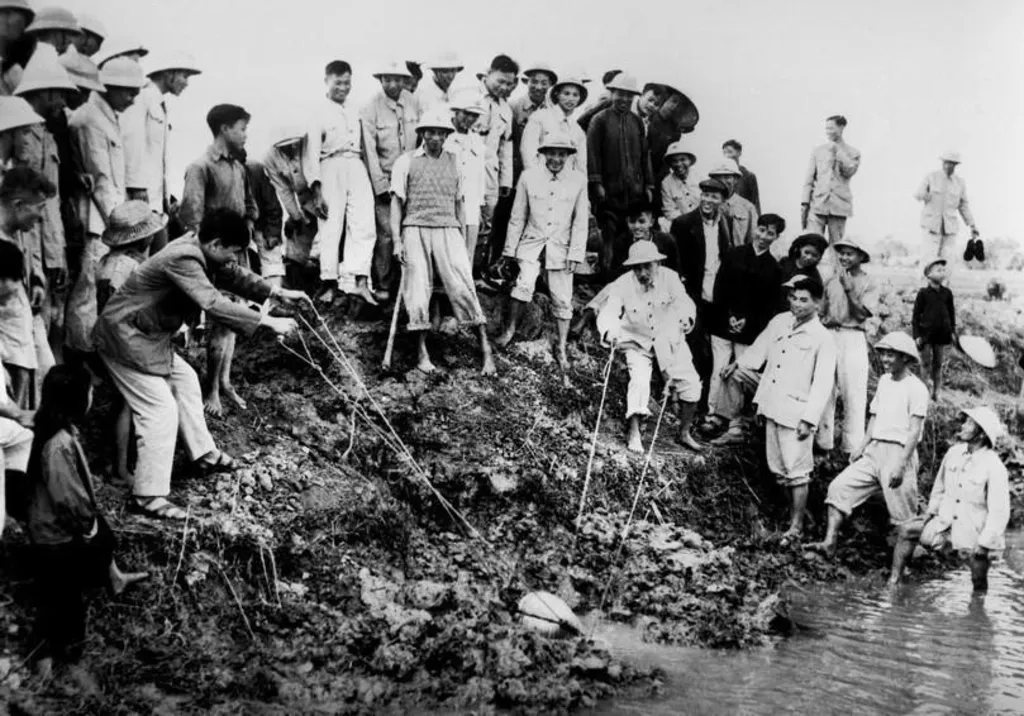 |
| After the complete liberation of the North, President Hồ Chí Minh and the Party Central Committee focused on strengthening the region in every aspect, with priority given to restoring and boosting agricultural production. He regarded agriculture as the foremost front. In the photo, President Hồ Chí Minh joins farmers in Đại Thanh Commune, Hà Đông (now Hà Nội) in combating drought by bailing water into the fields on January 12, 1958. VNA/VNS Archive Photo |
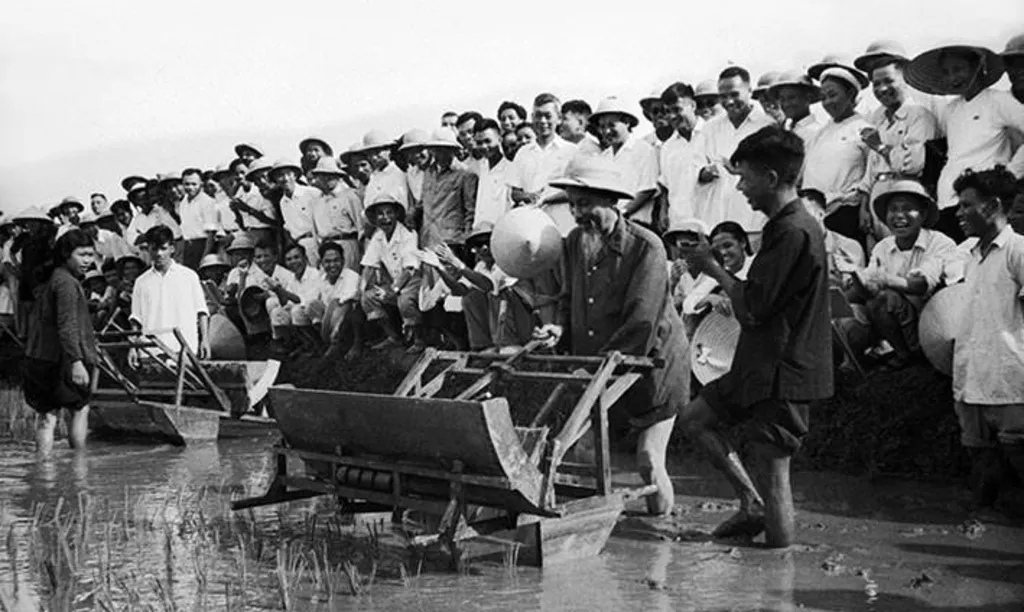 |
| President Hồ Chí Minh personally operates a rice-transplanting machine in an experimental field of the Hà Nội Department of Agriculture and Forestry in July 1960. |
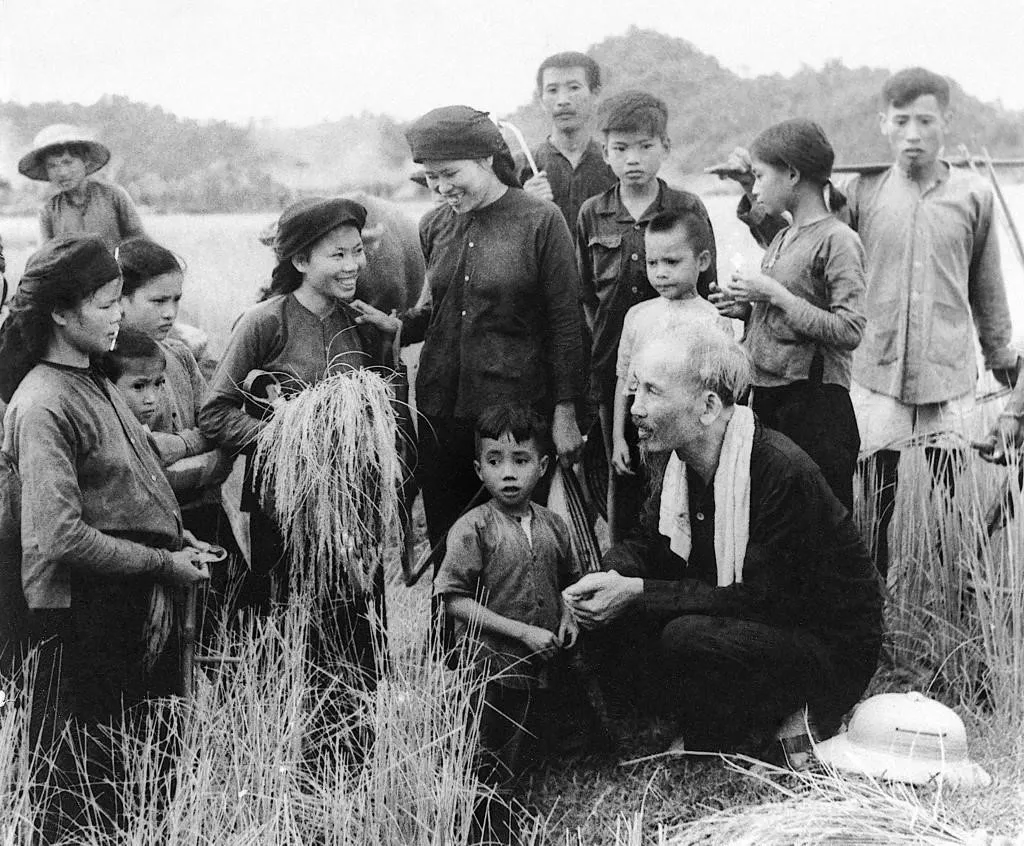 |
| President Hồ Chí Minh visits farmers harvesting crops at Hùng Sơn Cooperative in Đại Từ District, Thái Nguyên Province in 1954. |
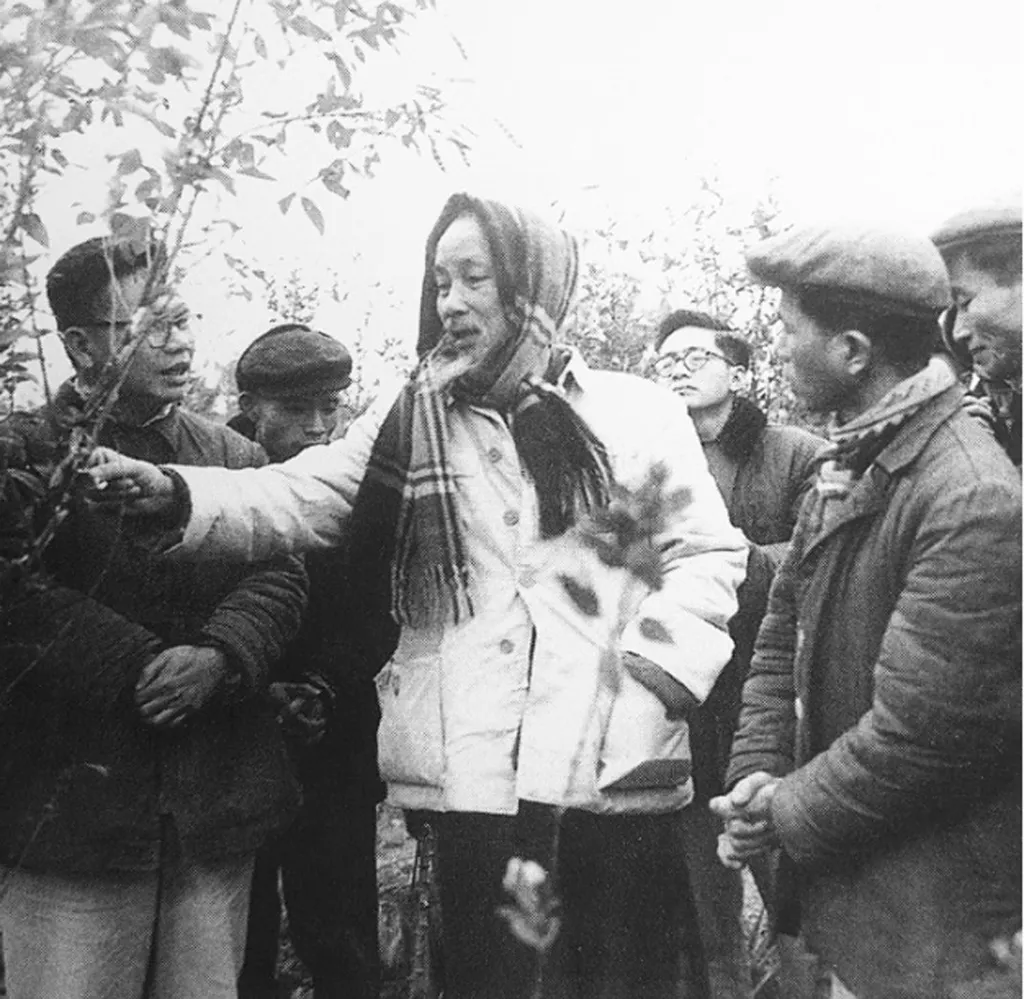 |
| President Hồ Chí Minh’s simplicity came most naturally, deeply rooted in the lives of ordinary people, making his virtues something everyone could learn from and follow. In the photo, on January 26, 1964, President Hồ Chí Minh visits Vinh Quang Commune (now Đào Xá Commune, Thanh Thủy District), the locality recognised as the North’s leading area in tree planting after five years of the Tree-Planting Festival movement he initiated. |
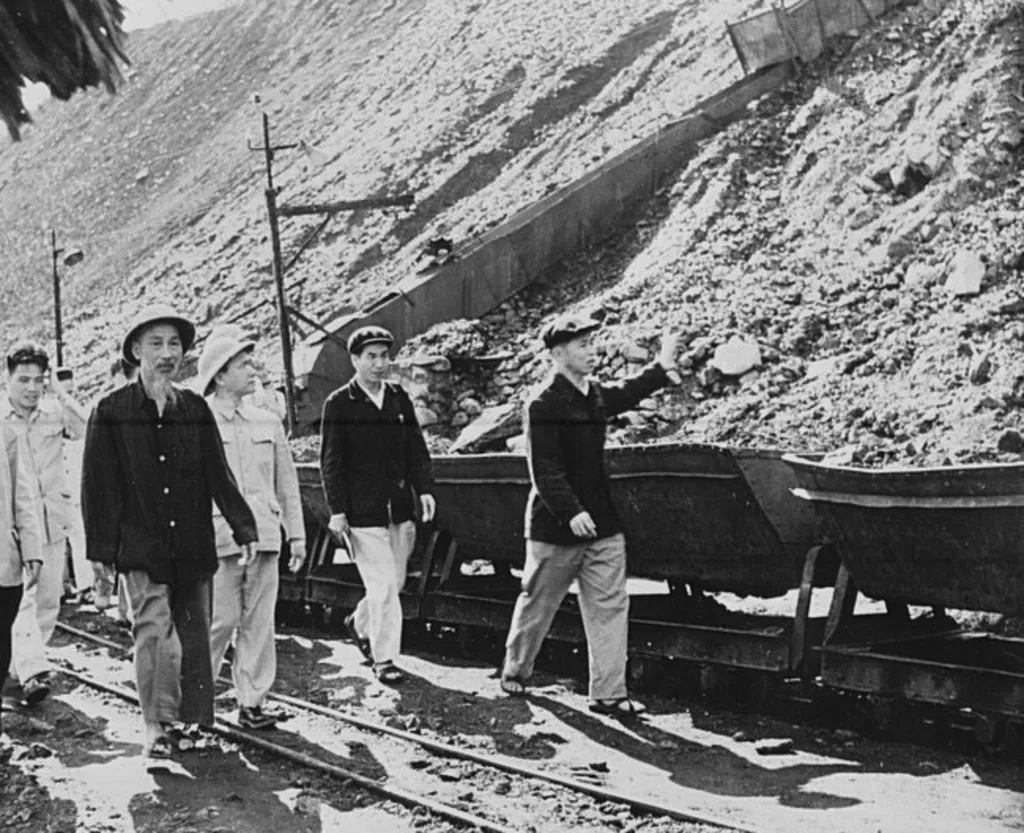 |
| President Hồ Chí Minh always made time to visit construction sites and factories, encouraging workers and farmers to enthusiastically engage in emulation movements for labour and production. In the photo, he visits the mining site of Đèo Nai Coal Mine in Cẩm Phả on the afternoon of March 30, 1959. |
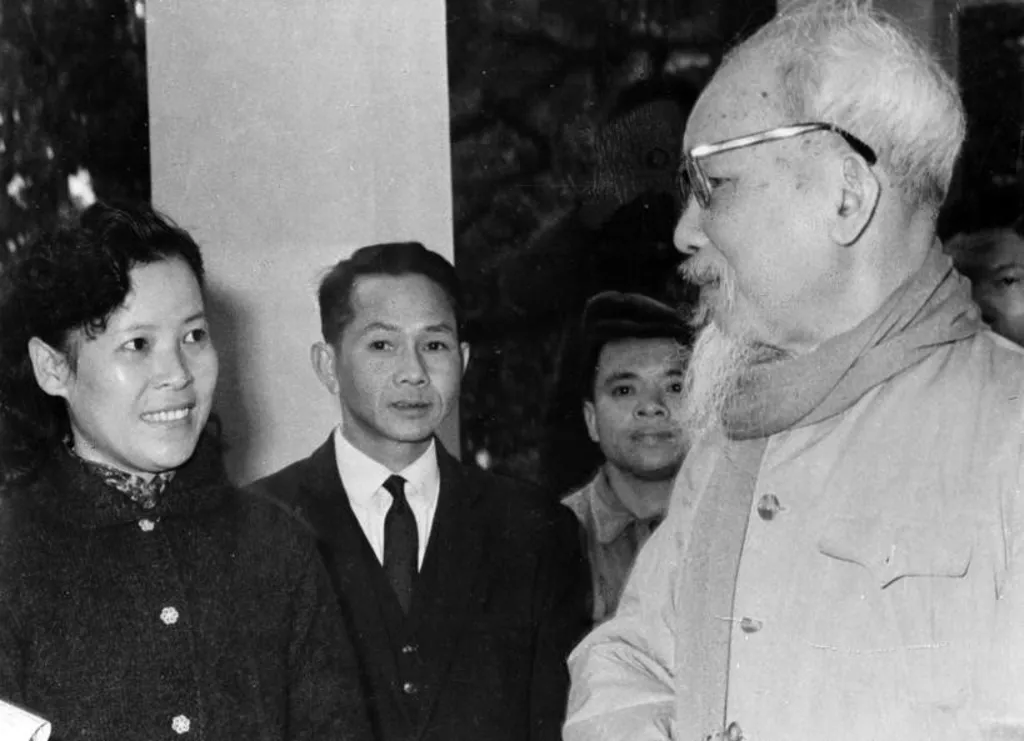 |
| President Hồ Chí Minh advises Vietnam News Agency reporter Tuệ Oanh from the Domestic News Department on news writing while covering the election of the 3rd National Assembly in 1964. |
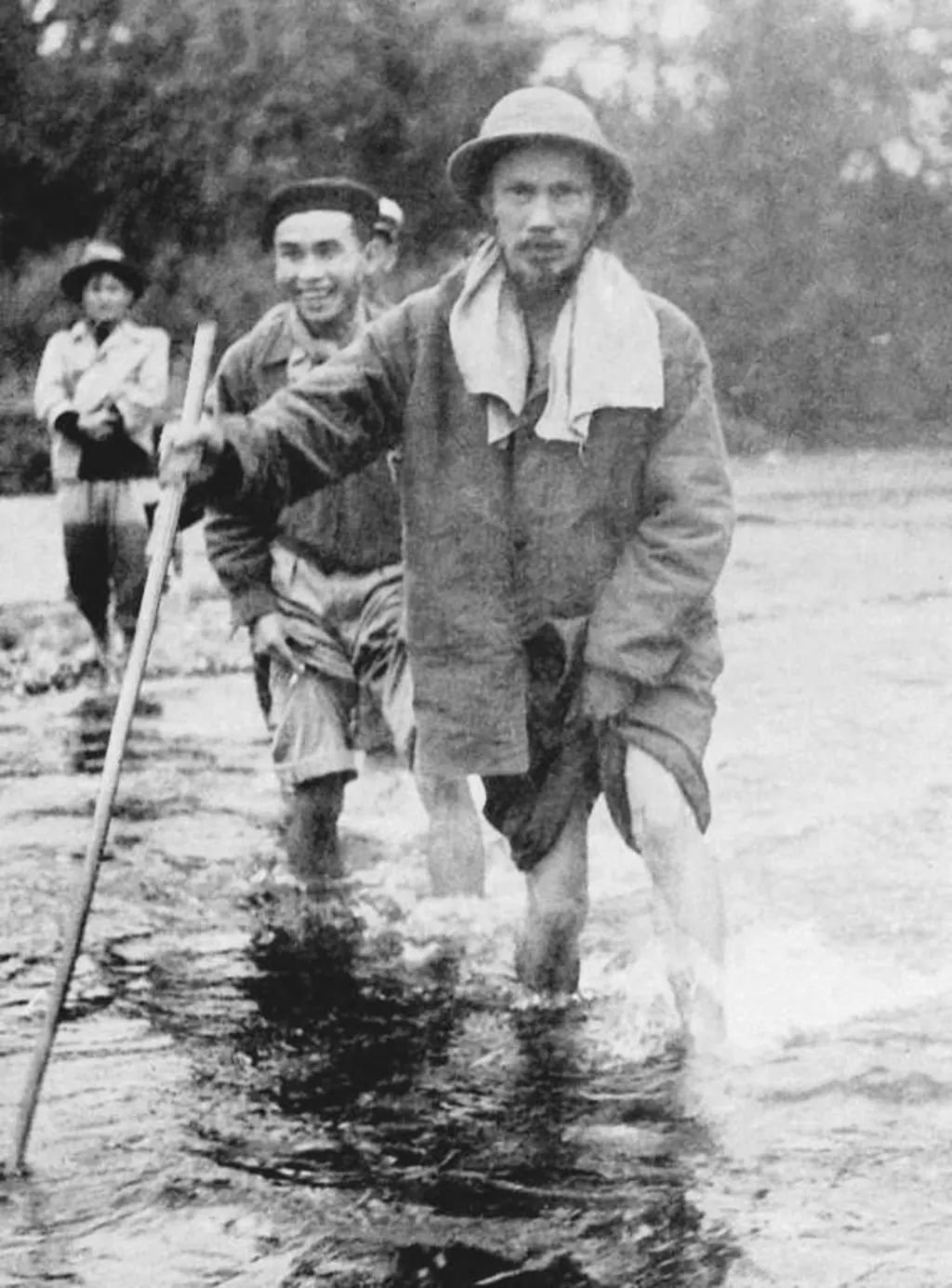 |
| At the Việt Bắc resistance base during the war against the French, President Hồ Chí Minh lived alongside cadres and staff, sharing meals, accommodation, daily life and hardships with everyone. In the photo, President Hồ Chí Minh on a working trip in Việt Bắc in 1951. |
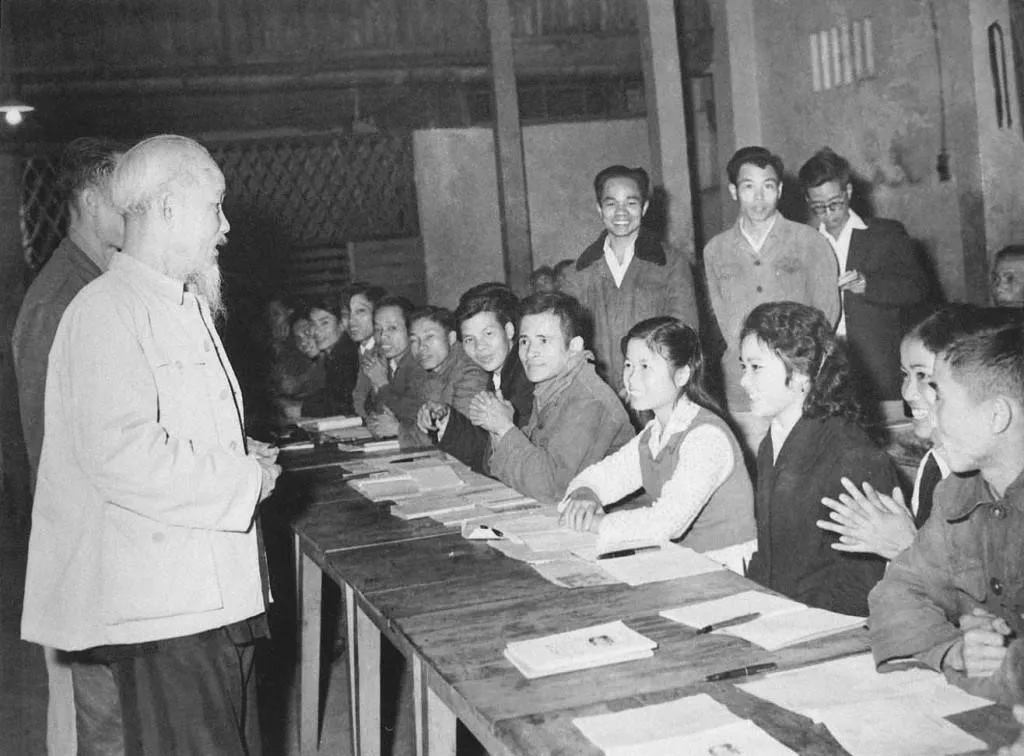 |
| President Hồ Chí Minh called for nationwide and comprehensive emulation movements, encouraging millions of people across all sectors and levels to enthusiastically compete and contribute to a collective national strength. In the photo, President Hồ Chí Minh visits an evening literacy and technical training class for workers at the “1-5” Automobile Factory, a leading unit in Hà Nội’s industrial sector literacy movement, on December 19, 1963. |
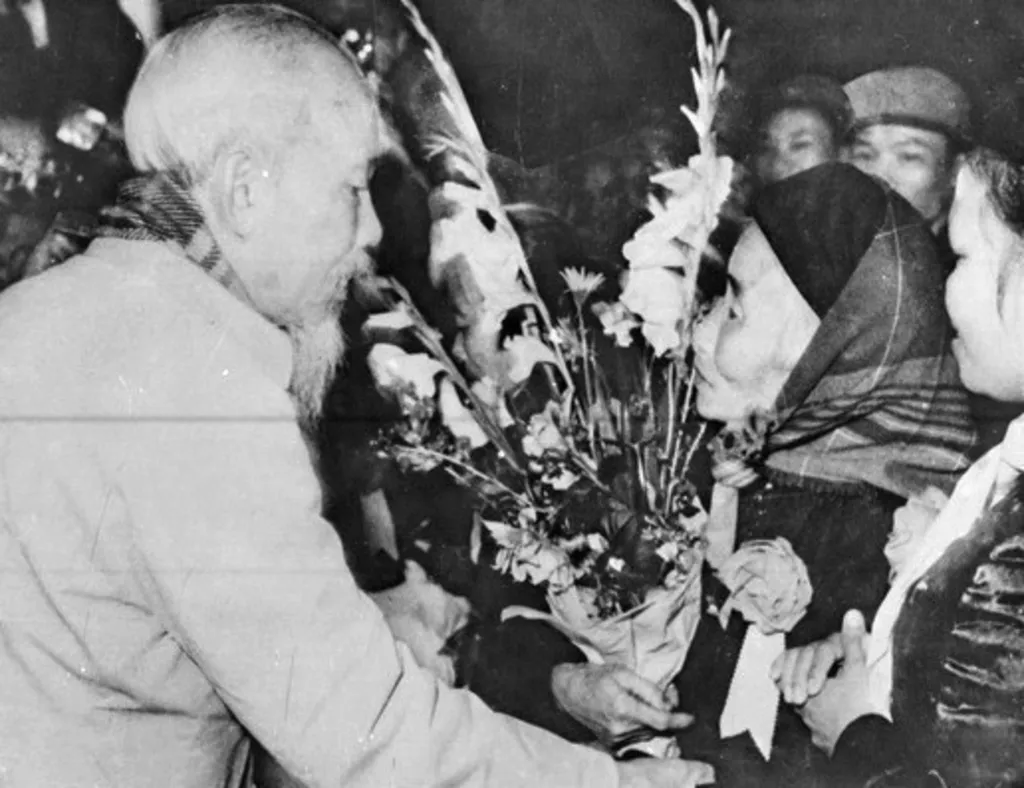 |
| President Hồ Chí Minh presents flowers to Đào Thị Phấn from Cao Bằng Province, whose children served in the army, at the 5th National Congress honouring Heroes and Emulation Fighters in 1966. |
Society
 Society
 Society
 Society
 Society
 Society
 Society
 Society
 Society
 Society
 Society
 Society
 Society
 Society
 Society