 Op-Ed
Op-Ed
Data centre market faces energy challenges
1.
|
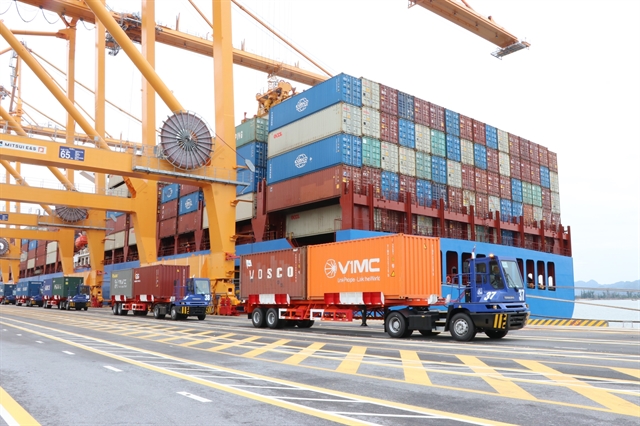
| Hải Phòng International Container Terminal (HICT). Hải Phòng Port is the first seaport in northern Việt Nam to record container throughput surpassing two million TEUs. — VNA/VNS Photo Mạnh Tú |
Ngọc Bích
There is a peculiar gap at the heart of regional trade policy in Southeast Asia. The agreements are real, the tariff schedules are signed, the diplomatic communiqués have been issued.
Yet, on the shop floor of a garment factory in Bình Dương, in the warehouse of a small exporter in Đà Nẵng, or on the farm of a coffee grower in the Central Highlands, the actual reality of the Regional Comprehensive Economic Partnership (RCEP) remains frustratingly distant.
Closing that gap is the central challenge of RCEP’s upgrade agenda. And for Việt Nam, a country with perhaps the most ambitious growth targets in the region – double-digit GDP expansion that would require a sustained mobilisation of investment, exports and productivity – getting the upgrade right is not a technocratic exercise. It is an economic imperative.
Việt Nam’s double-digit growth target is not merely a number. It represents a political commitment to transforming the material conditions of Vietnamese life within a generation. Achieving that target in a global environment marked by geopolitical fragmentation, supply chain disruptions and shifting industrial geography requires Việt Nam to extract maximum advantages from every trade framework it belongs to.
RCEP is a free trade agreement among the Asia-Pacific countries of Australia, Brunei, Cambodia, China, Indonesia, Japan, South Korea, Laos, Malaysia, Myanmar, New Zealand, the Philippines, Singapore, Thailand, and Việt Nam.
Under the 15-member agreement, inputs sourced from any member economy count towards origin qualification – meaning a Vietnamese product incorporating Chinese components, Thai resins and Indonesian materials can qualify as a regional product and access the full RCEP market at preferential rates.
For an economy like Việt Nam’s, deeply embedded in regional supply chains and increasingly moving into higher-value manufacturing in electronics, solar panels, and electric vehicle components, these provisions create a powerful incentive for co-production that far exceeds what any bilateral arrangement could offer.
However, RCEP’s cumulation provisions under its rules of origin are among the most underused tools in Việt Nam’s trade arsenal.
From 2022 to 2024, the RCEP utilisation rates for Việt Nam were 0.67 per cent, 1.26 per cent and 1.83 per cent, respectively, according to a 2026 RCEP Development Report recently released by the China Institute for Reform and Development. Despite showing an upward trend, the figure is still modest compared with an average of 40.5 per cent for its ASEAN+1 free trade agreements (FTAs) due to RCEP's less ambitious tariff offering.
"Under current arrangements, RCEP will remove duties on 92 per cent of tariff lines over twenty five years, placing it at the lower end of ambition relative to existing ASEAN+1 agreements, even at full implementation," said Scarlet Xu Ni, Research Assistant at the Centre on Asia and Globalisation, at the Lee Kuan Yew School of Public Policy.
As the global trade landscape shifts toward deeper digitalisation and 'green' protectionism, the RCEP stands at a crossroads. For the ASEAN region, the status quo is no longer enough.
To move from a technical agreement to a transformative engine of prosperity, RCEP must undergo a strategic upgrade that embraces the future of the digital and green economies and delivers a SME-inclusive architecture.
|
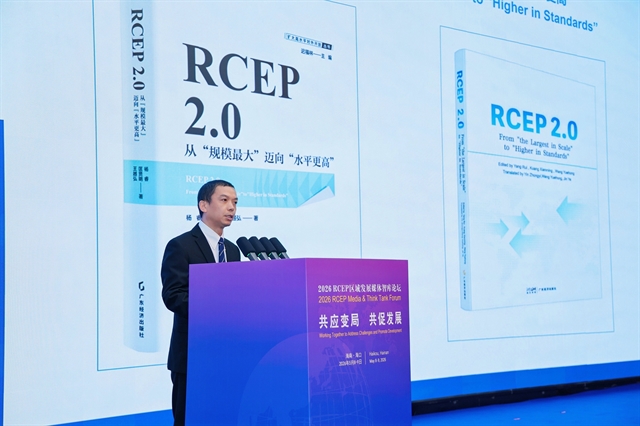
| Kuang Xianming, vice president of the China Institute for Reform and Development (CIRD), introduces 2026 RCEP Development Report compiled by CIRD Research Team. — Photo courtesy of China Daily |
Three breakthroughs RCEP must pursue
Looking beyond immediate alignment, RCEP’s upgrade negotiations present the region with an opportunity to make structural advances in three areas where the current agreement falls decisively short.
The current RCEP digital trade provisions are comparatively thin.
As regional economies digitise at speed – e-commerce growing at over 20 per cent annually in Việt Nam alone, fintech expanding across the unbanked populations of lower-income ASEAN members and AI beginning to reshape manufacturing logistics – the absence of strong common rules creates regulatory arbitrage that benefits no one.
A future upgrade must include a binding Digital Economy Chapter with genuine data governance, mutual recognition of e-signatures, and harmonized cross-border data flows.
As Việt Nam cannot rely solely on traditional manufacturing; it must unlock the 'transformative' potential of the digital economy. Therefore, these digital rules would provide the legal certainty needed for digital MSMEs to become export-active powerhouses.
Furthermore, the 'green economy' is no longer a peripheral concern; it is a prerequisite for market access. With major markets like the EU implementing carbon-border adjustments, RCEP must integrate a Climate-Resilient Trade Framework. This includes mutual recognition of sustainability certifications; preferential treatment for environmental goods like solar panels and EV components; and capacity-building provisions to help developing RCEP members green their supply chains without bearing transition costs.
RCEP economies that are not prepared for green trade standards risk losing access to their most important export destinations. For Việt Nam, whose Mekong Delta agriculture and coastal manufacturing zones are already bearing the costs of climate change, greening the supply chain is not just an environmental goal, it is a core pillar of economic survival.
The formal commitments of RCEP are often invisible to the small businesses and farming households who could benefit most from them. For RCEP to be politically sustainable, its benefits must reach beyond policy elites and large corporations.
An upgraded RCEP needs an 'SME and Inclusive Trade Chapter'. This means moving beyond aspirational language to deliver a regional RCEP business portal – a single digital window in local languages providing tariff schedules, rules-of-origin calculators, and market entry information – would be transformative for the millions of micro and small enterprises across ASEAN.
Simplified origin certification, targeted technical assistance for women-owned businesses and rural enterprises, and dedicated capacity-building funds for least-developed ASEAN members are not peripheral add-ons.
They are the difference between an agreement that exists on paper and one that changes lives.
|
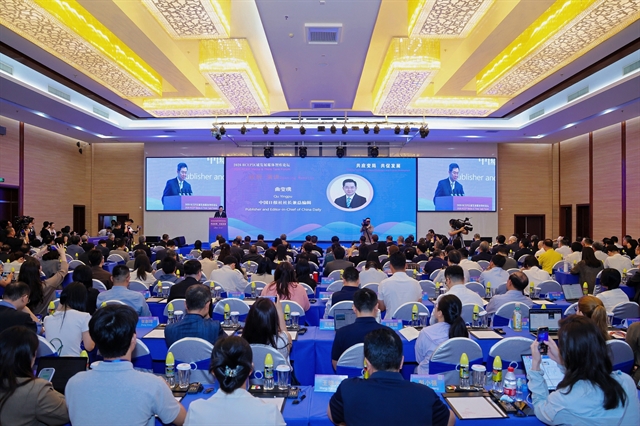
| Qu Yingpu, publisher and editor-in-chief of China Daily delivers an opening remark at the 2026 RCEP Media & Think Tank Forum. — Photo courtesy of China Daily |
The narrative that sustains political will
At the 2026 RCEP Media & Think Tank Forum held recently in Hainan Province, China, by the China Daily and China Institute for Reform and Development, experts agreed that regional trade agreements are ultimately political constructs. They depend on public consensus to survive changes in government and economic downturns.
Building that consensus is not the job of trade negotiators alone. It is the responsibility of the media, the think tanks and the civil society institutions that translate technical architecture into human stories, they highlighted as reflected in the theme of the forum "Working together to address challenges and promote development".
Trade journalism in Southeast Asia has not always risen to this challenge. Coverage gravitates toward drama – tariff disputes, sanctions, diplomatic friction.
The quiet, complex work of regulatory harmonisation rarely makes headlines. But the factory worker in Bình Dương whose employer can now source components more cheaply because of RCEP cumulation rules, the coffee farmer in the Mekong Delta accessing a new Japanese market through reduced tariff barriers, the small digital exporter in Đà Nẵng benefiting from harmonised e-signature standards – these are the stories that build durable public support for regional integration.
Media can play three specific roles in sustaining the political will that RCEP’s upgrade agenda requires. It can educate – building public literacy about what these agreements actually do and who they benefit. It can advocate – giving voice to the communities and businesses who stand to gain from deeper integration. And it can hold accountable – reporting honestly on implementation gaps, asking governments hard questions about why commitments on paper have not translated into outcomes on the ground, and ensuring that the public consensus for regional cooperation is grounded in evidence rather than aspiration.
To sum up, the upgrade of RCEP is the essential 'institutional scaffolding' required to support ASEAN’s broader development. By focusing on digitalisation, sustainability, and inclusivity, we can ensure that trade rules are not just ends in themselves, but instruments for improving lives.
The media and policy-makers must now work together to translate this technical architecture into a story of shared regional prosperity – one where every factory worker and small farmer has a stake in the success of a more integrated Asia. — VNS
Op-Ed
 Op-Ed
Op-Ed
 Op-Ed
Op-Ed
 Op-Ed
Op-Ed
 Op-Ed
Op-Ed
 Op-Ed
Op-Ed
 Op-Ed
Op-Ed
 Op-Ed
Op-Ed
 Op-Ed
Op-Ed
 Op-Ed
Op-Ed
 Op-Ed
Op-Ed
 Op-Ed
Op-Ed
 Op-Ed
Op-Ed
 Op-Ed
Op-Ed
 Op-Ed
Op-Ed