 Op-Ed
Op-Ed
Data centre market faces energy challenges
1.
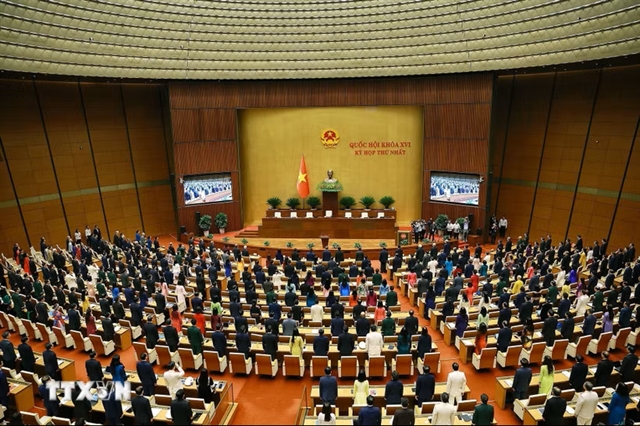 |
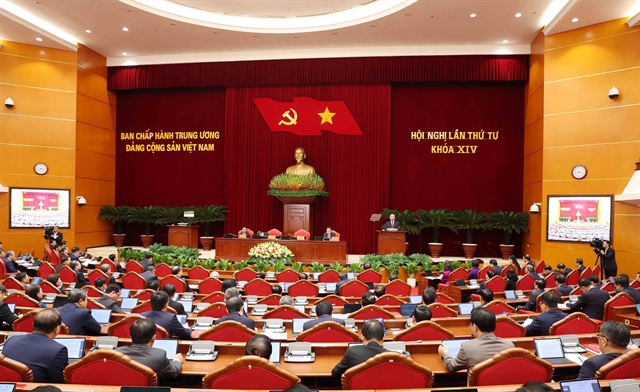
| The opening of the 16th-tenure National Assembly’s first session in Hà Nội on April 6. — VNA/VNS Photo |
HÀ NỘI — Party General Secretary Tô Lâm, in his inaugural speech as President of the Socialist Republic of Việt Nam at the 16th National Assembly (NA)’s first session in Hà Nội, declared that his top priority in both the Party’s and the State’s highest positions is to drive rapid and sustainable national development and improve all aspects of people’s lives.
The foremost focus is to thoroughly follow the principle that “people are the root,” strongly upholding the people’s role as the central actors and ultimate beneficiaries of every development gain, he said.
More than 80 years ago, shortly after the founding of the Democratic Republic of Việt Nam, President Hồ Chí Minh articulated the supreme goal of national independence paired with a strong, prosperous country. In a letter to authorities at all levels published in “Cuu quoc” newspaper on October 17, 1945, he wrote: “If the country is independent but the people do not enjoy happiness and freedom, then independence has no meaning”.
The documents of the 13th National Party Congress held in January - February 2021 expanded the longstanding action motto “people know, people discuss, people do, people check, people monitor” by adding “people benefit”, creating the full principle: “people know, people discuss, people do, people check, people monitor, and people benefit”.
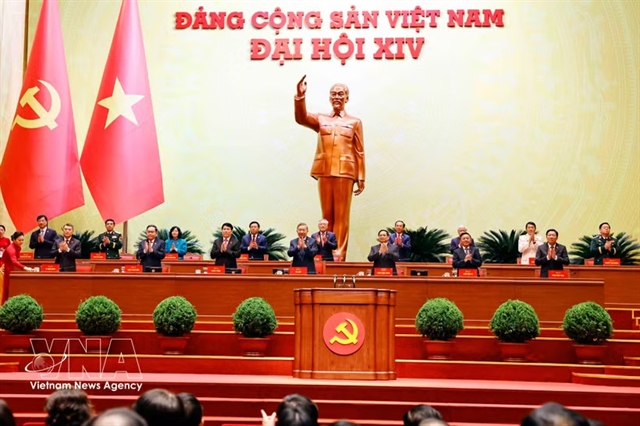
The 14th National Party Congress in January 2026 further cemented the “people are the root” doctrine. In his report on the draft documents submitted to the Congress, General Secretary Lâm stressed that this principle serves as the ultimate yardstick for all policy decisions and the core source of strength for Việt Nam's revolution. The people are the centre, subject, goal, driving force, and resource of development. Every policy must aim to raise material and spiritual living standards, guarantee citizens’ right to mastery, and demonstrate genuine respect by listening to and relying on the people. The Party must maintain close ties with the masses, serve them wholeheartedly, accept their oversight, and bear full responsibility before them for every decision.
Public trust in the Party, he noted, does not come from words, but from actions, from the fairness in ẹnoying benefits, from the results of protecting legal rights and interests, and from timely and thorough responses to the public's legitimate concerns.
He challenged every official and Party member to apply a rigorous self-test to every policy: Does this benefit the people? Does it strengthen public trust? Does it improve people’s lives? Does it make the country stronger and more prosperous? If answers are unclear, policies must be sharpened and refined because no decision holds real meaning without broad public support and measurable, tangible benefits for citizens.
GDP per capita stands as one of the clearest benchmarks for both economic expansion and the degree to which ordinary people share in the gains. Việt Nam's figure surged from US$121.72 in 1990 to more than $5,000 in 2025, on track for a 2026 target of $5,500, underscoring sustained gains in living standards.
To ensure no one is left behind, the Ministry of Labour, Invalids and Social Affairs (now merged into the Ministry of Home Affairs) has offered regular support to roughly 4 million vulnerable citizens in recent years. This includes 1.4 million elderly, 1.7 million persons with disabilities, more than 16,000 orphans, over 150,000 children under three, and more than 80,000 single individuals. Monthly state budget outlays for social assistance exceed VNĐ2.25 trillion ($3.84 billion).
Rapid, sustained poverty reduction remains a key litmus test of the “people benefit” policy.
The rate of poor households plummeted from 58.1 per cent in 1993 to 9.88 per cent in 2015, 2.93 per cent in 2023, and around 1.9 per cent in 2024. In 2025, Việt Nam cut more than half of its poor and near-poor households compared to 2021 under the national multidimensional poverty standard. All poor areas and disadvantaged coastal and island communes received targeted infrastructure investment.
Through various support schemes, more than 1.7 million new homes meeting the “three solid standards” (solid foundation, solid frame and walls, solid roof) have been constructed nationwide. A 450-day peak campaign launched in October 2024 and running through late 2025 was completed ahead of schedule, delivering state-funded housing assistance for around 200,000 policy beneficiaries, about 88,000 units for poor households and ethnic minority communities, and the elimination of over 153,000 temporary and dilapidated houses for poor and near-poor families.
In education, Việt Nam achieved universal preschool for five-year-olds in 2017, and all 34 provinces and cities now provide universal primary education. Education spending accounts for 17–19 per cent of the state budget, on par with or exceeding many developed economies such as the US (13 per cent), Indonesia (17.5 per cent) and Singapore (19.9 per cent).
As a share of GDP, recent education expenditure has hovered around 4.9 per cent and is set to rise further under the 2019 Education Law, which mandates at least 20 per cent of total state spending on education and training.
In health care, 2025 delivered notable milestones: 95.15 per cent of the population covered by health insurance, 15 doctors and 34.5 hospital beds per 10,000 people, and average life expectancy reaching 74.8 years, up dramatically from just 40 years in 1960.
The 14th National Party Congress set a target of at least 10 per cent annual GDP growth for 2026–2030, with GDP per capita projected to reach about $8,500 by 2030.
The 16th NA now bears responsibility for converting Party resolutions into concrete action: lifting living standards and rapidly translating voters’ trust into practical, high-impact decisions.
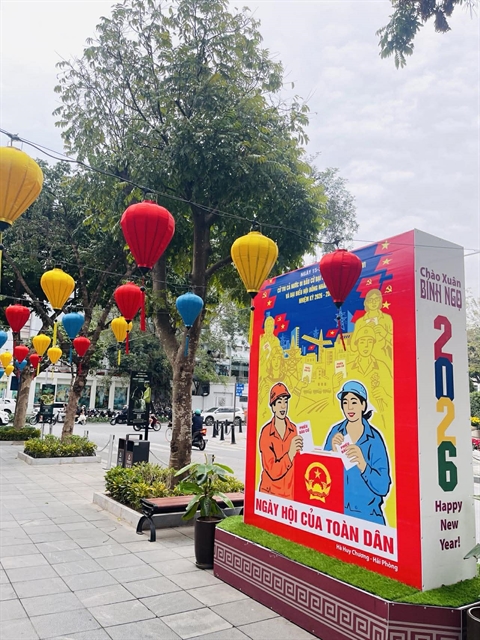
At the March 31 national conference reviewing the 16th NA and People’s Council election, General Secretary Lâm said an election’s success is only fully realised when it translates into effective performance throughout the new term. The 16th NA and People’s Councils at all levels must be those of innovation, action, effectiveness, and closeness to the people, and working for the people.
The 16th NA’s first session, held from April 6–23, embodies this spirit of renewal, closeness to citizens, and public service, focusing on personnel consolidation, legislative work, and major national decisions.
NA Secretary-General and Chairman of the NA Office Lê Quang Mạng said preparations for filling 39 senior leadership positions were carried out with care and systematic rigor. From the outset of the term, legislative efforts are zeroing in on urgent livelihood issues, policy refinement, and swift approval of five-year plans designed to unlock the conditions for sustained double-digit economic growth. — VNA/VNS
Op-Ed
 Op-Ed
Op-Ed
 Op-Ed
Op-Ed
 Op-Ed
Op-Ed
 Op-Ed
Op-Ed
 Op-Ed
Op-Ed
 Op-Ed
Op-Ed
 Op-Ed
Op-Ed
 Op-Ed
Op-Ed
 Op-Ed
Op-Ed
 Op-Ed
Op-Ed
 Op-Ed
Op-Ed
 Op-Ed
Op-Ed
 Op-Ed
Op-Ed
.jfif) Op-Ed
Op-Ed