 Op-Ed
Op-Ed
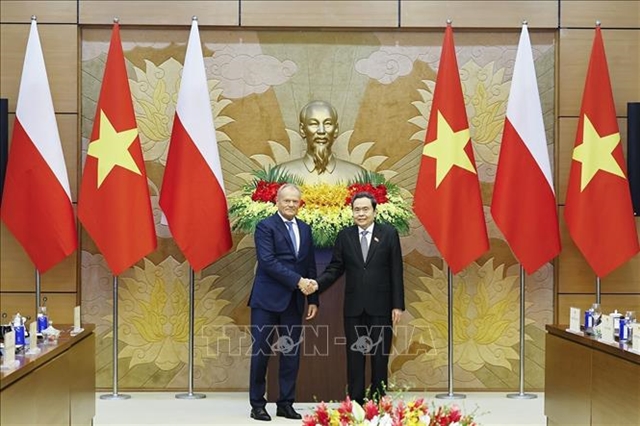
National Assembly President meets Polish Prime Minister
1.
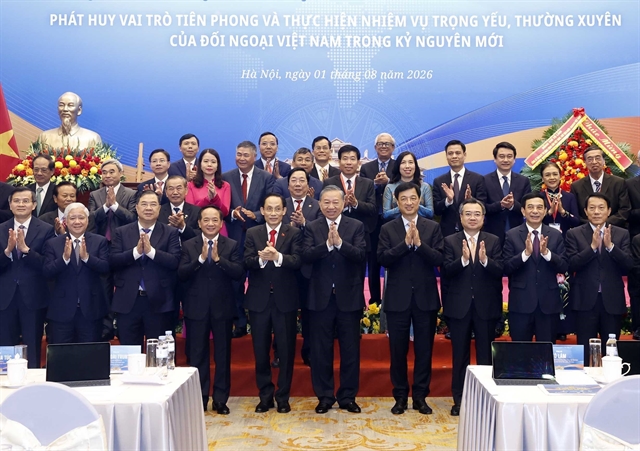 |
| Party General Secretary and State President Tô Lâm and delegates at the 33rd Diplomatic Conference. — VNA/VNS Photos |
HÀ NỘI — In a rapidly changing world, diplomacy is not merely about maintaining good relations, but also about securing a firm position for national development. Such a position becomes all the more meaningful when it can be translated into markets, capital, technology, knowledge, trust and concrete opportunities.
A look at the 33rd Diplomatic Conference and Việt Nam’s recent external activities shows that diplomacy is increasingly becoming more substantive and results-oriented.
More than 1,200 trade, investment and tourism promotion activities, and over 550 activities connecting localities with foreign partners were organised during 2024-2025, resulting in some 230 cooperation agreements with international partners. These figures show that diplomacy today is no longer simply about opening doors or paving the way; it is increasingly measured by tangible outcomes and concrete deliverables.
These may take the form of an investment flow, new technology, a new market or a cooperation opportunity that is translated into practical results. Yet for such opportunities to reach the country and generate lasting benefits, there must first be a peaceful and stable environment conducive to cooperation.
This is precisely the foundation that Vietnamese diplomacy has helped build over the years. Prime Minister Lê Minh Hưng once noted that the diplomatic sector has contributed to creating a favourable external environment for development, while actively mobilising external resources, expanding markets and promoting investment, science and technology, and innovation.
Maintaining a peaceful environment is not merely about safeguarding achievements already secured. In a world marked by turbulence and uncertainty, peace and stability must be sustained through a continuous process of building trust, expanding relations, managing differences, strengthening collaboration and creating additional pillars of support for national development.
This is particularly evident in ASEAN. On the occasion of the bloc’s 59th founding anniversary, Party General Secretary and State President Tô Lâm affirmed that Việt Nam will continue to pursue a foreign policy of independence, self-reliance, self-strengthening, peace, friendship, cooperation and development, and multilateralisation and diversification of external relations. He also underscored the importance Việt Nam attaches to ASEAN and its member states, describing ASEAN as a close-knit family and its member countries as close neighbours, while expressing Vietnam’s wish to work with others to build a united and strong ASEAN Community.
Building on this foundation, bilateral relations are expanding into increasingly specific and practical areas. With Thailand, the two countries are working towards the early achievement of a bilateral trade target of US$25 billion, while enhancing connectivity in infrastructure, logistics, businesses and localities, and expanding cooperation in science and technology, innovation and people-to-people exchanges. Bilateral ties are also being advanced through broader ASEAN and Mekong subregional frameworks.
The Việt Nam-Singapore relationship offers another vivid example. After 30 years of development, the Việt Nam-Singapore Industrial Park (VSIP) model has become a symbol of bilateral collaboration. Singaporean Ambassador to Việt Nam Rajpal Singh highlighted the model as reflecting political trust and cooperation for the mutual benefit of both countries. The two sides are now working to expand the VSIP network in tandem with a shift in development models and greater investment in high technology, innovation, the digital economy, green transformation and strategic infrastructure.
In this sense, good relations with a country should ultimately be about creating more opportunities for new and substantive cooperation.
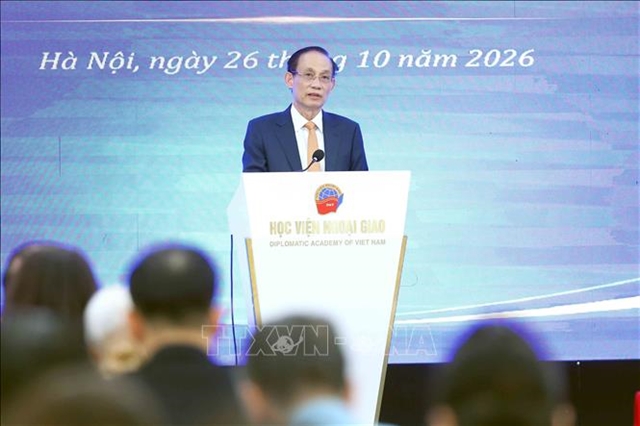
That is also the direction now being set for the diplomatic sector itself. At the 33rd Diplomatic Conference, PM Hưng called for a decisive shift from “paving the way” to accompanying businesses and localities all the way to results. Responsibility, he stressed, should not end with the signing of agreements, but continue until commitments are fulfilled, projects are licensed, capital is disbursed and facilities are put into actual operation.
This represents a notable transformation in how the effectiveness of external relations is assessed. From this perspective, diplomacy is not simply about mobilising resources. As the Government leader stressed, resources must be converted into development outcomes. Investment should be linked to technology transfer, human resources training and stronger capabilities for domestic enterprises. Greater attention should also be paid to core and strategic technologies, strategic infrastructure, and the attraction of talent from the Vietnamese community abroad as well as international talent.
The Việt Nam-US relationship clearly illustrates this approach. Defence cooperation is not confined to dialogue, training or peacekeeping, but also encompasses efforts to address the legacy of war. Việt Nam hopes that the US will soon approve an additional $130 million for the Dioxin Remediation at Biên Hòa Airbase Area Project, with the goal of completing the project before 2031. This is cooperation in the spirit of setting aside the past and looking towards the future, helping create a safer living environment for local residents.
In another area of bilateral cooperation, 14 leading US corporations in defence-security industry, technology and energy recently worked with the Vietnamese Ministry of Public Security. The areas discussed extended beyond security industry and dual-use technologies to strategic technologies such as artificial intelligence, semiconductors, cloud computing, big data and cybersecurity. Diplomacy is thus opening doors to fields that are crucial to the country’s development capacity and national strength.
Opening these doors is not only about securing effective and substantive cooperation at the central level or building major bilateral relationships. In northern border province of Lạng Sơn, experience in managing the border with China’s Guangxi Zhuang Autonomous Region shows how Party-to-Party, people-to-people and economic diplomacy can be connected to strengthen a “security-development belt”. Spring meetings, cooperation mechanisms with Guangxi, and village twinning models along the shared border not only build trust but also create better conditions for trade and economic exchange.
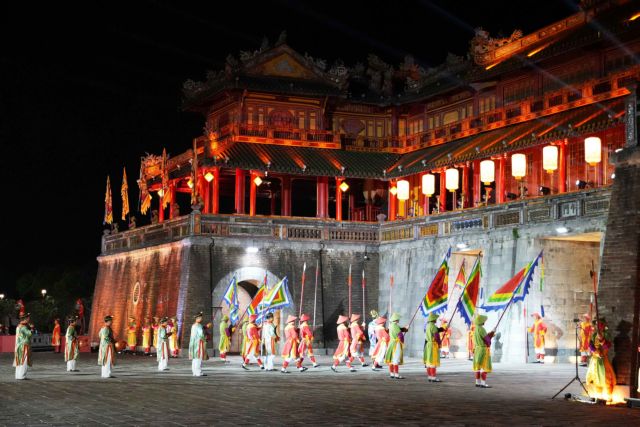 |
| A cultural performance at the Huế Imperial Citadel. |
In the central city of Huế, meanwhile, cultural and heritage diplomacy is being viewed as a resource for development. The city aims to transform people-to-people diplomacy from purely friendship-oriented exchanges into cooperation that generates tangible values, empowering local residents to become cultural ambassadors, applying digital technologies to heritage digitisation, and deepening engagement with UNESCO, conservation funds, financial institutions and international partners.
These examples demonstrate how diplomacy is becoming increasingly intertwined with national and local development. Economic diplomacy is only one part of this broader effort.
The three pillars of Việt Nam’s external relations – Party diplomacy, State diplomacy and people-to-people diplomacy – are being closely interconnected. In Africa, the Communist Party of Việt Nam has established official relations with around 40 political parties in 24 countries, playing a key role in laying political foundations for stronger State-to-State relations and economic cooperation. In China, Party diplomacy serves as a “strategic anchor”, while activities such as Việt Nam Culture Days in China, the Việt Nam-China People’s Forum and border friendship exchanges continue to strengthen the social foundation of bilateral ties.
Safeguarding peace, expanding relations and tapping markets, capital, technology and knowledge are ultimately all aimed at strengthening the country’s capacity and power. Therefore, the task of diplomacy is not simply to take the lead in opening doors. It must work alongside ministries, sectors, localities and businesses to turn the opportunities that have been opened up into concrete results.
Only then can external relations truly contribute to national development. — VNA/VNS
Op-Ed
 Op-Ed
Op-Ed
 Op-Ed
Op-Ed
 Op-Ed
Op-Ed
 Op-Ed
Op-Ed
 Op-Ed
Op-Ed
 Op-Ed
Op-Ed
 Op-Ed
Op-Ed
.jfif) Op-Ed
Op-Ed
 Op-Ed
Op-Ed
 Op-Ed
Op-Ed
 Op-Ed
Op-Ed
 Op-Ed
Op-Ed
 Op-Ed
Op-Ed
 Op-Ed
Op-Ed