 Society

Tighter controls on livestream sales
1.
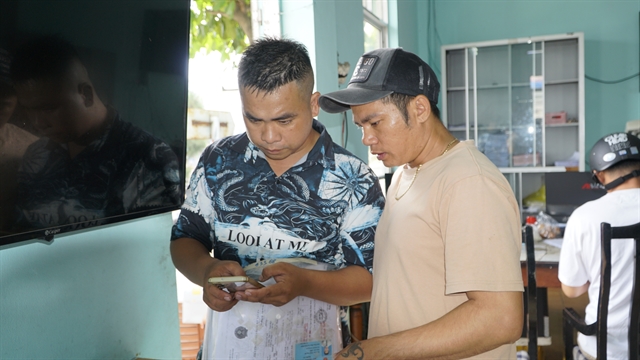 |
| Fishermen learn to use electronic fisheries logbooks. — VNA/VNS Photos |
GIA LAI — Gia Lai province is accelerating the adoption of electronic fishing logs as part of efforts to improve fisheries management, enhance traceability, and contribute to the removal of the European Commission’s “yellow card” warning against seafood exports for illegal, unreported and unregulated (IUU) fishing.
For many local fishermen, digitalisation is gradually replacing cumbersome paper-based procedures.
After returning to Quy Nhơn Fishing Port following a long offshore trip, vessel owner Ngô Thừa no longer has to rush to complete handwritten fishing logs and port entry declarations. Instead, all procedures are now carried out quickly on a smartphone through the electronic fishing log application integrated into the vessel voyage monitoring system.
According to Thừa, paper records were time-consuming, vulnerable to damage at sea, and prone to errors. With the electronic system, information is updated throughout the voyage, from departure to docking, helping improve accuracy and data management.
Another vessel owner, La Thành Sơn, said he had been using the software for several months. Although fishermen initially struggled with technology and unstable offshore internet connections, they gradually became familiar with the application.
He noted that recording fishing activities electronically is more convenient than writing by hand during rough seas. The software automatically updates vessel coordinates and fishing locations whenever nets are cast, while fishermen only need to enter the type and volume of seafood caught. Upon returning to shore, port authorities can print all voyage data directly from the system, significantly reducing waiting times for catch declarations and origin certification.
By the end of April, 3,257 fishing vessels measuring at least 12 metres in length in Gia Lai had adopted electronic fishing logs, according to local authorities. Software provider TComie Energy Telecommunications JSC has continued deploying staff at Quy Nhơn, Đề Gi and Tam Quan fishing ports to assist fishermen with installation and operation of the application.
Hoàng Lê Viết Thắng, a representative of the company, said the system had been rolled out province-wide since late 2025, with the number of users increasing steadily each month, reflecting fishermen’s rapid adaptation to digital tools.
 |
| Gia Lai Province Border Guard officers educate fishermen on legal regulations. |
The electronic fishing log system not only benefits fishermen but also strengthens fisheries management. Authorities can monitor catch volumes, fishing locations and vessel activities more effectively, while ensuring greater transparency for seafood traceability and anti-IUU enforcement.
Đào Xuân Thiện, Director of the Gia Lai Fishing Port Management Board, said handwritten logs previously created difficulties in verifying seafood origins because fishing coordinates were often inaccurate and inconsistent with voyage monitoring data. Mandatory installation of voyage monitoring devices combined with electronic logs has helped improve supervision and shorten port clearance procedures.
Gia Lai currently has 5,570 licensed fishing vessels, including 3,158 vessels over 15 metres long operating offshore, according to the provincial Department of Agriculture and Environment.
To encourage compliance with IUU regulations, the provincial People’s Council issued Resolution No. 28/2025/NQ-HDND in late 2025, introducing subsidies for vessel monitoring device subscriptions and electronic fishing logs. Offshore vessels over 15 metres receive monthly support of VNĐ330,000 (US$12.5), while vessels from 12 metres upwards using electronic logs receive VNĐ200,000 per month.
The policy is expected to accelerate the transition from manual record-keeping to modern, transparent and responsible fisheries management, contributing to sustainable development of the sector in the years ahead. — VNA/VNS
Society
 Society
 Society
 Society
 Society
 Society
 Society
 Society
 Society
 Society
 Society
.JPG) Society
Society
 Society
 Society
 Society