 Society
Vietnamese Prime Minister meets Cambodian National Assembly President
1.
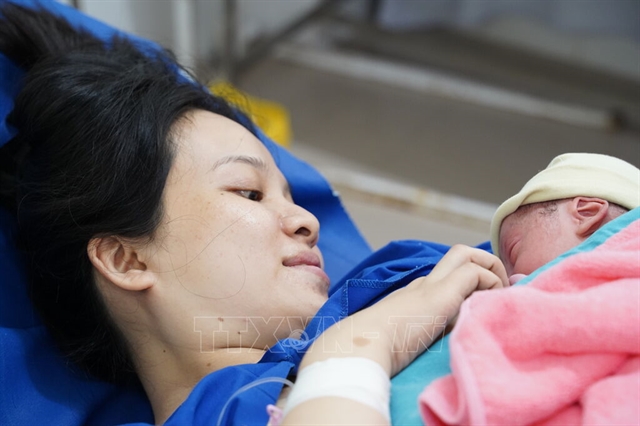 |
| Breast milk is considered ideal for newborns as it provides essential antibodies and nutrients that support their development. — Photo courtesy of the Administration of Maternal and Children's Affairs |
HÀ NỘI — Recognising the challenges new mothers face when returning to work, a new model has been introduced at the Việt Nam Academy of Social Sciences to help female employees balance work and childcare, marking a practical step towards a more supportive workplace environment.
The Âu Cơ Room, named after the mythical mother figure of the Vietnamese people, is an initiative for the academy’s female staff returning to work after childbirth. It not only reflects Vietnamese cultural respect for motherhood in modern life but also signals a practical, human-centred approach rather than a purely formal initiative.
The institute observed that many women struggle to express and store breast milk after returning to work, as no dedicated facilities were previously available. Some rushed home during breaks while others improvised in makeshift corners at the office, which was both inconvenient and lacking proper hygiene.
These repeated interruptions throughout the day directly affected workflow and mental well-being.
According to Nguyễn Thị Hồng Hạnh, deputy director of the Institute of Social Sciences Information, the model was developed through a process in which the institute’s leadership actively listened to feedback from female staff, particularly new mothers returning to work.
While lactation rooms have begun to appear in some workplaces, they remain uncommon in public-sector institutions. The academy’s initiative demonstrates a flexible approach that aligns policy with real-world needs, she said.
The Âu Cơ Room is fully equipped with a rest bed, refrigerator for milk storage, personal lockers and seating. Privacy and cleanliness were prioritised to allow users to manage their time without affecting overall work.
Trần Thị Khánh Huyền, an administrative officer at the institute who uses the room, said the initiative has allowed her to manage her daily routine more independently.
She said that for new mothers, the early period of returning to work after childbirth can be particularly stressful.
“There were times I had to pause tasks midway because I couldn’t manage the time and space [to express and store milk]. And this happens repeatedly, making it difficult to maintain focus,” she said.
The clean, private space of the lactation room was a relief. The most noticeable change, she said, is psychological, without having to worry about logistical issues, she can concentrate better and feels more at ease at work.
Based on her experience, Huyền noted that the model is not complex to implement but delivers clear benefits. Wider adoption, she suggested, would provide better conditions for women to continue their careers after childbirth.
For a research environment such as the VASS, Hạnh noted that small but frequent interruptions can significantly affect work quality. Providing a dedicated space, therefore, is not only a matter of daily convenience but also helps women maintain a more stable work rhythm.
From an organisational standpoint, the establishment of such a space is less about adding amenities and more about adapting working conditions to better reflect employees’ real needs. When essential needs are met, staff can work with greater peace of mind, minimise interruptions and maintain productivity. — VNS
Society
 Society
 Society
 Society
 Society
 Society
 Society
 Society
 Society
 Society
 Society
 Society
 Society
 Society
.jpg) Society
Society