 Society

Bà Đen Mountain’s cloud cap offers a spectacle worth seeing in person
1.
|
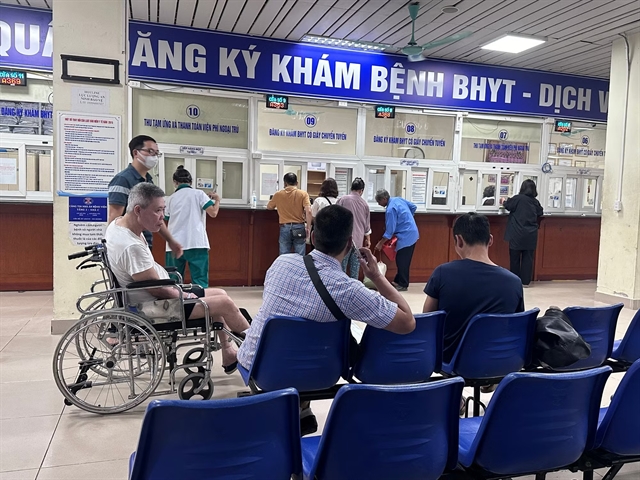
| Patients and their relatives wait for a check-up turn at Cancer Hospital K in Hà Nội. —Photo vietnamplus.vn |
HÀ NỘI — The list of medicines covered by health insurance is expected to be expanded in the second quarter as part of a new policy issued by the Ministry of Health, raising optimism among patients, caregivers and medical workers.
N.T.K., a 72-year-old lung cancer patient in Hà Nội, is currently receiving treatment at Friendship Hospital using a next-generation immunotherapy drug that costs about VNĐ55 million (roughly US$2,200) per 21-day treatment cycle.
She has already undergone five treatment cycles and is expected to continue receiving the medication.
According to her family, because the drug is not currently covered by health insurance, they must bear the full cost themselves. However, the medicine has proven effective and suitable for her condition.
The family hopes the drug will soon be added to the health insurance reimbursement list, easing their financial burden and allowing the patient to continue treatment with greater peace of mind.
Việt Nam records approximately 180,000 new cancer cases and more than 120,000 cancer-related deaths each year. Population ageing, rapid urbanisation and lifestyle factors such as smoking, obesity and physical inactivity are contributing to rising cancer rates.
It is forecast that the number of new cancer cases in Việt Nam could increase by 60-70 per cent by 2050, underscoring the urgent need for effective prevention, early detection and treatment strategies nationwide.
Like K., many cancer patients and people with chronic diseases are eagerly awaiting approval of a new list of reimbursable medicines, which would expand access to advanced and effective therapies while reducing treatment costs.
Associate Professor Phạm Cẩm Phương, director of the Nuclear Medicine and Oncology Centre at Bạch Mai Hospital, said major advances in cancer treatment have been achieved worldwide in recent years.
Many breakthroughs in targeted therapies and immunotherapies have even been recognised with Nobel Prizes due to their transformative impact on patient care, he said.
Over the past decade, Việt Nam has introduced targeted therapies and immunotherapies, including several next-generation immunotherapy drugs. However, these medicines remain expensive and are not suitable for all patients.
According to Phương, conventional cancer treatments such as surgery, radiotherapy and chemotherapy remain the foundation of care, while targeted and immunotherapy treatments have become important additions in recent years.
Many of the newest medicines, however, carry high costs and are not yet covered by health insurance. Some earlier-generation targeted therapies receive reimbursement of 30-50 per cent, but many newer drugs remain outside the reimbursement list.
In recent years, lower-cost generic versions of some medicines have become available. As a result, clinicians hope health authorities and the Việt Nam Social Security will consider raising reimbursement rates for these drugs during the upcoming review process.
"For newly approved cancer drugs, we hope health insurance will cover at least 50 per cent of treatment costs. Some medicines may initially receive reimbursement at 30-40 per cent or 50 per cent, depending on the implementation roadmap," Phương said.
He noted that targeted therapies and immunotherapies are not appropriate for every patient. Eligibility depends on disease stage, clinical condition and financial circumstances.
Although an estimated 20-30 per cent of cancer patients could benefit from these therapies, only about 10-20 per cent currently have access to them in Việt Nam.
"We hope that if health insurance covers part of the cost, more patients will be able to access these treatments, extending survival and improving quality of life," he said.
Phương added that some targeted therapies for advanced lung cancer are already partially reimbursed. However, many patients develop drug resistance after one to three years of treatment due to new mutations and must switch to next-generation medicines or other systemic therapies such as chemotherapy or immunotherapy.
Access to newer drugs can help patients maintain stable disease control for an additional one to two years before requiring chemotherapy. Yet many patients cannot afford these medicines because they are not covered by health insurance.
"For more than eight years, there has been no large-scale update of the health insurance drug list to add significant numbers of new medicines, particularly for cancer patients. As oncologists, we are very pleased that this review is moving forward," Phương said.
Nguyễn Trung Hiếu, deputy director of the Lào Cai Provincial Department of Health, said updating the health insurance drug list is not only about adding treatment options but also about improving the health care safety net with patients at its centre.
"The process has taken quite a long time. Both healthcare providers and patients hope the approval process can be accelerated. The current list has remained largely unchanged for eight years and some medicines are no longer aligned with current treatment practices," he said.
Hiếu called for stronger guidance from the Ministry of Health to ensure patients can benefit from the reimbursable medicines and hospitals can provide more effective treatment.
Trần Thị Trang, director of the Health Insurance Department under the Ministry of Health, said a new circular governing the reimbursement of pharmaceuticals, biologics, radiopharmaceuticals, tracers and medical gases used in healthcare services is expected to be issued in June.
Under the draft regulation, many new medicines will be added to the reimbursement list, including treatments for cancer and rare diseases that patients have long awaited, she said.
According to the draft circular, 84 new medicines will be added to the health insurance reimbursement list, including 30 cancer drugs, accounting for 35.7 per cent of all newly added medicines.
These include innovative medicines such as targeted therapies, monoclonal antibodies and immunotherapies.
The addition of these drugs is considered particularly significant because cancer remains one of the leading causes of death in Việt Nam and often imposes severe financial hardship on affected families due to the high cost of treatment. — VNS
Society
 Society
 Society
 Society
 Society
 Society
 Society
 Society
 Society
 Society
 Society
 Society
 Society
 Society
 Society