 Society
Việt Nam gives top priority to relations with Laos: PM
1.
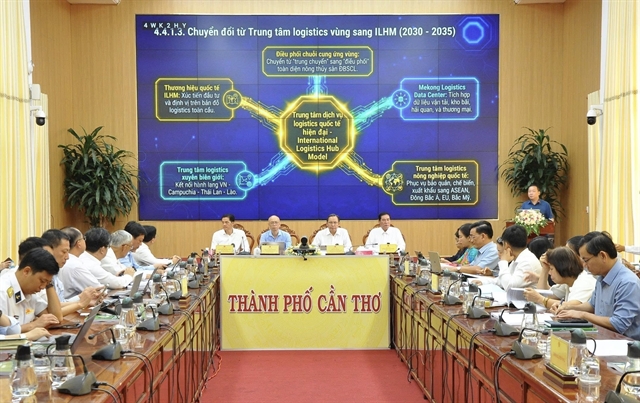 |
| Participants exchange views on infrastructure connectivity, digital transformation and green logistics at a conference on logistics development in Cần Thơ. — VNA/VNS Photo |
CẦN THƠ — Authorities, experts and businesses have outlined a series of solutions aimed at transforming Cần Thơ City into a major logistics centre for the Mekong Delta, leveraging the city's expanded development space, strategic transport assets and growing role in regional supply chains.
The proposals were discussed at a scientific conference on logistics development held by the municipal People's Committee on June 10.
Speaking at the event, Permanent Vice Chairman of the Cần Thơ People's Committee Lê Công Lý said the city now possesses significant advantages following its administrative expansion, including an international airport, an extensive inland waterway network, industrial parks, agricultural and seafood production areas, maritime economic space and plans for the Trần Đề deep water port.
These strengths position Cần Thơ not only as the region's administrative, educational, healthcare and commercial centre, but also as a future logistics hub, supply chain coordinator and import-export gateway for the Mekong Delta, he said.
Drawing lessons from international experience, Lý noted that Singapore had built its competitiveness through integrated management of ports, airports, customs systems, logistics services and digital platforms.
The Netherlands developed its logistics strength by linking the Port of Rotterdam with inland waterways, railways, distribution centres and manufacturing zones, while Germany has excelled through multimodal transport, operational efficiency and supply chain digitalisation.
Although Cần Thơ cannot simply replicate these models, it can adapt key principles such as integrated planning, multimodal connectivity, data driven management and logistics services closely linked with production, processing and exports, he said.
One of the city's priorities is the development of a coordinated logistics network integrated into its long-term master plan.
Authorities aim to avoid fragmented warehouse development and instead establish logistics centres connected to Cái Cui Port, Thốt Nốt Industrial Zone, Cần Thơ International Airport, agricultural production zones and the future Trần Đề port area.
Participants at the conference stressed the need to strengthen links between expressways, inland waterways, seaports and aviation infrastructure, while preparing for future railway connections.
Particular attention was given to the strategic roles of Trần Đề deep water port, the Hậu River shipping channel, Cái Cui Port and Cần Thơ International Airport in reducing dependence on transshipment services outside the region.
Agricultural and seafood logistics, especially cold chain services, were identified as key priorities.
The city plans to attract investment in cold storage facilities, irradiation and inspection centres, packaging services, traceability systems and export support infrastructure.
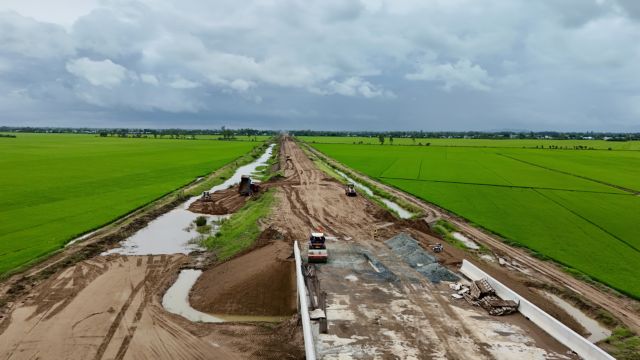 |
| The Châu Đốc – Cần Thơ – Sóc Trăng Expressway is expected to become a vital transport corridor linking An Giang with other Mekong Delta localities and providing direct access to the proposed Trần Đề seaport, boosting regional connectivity and trade. — VNA/VNS Photo |
The goal is to enable agricultural and seafood products from across the Mekong Delta to be consolidated, preserved, processed, certified and exported more efficiently within the region, thereby reducing logistics costs and increasing competitiveness.
Digital transformation and green logistics also featured prominently in discussions.
The Department of Science and Technology and the Department of Industry and Trade have been tasked with studying the development of a citywide logistics data platform linking ports, warehouses, transport networks, production areas, exporters, customs authorities and quarantine agencies.
Authorities also encourage businesses to adopt advanced technologies such as artificial intelligence, the Internet of Things and blockchain applications to improve warehouse management, optimise transport routes and meet increasingly stringent environmental standards in export markets.
To strengthen the logistics ecosystem, the city will introduce a list of priority logistics projects and improve access to land, infrastructure, green finance and workforce training. Cần Thơ also plans to attract major logistics firms, shipping lines, air cargo operators, cold storage investors, e-commerce companies and agricultural exporters.
According to Lê Thanh Hòa, acting director of the Cần Thơ Institute for Socio Economic Development Studies, the conference aimed to assess the current state of logistics infrastructure and services, identify bottlenecks in agricultural logistics, inland waterway transport and multimodal connectivity, and propose solutions aligned with Việt Nam's logistics development strategy through 2035 with a vision to 2050.
Experts at the event discussed infrastructure gaps, the city's position within the regional logistics network, measures to enhance business competitiveness, policy mechanisms, regional connectivity and international experiences in sustainable logistics development.
Officials said the conference outcomes would help shape future policies and action plans while strengthening regional cooperation, attracting investment and gradually establishing Cần Thơ as the leading logistics centre of the Mekong Delta. — VNS
Society
 Society
 Society
 Society
 Society
 Society
 Society
 Society
 Society
 Society
 Society
 Society
 Society
 Society
 Society