 Society
Vietnamese scientist wins ASEAN-US Science Prize for Women
1.
|
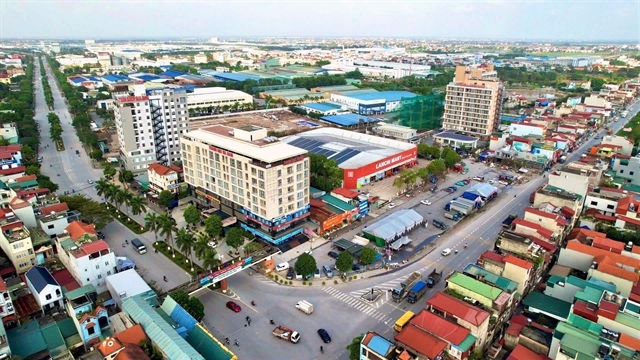
| An aerial view of part of Ninh Bình Province. — VNA/VNS Photo Nguyễn Chinh |
NINH BÌNH — The northern province of Ninh Bình is accelerating urbanisation and infrastructure development as it works towards its goal of becoming a centrally governed city before 2030.
Local authorities are focusing on completing urban criteria, expanding development space, upgrading infrastructure and improving the quality of urban areas, with the aim of creating a modern, well-connected urban system.
Ninh Bình is home to the Tràng An Landscape Complex, which was recognised by UNESCO as a World Cultural and Natural Heritage Site in 2014.
Under regulations that take this special characteristic into account, the province is required to achieve an urbanisation rate of at least 31.5 per cent. Its urbanisation rate has now reached 36 per cent, broadly meeting the requirement.
However, Ninh Bình still faces a shortfall in the number of wards. Regulations require wards to account for at least 30 per cent of commune-level administrative units, while the province currently has 32 wards among 129 commune-level units, equivalent to 25 per cent.
The province thus needs to establish at least seven more wards. Completing this task has been identified as a key priority for the 2027-2028 period.
Preparations
In Vĩnh Trụ Commune, authorities have issued a thematic resolution and detailed plan to mobilise resources and complete the criteria for ward status before 2028.
The commune is targeting an urban population ratio of at least 50 per cent, average per capita income above the provincial average and a combined share of industry construction and services of at least 70 per cent of gross regional domestic product.
It also aims to ensure that non-agricultural workers account for at least 70 per cent of the workforce, while completing the criteria for urban classification and achieving recognition as a Class III urban area.
Secretary of the Vĩnh Trụ Commune Party Committee Lê Thị Hồng Hà said the locality is strengthening Party leadership, improving State management and accelerating administrative reform and the development of urban administration.
At the same time, it is seeking to mobilise and use resources more effectively, diversify investment models and attract greater participation from the private sector to promote socio-economic development.
The commune has so far met three of the five criteria for ward status under Clause 5 of Resolution 112/2025 of the National Assembly Standing Committee.
In the meantime, Gia Viễn Commune is also working towards becoming a ward in 2027.
The commune is reviewing and supplementing its planning, while focusing on urban development, landscape and architectural management and investment in a smart infrastructure system connected with neighbouring areas.
It aims to raise average per capita income to at least VNĐ90 million (US$3,500) a year by 2027 and reduce the poverty rate to below 1.22 per cent.
The commune is also pursuing a green urban development model linked to tourism and services, with the longer-term goal of developing a smart urban area and exemplary tourism city.
It has already met four of the five criteria for ward status.
Phạm Anh Tú, head of the commune’s Economic Office, said the locality is focusing on tourism as a spearhead economic sector.
It is seeking to make better use of its major attractions, such as Kênh Gà hot mineral springs and Vân Long Wetland Nature Reserve, while developing eco-tourism, resort and community-based tourism products.
Agriculture is also being linked with tourism to increase the value of local products and improve income generated from each unit of land.
Roadmap to 2030
Ninh Bình’s departments and sectors have been tasked with reviewing the current situation, identifying criteria that have yet to be met and developing specific solutions and timelines.
The province has also developed a plan to carry out a project to make Ninh Bình a centrally governed city before 2030.
Priority is being given to urban planning and development, smart city development, transport connectivity, technical infrastructure and urban upgrades.
These efforts are expected to improve the quality of existing urban areas while creating additional space for future development.
An initial review showed that as of July 30, the province had met 11 of the 15 criteria for a Class I urban area, with many standards already meeting or broadly meeting regulatory requirements.
Vice Chairman of the provincial People's Committee Nguyễn Anh Chức said progress towards meeting the standards for centrally governed city status was mostly on track with the roadmap set out in the project.
Standards that have already been achieved will continue to be maintained, while agencies responsible for outstanding criteria have been identified along with implementation timelines and solutions.
With efforts focused on completing the remaining requirements, the province is gradually building a more modern and integrated urban system, improving infrastructure and expanding its development space as it moves towards its 2030 goal. — VNS
Society
 Society
 Society
 Society
 Society
 Society
 Society
 Society
 Society
 Society
 Society
 Society
 Society
 Society
 Society