 Economy



Sơn La holds second coffee festival, targeting stronger businesses in future
1.
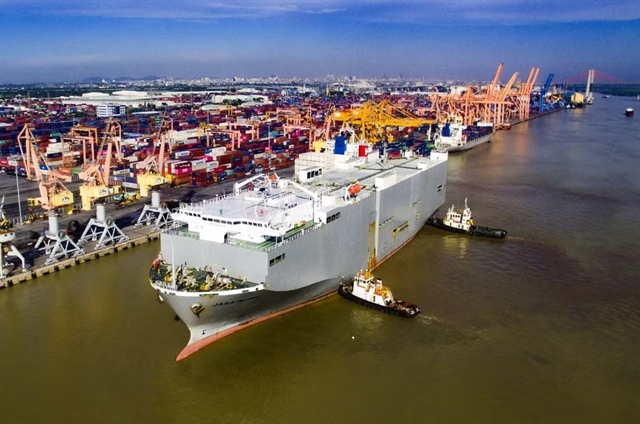 |
| A view of the Hải Phòng Port. The port received over 40,000 vessels last year thanks to strong investment. — VNA/VNS Photo |
HÀ NỘI — As seaports evolve into key transport hubs, attracting investment to develop modern facilities linked with international cooperation has become an urgent requirement, experts said.
Alongside rapid expansion in numbers, Việt Nam’s seaport system is steadily improving its capacity and service quality, driving continuous growth in cargo throughput.
Hải Phòng Port, for example, received more than 40,000 vessels last year thanks to strong investment. The port brought four additional berths into operation in 2025 alone. All berths are equipped with state-of-the-art, world-leading technology and handling equipment. In 2026, construction is continuing at the port with six more berths.
Vingroup also plans to invest in a terminal and logistics centre project at Nam Đồ Sơn port, covering more than 4,300ha and valued at nearly US$14.2 billion.
Recently, a consortium represented by Vietnam Maritime Corporation (VIMC) was approved to implement the Cần Giờ International Transshipment Port Project, with total investment of nearly VNĐ128.87 trillion ($4.99 billion). The port’s design capacity is expected to reach approximately 4.8 million TEU by 2030 and increase to around 16.9 million TEU by 2047.
In the context of ongoing disruptions to global shipping routes, these projects are contributing significantly to the modernisation of seaports and their transformation into logistics centres. A key trend is the growing role of joint ventures in port development with major international shipping companies.
Hồ Kim Lân, Secretary General of the Vietnam Port Association, said seaports play a crucial role in infrastructure development and should be prioritised ahead of other sectors to support the economy and maritime industries.
“Việt Nam has great potential to develop its seaports into international transhipment hubs. However, the lack of proper planning over a long period, coupled with limited resources for systematic investment, has prevented seaports from fully realising their potential,” Lân said.
Under the orientation of developing seaports into transport hubs, the detailed plan for seaports and wharves for the 2021–2030 period, with a vision to 2050, identifies an investment requirement for the seaport system of approximately VNĐ351.5 trillion by 2030, with the majority expected from non-budgetary sources. State budget capital will focus on public infrastructure and key areas, creating spillover effects and attracting further investment.
Deputy Minister of Construction Nguyễn Xuân Sang said around 95 per cent of total investment in seaport infrastructure is expected to come from non-state sources rather than the State budget.
To mobilise diverse domestic and foreign resources for seaport development in line with planning, localities need to soon institutionalise solutions on decentralisation and delegation of authority to mobilise resources based on Government policies and guidelines, Sang said.
In the draft amended Maritime and Inland Waterway Law, the terms green port and smart port are being codified for the first time, reflecting the role of seaports in the modern supply chain and aligning with logistics development trends under the National Strategy on Green Growth and the application of science and technology. This also entails significant changes in investment needs and current investment attraction policies will need to be revised accordingly.
According to the Vietnam Maritime and Inland Waterway Administration under the Ministry of Construction, to create sufficiently attractive financial incentives and encourage businesses to invest in new fuel supply infrastructure, the draft law proposes a stronger incentive mechanism on taxes, fees, credit and land.
In addition, one of the Ministry of Construction’s key directions to attract investment into seaports is to strengthen cooperation with major global shipping companies, a direction that some maritime businesses are actively pursuing. — BIZHUB/VNS
Economy
 Economy
 Economy
 Economy
 Economy
 Economy
 Economy
 Economy
 Economy
 Economy
 Economy
 Economy
 Economy
 Economy
 Economy